
Minor Spoilers
Introduction: A Return to the Caribbean
Black Flag is my favourite Assassin’s Creed game of all time, no contest, so a remake was always going to live or die on whether it respected that. I’m genuinely relieved to say Ubisoft didn’t screw it up. At its heart, this is still the same 2013 classic, but the visuals do things Assassin’s Creed Shadows, a game that came out barely a year ago and already looked incredible, simply couldn’t manage. Ray tracing changes everything here, every golden hour at sea, every dingy tavern, it all just feels right. Weirdly, it looks exactly how I always remembered Black Flag looking back in 2013, even though it obviously never looked anything like this at the time.
It’s also proof of concept for something I hope Ubisoft takes to heart: people would rather play a focused, narrative-driven Assassin’s Creed with a great cast than another 200-hour RPG slog. This is Black Flag as if it were released today, still Black Flag at its core, but with the modern quality-of-life touches the original always deserved. Technical improvements go beyond the visuals too. Transitions between naval exploration, cities and interior spaces are now seamless, eliminating many of the loading screens that broke immersion in the original release.
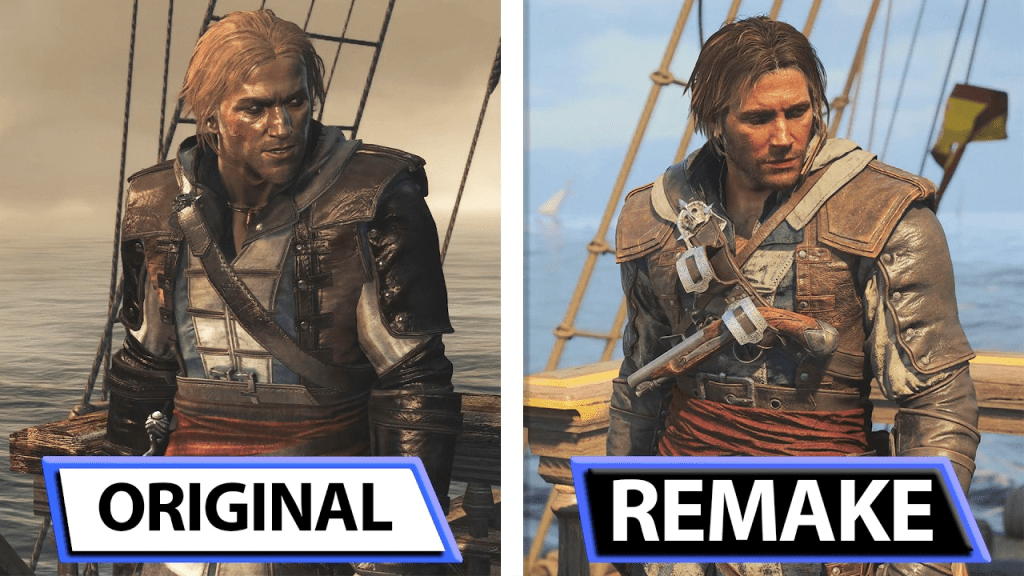
Figure 1: Edward Kenway, then and now, thirteen years on, and it’s not just a resolution bump.
Image Source: https://www.youtube.com/watch?v=un4bpDZUjwk
The Story So Far: Same Waters, New Currents
The story is almost identical to the original, One notable change is the complete removal of the modern-day storyline. Whether that’s a positive will depend on the player; some will miss the extra layer of Assassin-versus-Templar context, while others will appreciate the tighter pacing and reduced interruptions to Edward’s journey.
A handful of additions are woven into the cutscenes, extra characters and side missions, most of which are genuinely welcome rather than filler. Edward Kenway remains one of Ubisoft’s best-written protagonists, charming, flawed, and endlessly watchable, but what really makes it work is the cast around him. Every major side character has their own motivation and arc, nobody’s just there to fill a role and vanish, which is rarer than it should be in a game this size.
The biggest addition comes in the form of the new side story content, and surprisingly, it’s one of the remake’s strongest ideas. Without giving anything away, it doesn’t feel like content that was bolted on thirteen years later to justify the remake’s existence. Instead, it slots naturally into the wider narrative, expands on themes the original only briefly touched on, and gives several characters a little more room to breathe. More importantly, it understands what made Black Flag’s writing work in the first place: it’s character-focused rather than spectacle-focused. By the time it wrapped up, it felt less like bonus content and more like something that could easily have been part of the original game all along.
Combat: A Duller Cutlass
Here’s my biggest disappointment with the whole package. The original Black Flag let you disarm enemies mid-fight, stealing axes from brutes or muskets straight out of a guard’s hands and turning their own weapons against them. It made Edward feel resourceful and unpredictable, genuinely pirate-like. That’s gone. So is unarmed combat and the ability to fight with just your fists or hidden blades. Removing it makes combat feel noticeably less varied and strips away a real chunk of the original’s personality.
Everything else about the fighting is smoother and more dynamic than it was previously, Enemy attacks are also communicated much more clearly than before. Blue attack indicators signal attacks that can be parried, while red indicators warn of unblockable strikes that must be dodged, making fights easier to read without significantly changing their underlying rhythm. but taking player options away isn’t an improvement, no matter how good the animations look doing it.
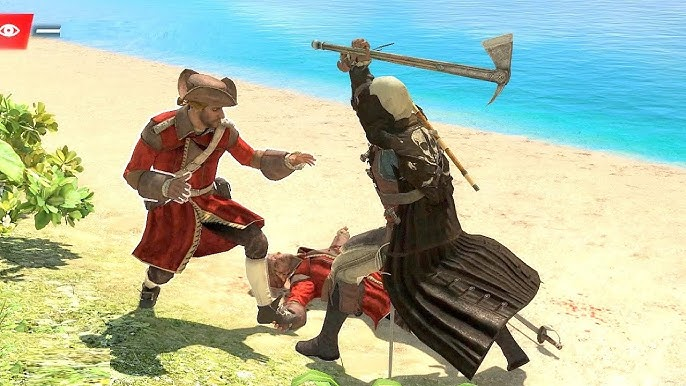
Figure 2: Edward finishes off an enemy with a stolen axe in the 2013 original, exactly the kind of improvised, weapon-stealing combat that’s missing from Resynced.
Image Source: https://www.youtube.com/watch?v=io5RYNKZROk
Exploration and the World: Havana’s New Life (and Old Ghosts)
Havana looks incredible, and its citizens feel genuinely more alive than they used to. What’s missing is a reason to actually engage with any of it. I don’t think I interacted with a single courtesan or beggar, or used social stealth outside of one solitary tailing mission, and that same “bar fight, a few collectibles, a naval quest giver” structure repeats across every small town without much added on top. A few new layers of missions or mechanics in these towns would have gone a long way.
Levels are also more closed off than before, you can’t climb bare walls or scale rocks freely anymore, which fits the more grounded, classic-AC parkour they were clearly going for, and it does look better for it, even if Edward still occasionally leaps three metres up a wall and skips ledges that were obviously meant to be climbed. Stealth has softened considerably too, fewer guards populate most areas, and there’s noticeably less chance of getting caught, so if you’re after a genuine challenge, don’t expect the AI to provide much of one. Tailing missions can now be skipped outright, which some will appreciate and others will see as one more layer of friction quietly sanded off.
Life Aboard the Jackdaw: Sea Shanties, Pets, and Missed Tides
Life Aboard the Jackdaw: Sea Shanties, Pets, and Missed Tides
Naval combat is improved rather than untouched, and in the best way. Beyond the usual broadsides and boarding, you can now recruit named officers through their own dedicated questlines, and abilities that used to be automatic rewards for beating a legendary ship (the ram, double broadside fire, enhanced bracing) are now earned through those officer stories instead, which gives naval progression a much stronger sense of character than the original’s simple gear checklist ever had.
The legendary ships are the biggest win here. In the original, each of the four (HMS Prince, El Impoluto, La Dama Negra, HMS Fearless) was a one-and-done fight, brutal, memorable, and then gone forever. In Resynced they respawn, so you can go back and farm them again for cosmetic rewards once you’ve got the Jackdaw properly kitted out. There’s also a new fifth encounter, the HMS Ipswich, tied to the endgame content, the one exception that doesn’t respawn. If you were the kind of player who treated those fights as the true endgame back in 2013, this alone might be worth the price of admission.
Ship pets are a genuinely new touch, cats and monkeys you can unlock and equip to lounge around the deck and cabin. They’re purely cosmetic and don’t affect gameplay at all, but watching a cat curl up by the wheel after a naval battle, or a monkey perched on Edward’s shoulder, gives the Jackdaw a bit more personality than it had before.
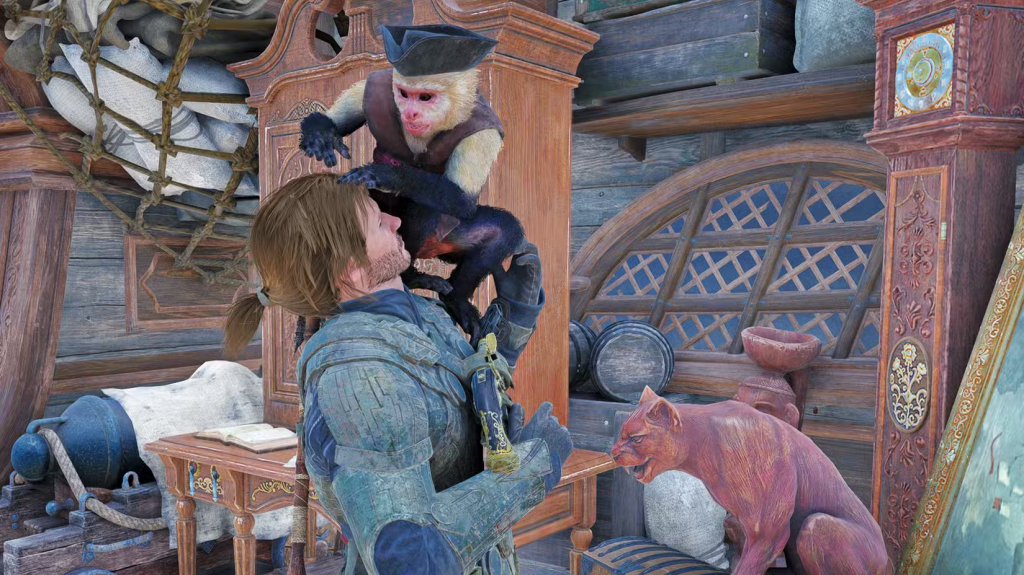
Figure 3: A pet monkey perches on Edward’s shoulder, small, cosmetic, and one of Resynced’s most charming new additions.
Image Source: https://www.polygon.com/assassins-creed-black-flag-resynced-all-pets-how-to-get-cat-monkey/
One genuine frustration sits alongside all that good work, though. Purchasing ship weapons and equipment is now locked behind a progression system tied to upgrading your harbour master at the Cove, so even with the money and materials sitting right there, you simply aren’t allowed to fit a ram to your ship or upgrade it until the game decides you’ve earned the privilege. In the original, upgrades were bought directly from any shipwright with no extra gate in the way. Here, returning players who already know exactly what to do get slowed down for the sake of it. That said, by the time I had the Jackdaw properly under me, I was still sitting on around 20,000 coins, so it’s more of a pacing annoyance than a real scarcity problem.
A few smaller wishes remain too. Chain shot doesn’t actually de-mast ships, flame shot doesn’t set them properly ablaze over time, you can’t walk the deck when Edward puts the ship on autopilot, and despite the small sail boats littering every port, you still can’t hop on one and sail it yourself. Small stuff, but with officers, legendary ships, and pets all genuinely expanded this time, it’s clear naval life got the lion’s share of the new content, land-side exploration could have used the same attention.
Sound and Music: Yo Ho Ho and a Barrel of Shanties
The soundtrack blends Brian Tyler’s original Black Flag score with 22 brand new tracks composed by Stephen Lukach, and the whole thing sits together far more cohesively than that description makes it sound. The standout addition is a reworked version of the iconic sea shanty “Leave Her Johnny,” given a moody, cinematic makeover by Woodkid, it’s a genuinely lovely piece of music that respects the original while doing something new with it. Combined with the ability to choose which shanty your crew sings as you sail, sound design here is doing real, quiet work to make the Caribbean feel lived in.
Being able to pick your own sea shanty is a lovely small addition too, functioning basically like a radio setting in a modern Rockstar game.
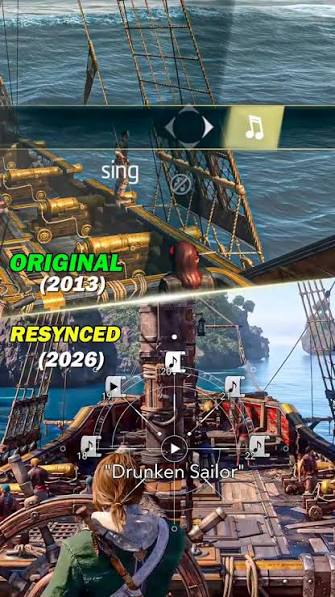
Figure 4: The shanty selection menu, then and now
Image Source: https://www.instagram.com/reels/DZCYd4GNPoO
The Elephant in the Store: Microtransactions and Menu Traps
This is where the remake genuinely embarrasses itself. Press the pause button and the game pauses, as you’d expect. Press it again, the same button you used to open the menu, and instead of closing it, you’re dumped straight into the in-game store. Every single time. You have to remember to hit B instead, which is an absurd thing to have to consciously think about just to close a pause menu. On top of that, in-game notifications will genuinely interrupt you to suggest buying items from the store, and I got an actual tutorial pop-up mid-mission explaining how to purchase microtransactions. That has to be one of the most Ubisoft things I’ve ever seen in a game. All of this sits on top of roughly £80 worth of DLC available at launch (mostly cosmetic), which is a lot to stomach for a remake of a thirteen-year-old game.
Accessibility: Ubisoft’s Strongest Suit
Say what you like about Ubisoft elsewhere, their accessibility work continues to be genuinely best in class, and Resynced might be their most comprehensive effort yet. Difficulty can be adjusted separately across naval, ground, activity and stealth gameplay, QTEs can be skipped outright, and underwater sections can have their intensity reduced or have oxygen limits and shark attacks turned off entirely. A toggleable centre-screen camera dot helps with motion sickness, aim assist has four distinct settings, and healing during combat is now possible via remedies, a genuinely useful addition for players who found the original’s combat punishing.
Beyond that, subtitles support toggleable speaker names and emotions with a huge size range, screen narration covers menus and select gameplay info, and HUD customisation lets you resize, reposition or hide practically everything on screen. Full control remapping, configurable haptics, dual-stick axis inversion, and multiple supported input devices round out one of the deepest accessibility suites in the franchise’s history. It’s the one area of this remake with no real notes attached, just consistent, thoughtful work.
The Final Verdict: X Marks the Spot (Mostly)
Black Flag Resynced is, structurally, close to a 1:1 remake with extra content bolted on, and I was hoping for a bit more revamping of the underlying systems than that.
The visuals are a genuine triumph, The technical modernisation is equally impressive, with seamless world streaming, improved combat readability, and a generally smoother overall experience helping the remake feel genuinely current rather than simply prettier. the cast and story still sing, and the accessibility suite is some of the best work Ubisoft have ever shipped. But stripped combat options, a progression system that actively slows down players who know exactly what they’re doing, and a storefront that ambushes you mid-pause-menu all chip away at what should have been an easy win.
So, is it still the best pirate game ever made? Yes, comfortably, but it’s fighting its own publisher to get there. The bones underneath are as good as they’ve ever been, this is still Black Flag, and that’s still one of the best things Ubisoft has ever built. I just wish they’d trusted that more, and trusted their own storefront less.
Rating: 4.5/5
Time Played: 49 hours
Achievements: 49/49 (1000/1000g)


 Kirbylife Game Research & Reviews
Leave a comment