
Spoiler-Free Review
Introduction: No Rats, No Problem?
I’ve been playing my way through the “A Plague Tale” series, one game at a time, handing A Plague Tale: Innocence a 3/5 and then falling for A Plague Tale: Requiem enough to give it a 4.5/5. So when Resonance: A Plague Tale Legacy showed up, I was excited but a little nervous. Made by Asobo Studio, the team behind the first two games, it takes the series’ greatest hits and gently sets most of them down. You play as Sophia, the scene-stealing side character from Requiem, swinging a sword and dagger instead of a sling. The setting is the mysterious Minotaur Island, and the rats have left the building.
Making a prequel is a tricky business because you can’t lean on the story that came after, and here Asobo Studio couldn’t even lean on its most famous gimmick. Instead of awkwardly squeezing rats into the plot, it went for a bold reinvention as a linear action-adventure, one that feels closer to Uncharted or Tomb Raider than to Innocence. I played it through Xbox Game Pass, so it cost me nothing, I played it through Xbox Game Pass, so it didn’t cost me a penny.
Story and Characters: Minotaurs, Myths and a Missing Spark
The setup is easily the story’s biggest win. Sophia’s own past collides with the legend of the Minotaur, and the game weaves between her present and the ancient events that shaped the island. It’s a clever way to tuck a Greek myth into a series about a medieval plague curse, and it gives the world a real sense of depth that a straightforward adventure would have missed.
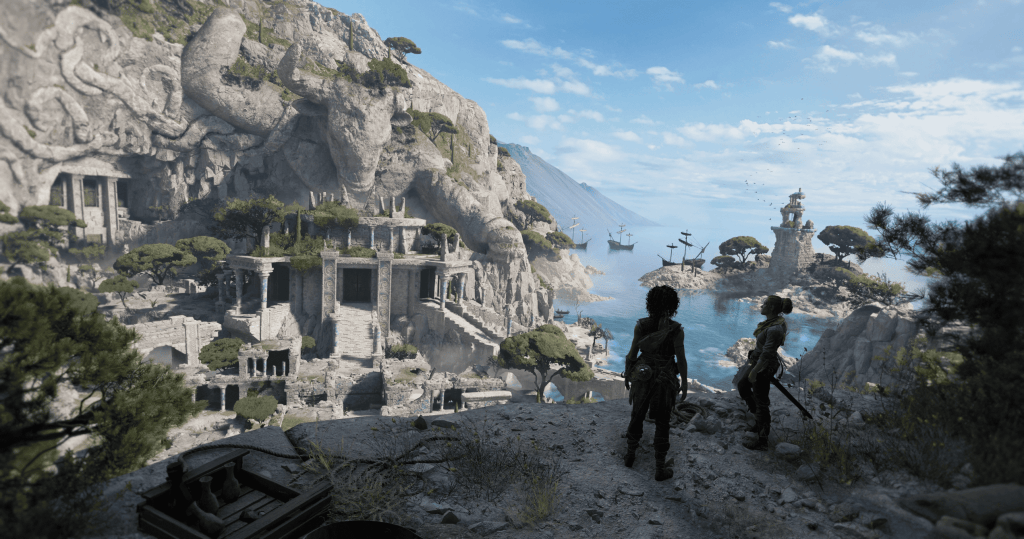
Figure 1: Sophia and Leni overlooking the ruins of Minotaur Island.
Image Source: https://aplaguetale.fandom.com/wiki/Minotaur%27s_Island
Where it stumbles a little is the emotional punch. Innocence ran on the bond between Amicia and Hugo, and Requiem deepened it beautifully while giving its supporting cast proper motivations. Resonance doesn’t quite catch that same lightning. Sophia is a brilliant lead with a great sense of humour, and her performance is a joy, but I never fell for her the way I did for the De Rune siblings. The supporting cast is likeable and full of personality, but I would have loved to see them fleshed out a little more. I also found myself comparing this Sophia to the one I met in Requiem, and the two didn’t always feel like the same person.
None of that stops it from being a satisfying story, and I never felt lost. The pacing does shift as it goes, though. The early chapters balance action, exploration and quieter moments nicely, but the later chapters lean heavily into action and adventure set-pieces rather than the quieter, character-focused stretches that made the first half so charming. I would have loved a few more of those moments to keep the balance going right to the end.
Combat and Stealth: Swapping Slingshots for Swords
Here’s the biggest shake-up of the whole game. Amicia treated a fight as a last resort. Sophia treats it as just another Tuesday. Combat is built around sword and dagger strikes, dodges, blocks, parries and charged critical strikes, with a grappling hook and a guard-breaking kick adding some flair. My favourite touch is that you heal by defeating enemies, which nudges you to stay bold instead of hiding behind consumables. It’s a brilliant idea, and it keeps the action flowing.
The catch is that, for me, combat stayed fun without ever becoming thrilling. It moves quickly and feels smooth, and the parry-and-dodge rhythm will be instantly familiar if you’ve played Assassin’s Creed or the Arkham games. But it rarely pushed back. Shield carriers get kicked aside, archers are more of a background hum, and even the big armoured brutes topple after a few well-timed moves. Back in Innocence and Requiem, one armoured soldier had me plotting an entire route around him like a tiny medieval heist crew. Here, he’s a health bar with a helmet. I never dreaded a fight, but I never got that lovely spark of anticipation before one either.
Stealth has almost taken a bow and left the stage. You might get an opening takedown to kick off an encounter, but there’s no proper sneaking, and combat simply switches on when you get close to an enemy. I felt that a bit, because in my Innocence review I called the stealth rigid and trial-and-error, and Requiem fixed it with far more freedom. Resonance solves the problem by mostly skipping stealth altogether. The chase sequences with the island’s creature scratch a similar itch, as they ask you to think about how you move and what you leave behind, and they’re a real treat. They just aren’t a full replacement for sneaking past a patrol.
Skills, Charms and Resonance Points: Sophia’s Secret Sauce
Every A Plague Tale game has found its own way to make your hero feel like they’re growing. Innocence had you crafting upgrades at a workbench with scavenged materials, and Requiem let your skills develop naturally from how you played. Resonance does something different again, and it’s one of the things that gives the game its own identity.
Everything runs on Resonance Points, which you earn by exploring the island and spend on new skills and abilities. It’s a simple loop that gives you a real reason to poke around, and the skills add welcome variety to combat, from crowd-control moves like the Bullbreaker Kick to upgrades that make parrying more forgiving. The standout for me is the mastery skill that lets you parry red-glint attacks, which turns tricky fights into a satisfying rhythm. Not every upgrade feels essential, and a few are clearly better than others, so it pays to be picky. I hoarded points for ages before remembering to spend them, which says a lot about how gentle the game can be.
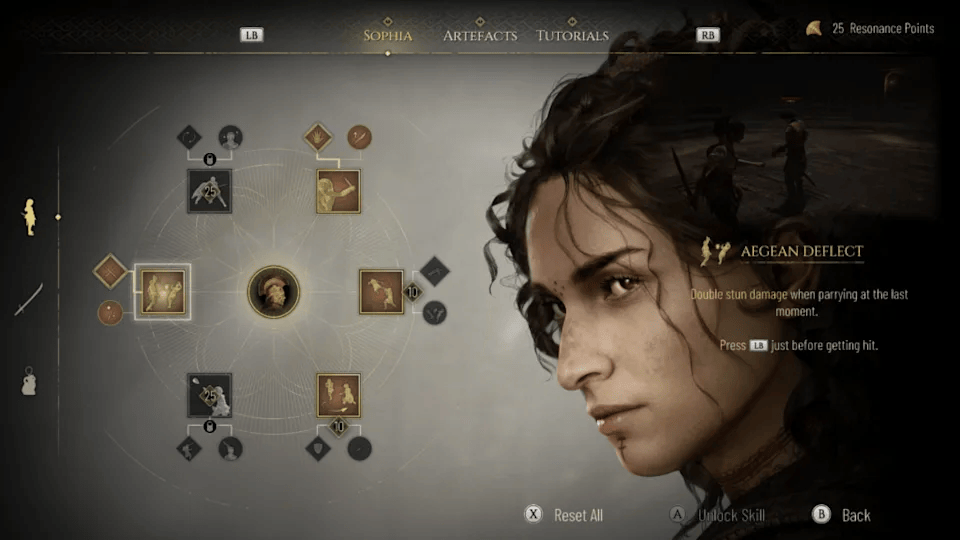
Figure 2: Sophia’s skill wheel, where Resonance Points unlock new abilities like Aegean Deflect.
Image Source: https://tech.yahoo.com/gaming/articles/resonance-plague-tale-legacy-best-050000266.html
Scattered around the island you’ll also find charms, small perks like a wider parry window or a second chance when a fatal blow slips through. They’re mostly numbers going up, but I loved that the game alerts you when a charm kicks in, so you can actually feel them working instead of wondering whether they do anything. Exploring also turns up different swords to fight with, which is a nice incentive to go digging through the island’s ruins rather than just sticking to the main path. Crafting has been removed entirely, which keeps things tidy, and swapping scavenged materials for points makes progression cleaner and easier to follow than it was in Innocence.
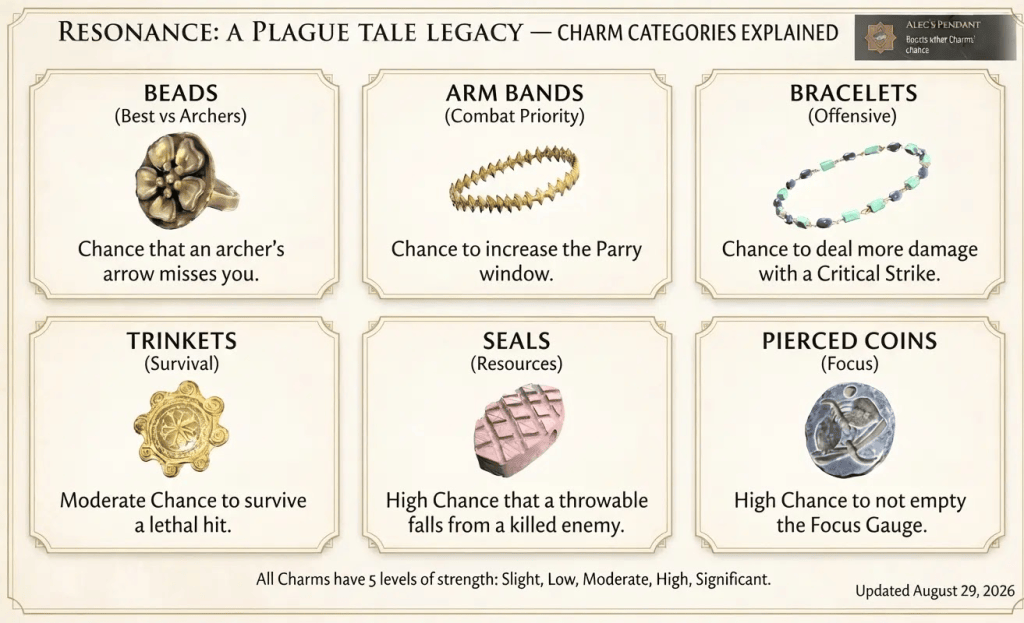
Figure 3: The six charm categories in Resonance, each with five levels of strength from Slight to Significant.
Image Source: https://www.dtgre.com/2026/08/resonance-plague-tale-legacy-charms-guide.html
Puzzles, Platforming and Exploration: Where the Magic Happens
If combat is the quiet corner of the party, the adventure side is the dance floor. The puzzles revolve around Sophia’s Minoan Sphere, giving the series’ long-running love of light a fresh new spin. They begin with simple light-redirecting challenges and grow into satisfying multi-step rooms that kept me curious rather than repeating themselves. They lean on the gentler side, which suited me perfectly. I never dreaded a puzzle room, and none of them interrupted the story’s momentum.
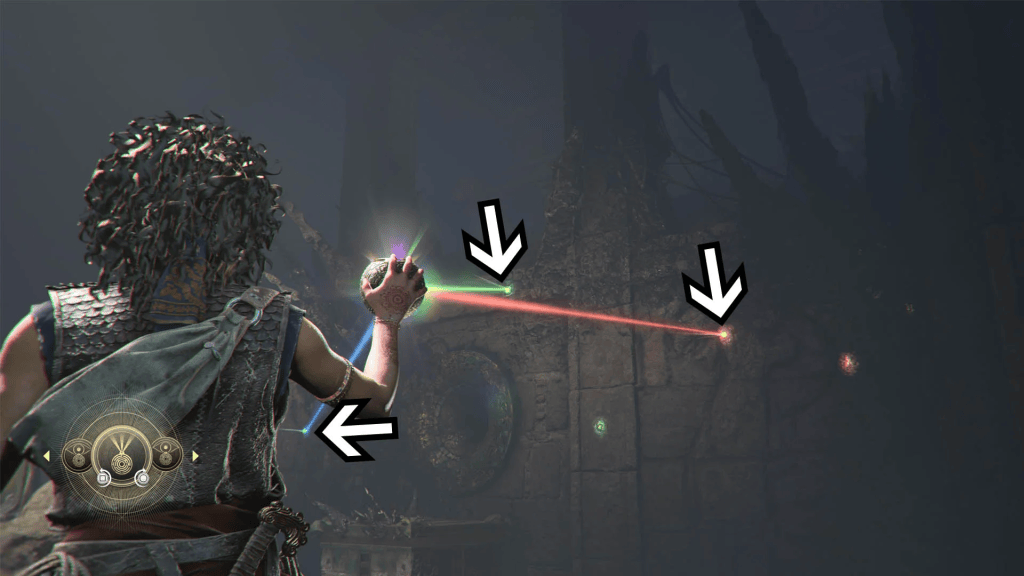
Figure 4: Sophia redirecting coloured light beams with the Minoan Sphere to solve one of the game’s puzzles.
Image Source: https://www.eurogamer.net/resonance-a-plague-tale-legacy-light-splitting-chamber-puzzle-solution
One detail I loved is how the game handles hints. You can tone down or switch off the constant advice from Sophia and her companions, so you get the joy of working it out yourself instead of being handed the answer. As a games user researcher , this is exactly the kind of thoughtful design I like to see. Some players want a helping hand, others want a proper brain-tickler, and this lets everyone have the experience they came for.
Platforming is a delight. Jump timing is generous, the climb-up animation rescues you when you’re a touch short, and the grappling hook feels wonderful, especially when you chain it into other moves. The absolute highlights are when platforming collides with the creature chases, because every one turns into a mini set-piece without any extra effort.
My one gripe is exploration. There’s always a clear main path, with side routes hiding collectables, charms and points. But the collectable count is enormous, especially the 200 Resonance fragments, and I sometimes found my attention pulled away from the story to check just one more corner. To its credit, you’re nowhere near required to find all 200 to fully upgrade Sophia, so it never feels mandatory, just tempting. Still, Requiem‘s exploration felt rewarding without ever feeling like homework, whereas here it can slide into checklist territory, especially with crafting gone and few upgrades feeling essential..
Visuals and Sound: Asobo Studio Shows Off Again
Visually, Resonance is jaw-droppingly gorgeous. Minotaur Island’s ruins, labyrinths and vast underground spaces look incredible, and the lighting is used with real purpose, guiding your eye and giving everything a slightly mythic glow. More than once I walked into an enormous new space and just stood there, soaking it in. Requiem had that magic too, and Resonance delivers it even more often.
Performance was rock solid. The game ran beautifully on Xbox Series X, with no crashes and no noticeable frame drops. The soundtrack is another highlight. Olivier Derivière returns with a fresh musical palette that suits the setting perfectly, and the music knows exactly when to step forward and when to melt into the background. It carries a lot of the emotional weight in moments where the writing needs a helping hand, and the voice acting is superb across the board.
Accessibility: A Studio That Keeps Listening
This is where the series has come the furthest. Innocence launched with no difficulty options, hard-to-read subtitles and no controller remapping on console. Requiem fixed most of that, and Resonance takes another impressive step forward.
Difficulty now runs from Narrative through Easy, Normal and Hard up to Nightmare. Narrative mode even offers automatic parrying and dodging, a thoughtful way to open up combat for players with limited mobility. The visual options are generous, with a high contrast mode, dedicated colourblind settings (including a custom mode for adjusting hue, saturation and brightness), a steady camera option, a static background toggle, adjustable motion blur and the choice to disable blood effects. Subtitles can show speaker names, come in three sizes and have customisable colours and background opacity. On the controls side, QTEs can be reduced to single presses, and sprinting, walking and using the Sphere can all be set to toggles. Everything is also gathered in a dedicated accessibility menu, so finding what you need is easy.
My only wish is for the high contrast mode to let you customise its colours, as that would make it even more useful. Otherwise, it’s a huge leap from Innocence, and a lovely example of Asobo Studio listening to player feedback across three games.
The Final Verdict: A Worthy Side Story
So, does Resonance work without the rats?
For the most part, absolutely. It’s a confident, beautifully made spin-off with stunning presentation, a gorgeous soundtrack, clever puzzles, a fresh progression system and fantastic accessibility. Asobo Studio deserves a round of applause for not simply remaking Requiem with a different lead. Rebuilding the gameplay from the ground up was a bold move, and the adventure half of the game rewards that courage.
There are a few bumps along the road. The combat could use more bite, stealth has largely wandered off, the collectable count is a lot, and the characters don’t quite reach the emotional heights of Amicia and Hugo. It’s also on the shorter side, around the length of Innocence and shorter than Requiem. At £44 it feels a touch pricey to me, with £25-30 sitting closer to what it offers. But if you’re a Game Pass subscriber, this is an easy recommendation. It costs you nothing, and you get one of the best-looking and best-sounding games in the series.
Placed alongside the rest of the series, I’d slot it right in the middle. It’s more rounded than Innocence, whose wonderful story was held back by average stealth, but it doesn’t have the emotional weight that made Requiem so special. It’s a stylish, enjoyable detour I’m really glad I took, and I’d love to see Asobo Studio keep experimenting with where the series goes next.
Rating: 3.5/5
Time Played: 12 Hours
Achievements: 36/36 (1000G/1000G)



Leave a comment