
Introduction: Building on Strong Foundations
Having recently finished A Plague Tale: Innocence, and with A Plague Tale: Resonance just around the corner, I came into Requiem with a fairly clear idea of what I wanted from a sequel. I loved the original’s atmosphere, visual design and the relationship between Amicia and Hugo, but I also found myself frustrated by its rigid stealth, one-dimensional villains and a back half that never quite lived up to its opening hours. It was an easy game to admire, but a harder one to truly love (in my own opinion).
It didn’t take long for Requiem to convince me that Asobo Studio had been paying attention. Rather than simply delivering more of the same, almost every aspect of the original has been refined or expanded in meaningful ways. The story is more mature, the gameplay offers far greater freedom, accessibility has seen a huge leap forward, and the emotional moments land with far greater consistency than before.
That’s not to say it’s flawless, but where Innocence often felt like a great narrative trapped inside an average stealth game, Requiem finally brings those two halves together. Rather than reinventing what worked, Asobo Studio has refined almost every aspect of the original, creating a sequel that feels confident enough to build on its foundations instead of abandoning them.
Story and Characters: A More Mature Journey
Picking up shortly after the events of Innocence, Requiem once again follows Amicia and Hugo as they search for answers to Hugo’s curse while trying to outrun the chaos left in their wake. Without spoiling anything, it’s immediately obvious that Asobo had far more confidence in its storytelling this time around. The writing is more restrained, the dialogue feels more natural, and quieter moments are given the space they need instead of constantly rushing towards the next dramatic reveal.
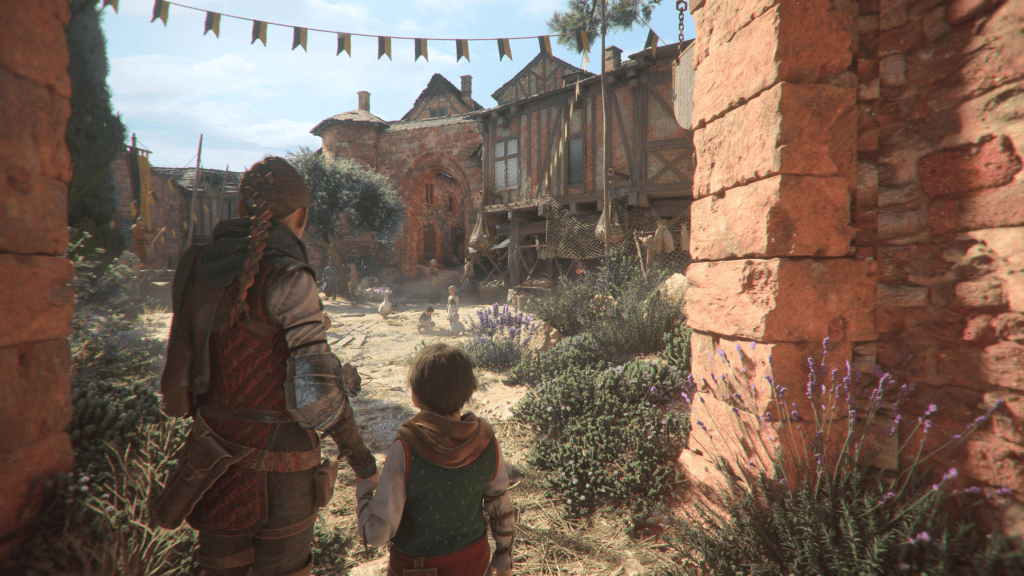
Figure 1: Amicia and Hugo, whose relationship remains the emotional heart of Requiem.
Image Source: https://www.reddit.com/r/APlagueTale/comments/1rk2hi5/a_plague_tale_requiem_is_one_of_the_best_looking/
The biggest improvement is undoubtedly Amicia. In the first game she often felt like someone simply reacting to tragedy, but here she’s carrying the emotional weight of everything she’s already endured. She’s frightened, angry, exhausted and, at times, deeply flawed, making her one of the most believable protagonists I’ve played in quite some time. Hugo benefits just as much, feeling less like someone you’re escorting and more like an equal part of the story, while the supporting cast and antagonists are leagues ahead of what Innocence offered. Rather than relying on cartoonishly evil villains or one-note companions, Requiem gives nearly everyone believable motivations, making the world feel considerably more grounded despite its increasingly fantastical premise.
Without venturing into spoiler territory, I also found the overall narrative considerably stronger than Innocence. The mystery unfolds at a much steadier pace, the stakes escalate naturally rather than suddenly, and the emotional beats consistently land because you’ve spent so much time with these characters. By the final chapters, it genuinely feels like everything has been building towards a single conclusion. The ending, in particular, is exceptional. It’s bold, emotional and, for me, one of the most memorable conclusions I’ve experienced in a game for quite some time. Even days after finishing it, I found myself thinking back to it.
Gameplay and Exploration: More Freedom, More Choice
If you’ve played Innocence, the foundations here will feel immediately familiar. You’ll still spend much of your time sneaking past guards, manipulating rat swarms and solving environmental puzzles using Amicia’s sling and alchemical ammunition. The difference is that Requiem rarely feels like it’s forcing you into one correct solution anymore. One of my biggest criticisms of the first game was how often stealth encounters boiled down to trial and error, memorising enemy movements until you discovered exactly what the developers wanted you to do. Here, encounters are larger, more open and far more flexible, encouraging experimentation instead of punishment.
Enemy variety has also seen a noticeable improvement. Innocence often felt like it was asking you to solve the same encounter repeatedly with only minor variations, whereas Requiem regularly introduces new enemy types that force you to rethink your approach. Whether it’s heavily armoured opponents, enemies with ranged weapons or situations where the rats themselves become a greater threat than the soldiers, encounters stay engaging far longer than they did in the original.
I also appreciated how the game continually introduces new mechanics throughout the campaign rather than showing all of its cards early on. Just when I thought I’d seen everything Requiem had to offer, another gameplay twist or environmental interaction would appear, helping the experience stay fresh across its roughly 14-hour runtime.
Your toolkit has expanded in meaningful ways too. The addition of knives, a crossbow and more varied alchemical options gives combat far more depth, while the simplified crafting system removes much of the resource micromanagement that occasionally slowed Innocence down.
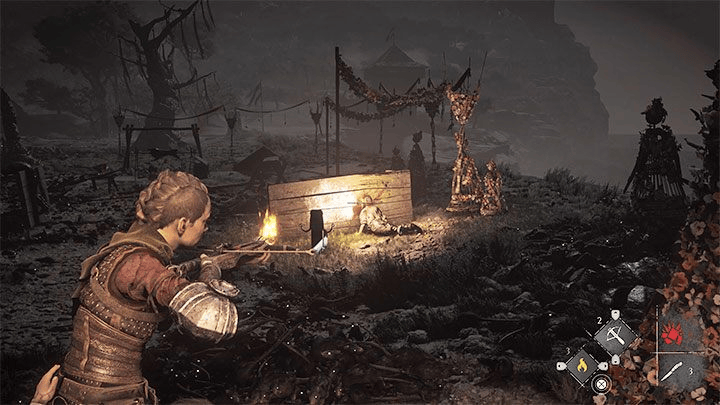
Figure 2: New weapons and alchemical tools can be used to manipulate rat swarms, creating new paths through otherwise deadly environments.
Image Source: https://www.thegamer.com/a-plague-tale-requiem-beginners-tips-tricks-guide/
One of my favourite additions is the playstyle-based skill progression system. Rather than manually selecting upgrades from a menu as you did in Innocence, Requiem allows Amicia’s abilities to develop naturally based on how you approach each encounter. Skills are divided into three categories: Prudence, which rewards stealth and avoiding conflict; Aggressive, which develops through direct combat and killing enemies; and Opportunism, which focuses on making use of alchemy, crafting and the environment. It’s a simple idea, but one that immediately makes progression feel far more personal.
Evolving each skill tree feels genuinely rewarding, as every unlock reinforces the playstyle you’ve naturally gravitated towards rather than one you’ve been told to choose. It also gives New Game+ and repeat playthroughs additional value, as experimenting with different approaches can unlock abilities you may have missed the first time around. More importantly, it perfectly complements one of Requiem‘s biggest improvements over Innocence: the freedom to tackle encounters in your own way, rather than feeling funnelled towards a single solution.
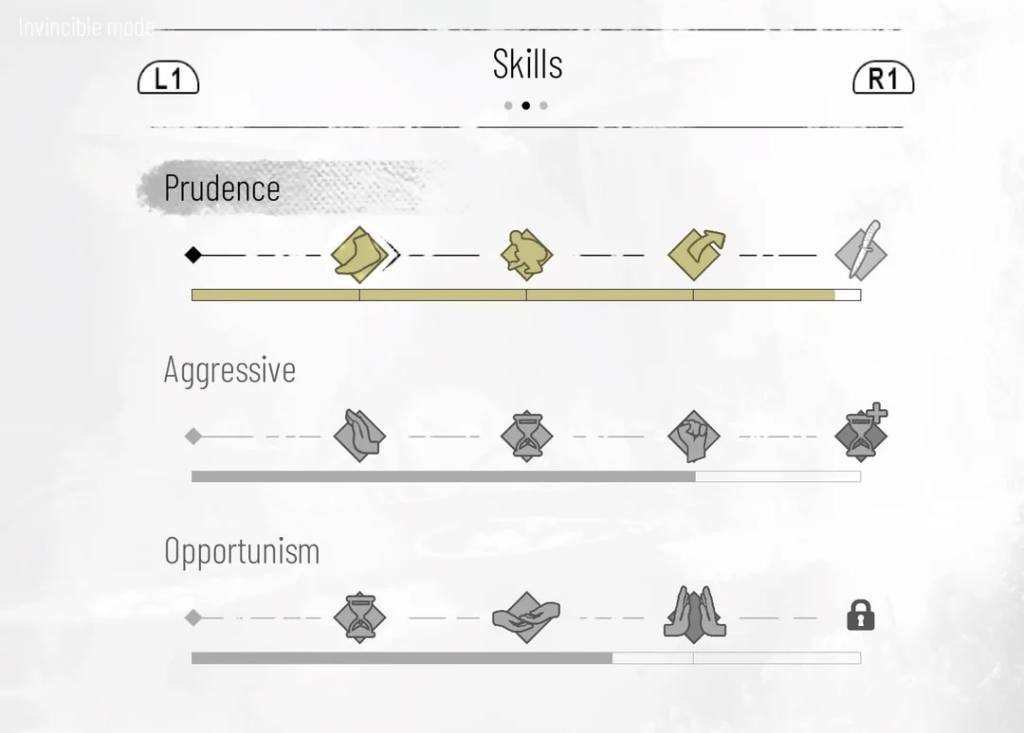
Figure 3: Requiem’s playstyle-based skill trees reward stealth (Prudence), combat (Aggressive) or alchemy (Opportunism) depending on how you play.
Image Source: https://www.reddit.com/r/Trophies/comments/1b7cad5/plague_tale_requiem_help_please/
Exploration has also seen a welcome improvement. In Innocence, venturing off the beaten path usually meant finding another handful of crafting materials. Here, there are hidden workbenches, secret chests, souvenirs, flowers, feathers and optional conversations that flesh out both the world and its characters. None of it’s revolutionary, but it makes exploring feel worthwhile rather than simply necessary. Combined with more open environments and better encounter design, the gameplay finally complements the story instead of occasionally holding it back.
Visuals and Sound: Bigger, Bolder and More Atmospheric
Whatever your thoughts on the gameplay, it’s impossible to ignore just how much Requiem pushes Asobo Studio technically. While Innocence was already an attractive game, this feels like a genuine leap forward rather than a modest visual upgrade. Environments are larger, richer in detail and noticeably more varied, taking you from bustling medieval towns to sweeping countryside, underground ruins and some genuinely breathtaking landscapes. Every location feels handcrafted, and I regularly found myself stopping simply to admire the scenery before moving on.
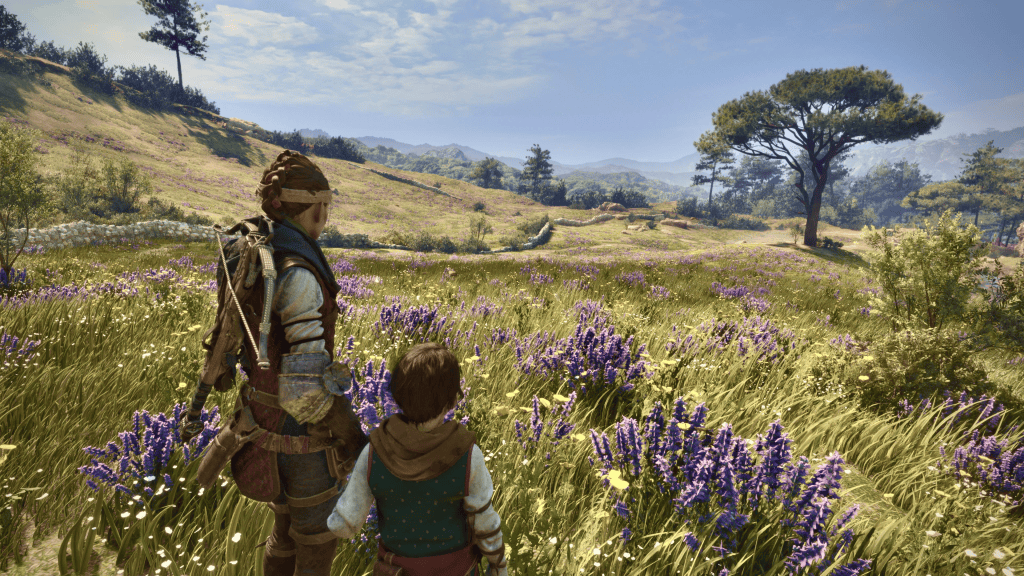
Figure 4: Requiem builds upon the original with larger, more detailed environments and striking visual variety.
Image Source: https://www.reddit.com/r/XboxSeriesX/comments/yg9qfr/a_plague_tale_requiem_has_some_nice_fidelity_what/
The rat swarms remain the game’s biggest technical showcase, but they’re far more than a visual gimmick now. Their sheer scale is staggering, flowing through environments almost like living water, transforming familiar locations into something genuinely unsettling. Combined with improved lighting, facial animation and environmental detail, they create some of the most memorable sequences in the game. The soundtrack deserves equal praise too. Olivier Derivière once again delivers a beautifully melancholic score that knows exactly when to step into the spotlight and when to quietly disappear, allowing emotional scenes to speak for themselves. Alongside excellent voice acting across the board, it’s a presentation that consistently elevates every major story beat.
Beyond simply looking impressive, the rats are used far more creatively than before. They’re no longer just obstacles to avoid, but an integral part of exploration, puzzle solving and combat encounters. As the game progresses, Asobo continually finds new ways to use them, ensuring they remain just as intimidating in the final hours as they are in the opening ones.
Accessibility: Learning From the Past
One of the biggest shortcomings of Innocence was its accessibility. There were no difficulty options, subtitle customisation was limited and controller remapping simply wasn’t available. Thankfully, Requiem addresses almost all of those concerns. Players can choose between Narrative, Normal and Hard difficulties from the outset, alongside an Invincible Mode for anyone wanting to experience the story without the pressure of combat. Controls are now fully remappable, subtitles can be customised extensively, and additional options such as Speech-to-Vibrations, adjustable aim assist and the ability to replace repeated button presses with a simple hold demonstrate a level of consideration that simply wasn’t present before.
None of these features fundamentally change the game, but together they make Requiem considerably easier to recommend to a wider audience. It’s one of the clearest examples of Asobo listening to feedback from the first game and making meaningful improvements rather than simply adding new content.
The Final Verdict: A Worthy Successor
So, is A Plague Tale: Requiem the sequel Innocence deserved?
Absolutely.
What impressed me most wasn’t any single mechanic or story twist, but just how consistently Asobo Studio builds upon the original. Nearly every criticism I had after finishing Innocence has been addressed in some form. The stealth no longer feels restrictive, exploration is genuinely rewarding, combat offers meaningful choice, accessibility has improved dramatically, and the story trusts both its characters and its audience far more than before. Rather than reinventing the series, Requiem simply refines almost everything that came before, and the result is a significantly stronger experience.
Few games leave me thinking about them once the credits roll, but Requiem is one of them. Its ending is powerful without feeling forced, emotionally devastating without becoming melodramatic, and it brings Amicia and Hugo’s journey to a conclusion that feels entirely earned. It’s the kind of finale that lingers in your mind long after you’ve put the controller down, and for me, that’s one of the highest compliments I can give any story-driven game.
When I finished Innocence, I appreciated what Asobo Studio had created, but I wasn’t convinced it would become one of my favourite narrative-driven series. Requiem completely changed that. It takes everything that made the original memorable and builds upon it with greater confidence, stronger writing and far more engaging gameplay, delivering an experience that stayed with me long after the credits rolled. If Resonance can maintain this level of quality, then I’ll be there on day one.
If you’re an Xbox Game Pass subscriber, Requiem is one of the easiest recommendations I can make while it’s available. That said, I’d still strongly encourage playing A Plague Tale: Innocence first. Requiem picks up directly after the original, and so much of its emotional impact comes from already knowing Amicia and Hugo, understanding everything they’ve endured and watching how their relationship evolves. You certainly could jump straight into the sequel, but I genuinely think you’d be doing yourself a disservice.
Rating: 4.5/5
Time Played: 19 Hours
Achievements: 35/35 (1000G/1000G)


 Kirbylife Game Research & Reviews
Leave a comment