Minor spoilers ahead for story beats and character details.
Introduction: So Mote It Be
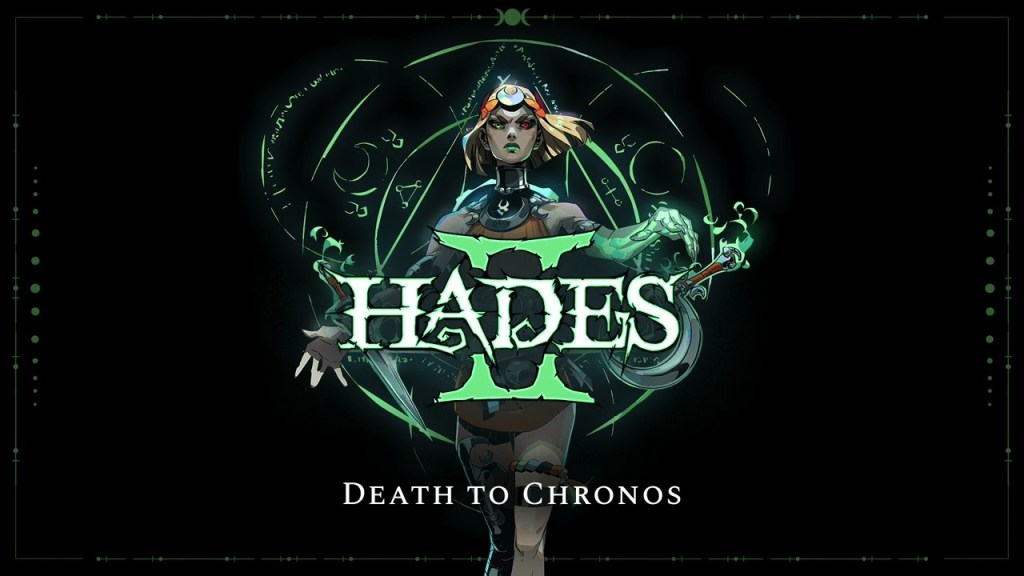
With Christopher Nolan’s The Odyssey bringing Greek mythology back into the spotlight this summer, there couldn’t have been a better excuse to return to the Underworld. Hades 2 is the sequel to Supergiant Games’ 2020 Game of the Year winner, one of the most celebrated roguelites ever made. If you’ve read my Hades review, you’ll know I was already sold on the formula. The original was a near-perfect loop of escaping the Underworld as Zagreus, son of Hades, dying repeatedly, getting stronger, and unravelling a surprisingly heartfelt family drama along the way. It set a benchmark that seemed almost impossible to clear. However, Supergiant decided to try anyway.
This time you play as Melinoë, daughter of Hades and younger sister to Zagreus, a trained witch on a mission to defeat Chronos, the Titan of Time, who has seized control of the House of Hades and taken most of the original cast hostage. The stakes are higher, the world is bigger, and the question hanging over the whole thing is whether lightning can strike twice. Sixty-five hours and every achievement later, I have an answer.
Story: Family Business, Titanically Scaled
The original Hades told an intimate story about a son trying to escape a difficult father, and it landed because the characters felt genuinely warm and human despite being Greek gods. Hades 2 takes that foundation and builds something larger on top of it. Chronos makes for a genuinely imposing antagonist, and the way the narrative unfolds across repeated runs is just as elegant as before, with new dialogue surfacing after every success or failure and the bigger picture slowly coming together the more you play. The story respects the player’s intelligence throughout, weaving Greek mythology with real care and accuracy rather than using it as window dressing.
Melinoë is a fundamentally different protagonist to Zagreus. Where he was brash, funny, and endlessly charming, she’s more serious, more guarded, and more complex. She won’t appeal to everyone in the same immediate way that Zagreus did, but if you spend enough time with her, then she earns her place completely. The supporting cast is the real revelation though. With around 45 characters compared to the original’s 30 or so, there’s a staggering amount of personality packed into the Crossroads and beyond. The writing is sharp, funny, and often genuinely moving, and the game tells you exactly which gifts characters want, which locations hold the items you’re after, and what every boon does. It never wastes your time.
The main place the story stumbles slightly is the climax. The original’s ending hit with a real emotional gut punch that’s hard to replicate. Hades 2’s resolution is satisfying but doesn’t quite land the same way, and the true ending requires significant additional investment to reach. If you’re going for full completion, it’s worth it. If you’re not, you may feel like the story trails off rather than lands.
One recurring frustration, however, is the way narrative progression can sometimes feel overly drawn out. Even with the dual-route structure and the sheer volume of content, certain character dialogue chains and prophecy-related story beats in Hades II take a long time to advance. This can make some conversations feel repetitive across runs, especially when you’re actively trying to push specific character arcs or unlock particular prophecy outcomes. While the game’s reactive writing is still impressive on a technical level, there are moments where the repetition starts to outweigh the novelty, and progression can feel slower than it needs to be for players focused on narrative completion.
Gameplay: Killing Time, Literally
Melinoë plays nothing like Zagreus, and that’s entirely the point. She’s a witch, and Supergiant have built her entire kit around that identity. Where Zagreus was a brawler who dashed through enemies and hit things hard, Melinoë uses Omega attacks that charge up and consume mana, a sprint that reshapes how you move through rooms, and a Hex ability granted by the moon goddess Selene that functions as a powerful charged spell on top of everything else. The mana system adds a genuine resource management layer that wasn’t present in the original, and mastering when to spend it and when to hold back is central to getting good at the game.
The Arcana Card system replaces the Mirror of Night for permanent upgrades, letting you slot cards into a limited point grid before each run to shape your passive build. It’s deeper and more strategic than what came before, and combined with the expanded boon system (more Olympians, more combinations, more synergies to discover) the build variety is enormous. There are six weapons to master, from the default Witch’s Staff to the Sister Blades, Moonstone Axe, Argent Skull, and beyond, each with four aspects (including a hidden aspect per weapon that requires specific steps to unlock), giving you 24 distinct playstyle configurations to work through. I went in thinking I’d find one weapon I liked and stick with it. Sixty-five hours later I’d tried everything and had opinions about all of it.
The dual route system is one of the biggest structural improvements over the original. Melinoë can take either the Underworld route (a fresh set of regions distinct from the original game’s) or the Surface route, fighting her way up toward Olympus to confront Chronos’ forces from above. If one route starts to feel stale, you swap to the other. It’s an elegant solution to the repetition that every roguelite eventually runs into, and it dramatically extends the life of the game without feeling padded. Just when you think you’ve seen everything, the game finds another way to surprise you.
Boss Design: Titans of the Trade
The boss encounters in Hades 2 are bigger and more visually spectacular than anything in the original, and for the most part they deliver. Each one has a distinct personality and attack set, and learning their patterns across repeated attempts is exactly the kind of satisfying mastery loop the genre is built on. The Chronos fight in particular is a genuine highlight, demanding everything you’ve learned across the run and rewarding clean play in a way that feels completely earned.
The one criticism worth making is that boss design occasionally leans too heavily on large telegraphed area of effect attacks and minion spawns, which can make some encounters feel more similar to each other than they should. The original’s bosses had more environmental variety and distinctive gimmicks, whereas Hades 2’s are more polished. It’s a minor gripe in an otherwise excellent slate of encounters, but it’s there.
Presentation: Painted by the Gods
Hades 2 is stunning. Supergiant’s art direction combines elegant, flowing design inspired by classical Greek mythology with richly detailed, highly ornate visuals. It feels both fresh and deeply intentional, with a strong sense of mythic atmosphere and visual density throughout. Every environment, every character portrait, every ability effect is designed with obvious care, and the game runs flawlessly while looking this good, which is its own kind of achievement. The darker, more gothic tone compared to the warmer palette of the original suits Melinoë’s story perfectly, even if it lacks some of the original’s immediate visual warmth.
The voice acting is extraordinary across the board. Every character is fully voiced, every repeated interaction has variation, and the performances never feel phoned in regardless of how many times you’ve heard a particular line. Melinoë’s voice work in particular carries enormous emotional weight across what is a very long game, and the sheer volume of recorded dialogue is genuinely staggering for a studio of Supergiant’s size.
Soundtrack: Darren Korb Does It Again
Darren Korb returns to score Hades 2, and the result is predictably excellent. The soundtrack blends orchestral myth with Korb’s signature genre-fluid style, creating something that feels appropriately epic without losing the intimacy that made the original’s music so memorable. It hits harder during boss encounters, pulls back during quieter narrative moments, and generally does everything a great game score should do.
It’s a personal call whether it surpasses the original’s soundtrack, which had an almost impossibly distinct identity. Hades 2’s music is arguably more ambitious and technically impressive. Whether it’s as instantly iconic is a harder question, but it serves the game beautifully throughout.
Accessibility: The Gods Are on Your Side
Hades 2 handles accessibility with the same respect for the player that defines everything else Supergiant do. God Mode returns and has been significantly improved: rather than a fixed damage reduction that scaled automatically, you can now manually adjust the damage reduction percentage once it unlocks fully, giving you precise control over the difficulty rather than a binary on/off switch. It’s a small change that makes a meaningful difference for players who want challenge with accommodation rather than only one of challenge or accommodation.
Full controller remapping is available, which makes the game far more approachable for players with motor impairments. There are also colour blind modes, aim assist, auto-fire, and auto-sprint options. The game also does something quietly brilliant for accessibility: it tells you everything. What gifts characters want, what resources drop where, what every boon and upgrade does in plain language. It never makes you feel stupid for not knowing something, and it never wastes your time searching for information that should just be on screen.
Verdict: So, Is Hades 2 the Ultimate Roguelite Sequel?
Hades 2 is bigger, faster, more challenging, and more varied than its predecessor in almost every way that counts. Melinoë is a brilliant protagonist once she clicks, the dual route system keeps the game fresh across dozens of hours, the writing is sharp and generous, and the build variety is enormous. I went in planning to beat the main story and stop there. I came out with every achievement and a genuine reluctance to put it down.
The story’s climax doesn’t hit quite as hard as the original’s, and the sheer commitment the game demands is worth knowing about upfront. But these are small things measured against an enormous achievement. Supergiant set the bar with Hades. With Hades 2, they’ve cleared it.
Hades 2 is on Xbox Game Pass. If you’re a subscriber and haven’t tried it yet, there is genuinely no excuse. This is exactly the kind of game Game Pass exists for, and the only thing you’re risking is losing sixty-five hours of your life to one of the best roguelites ever made. The Underworld is waiting. So mote it be.
So mote it be.
Rating: 4.5/5
Playtime: 65 hours
Achievements: 49/49 (1000/1000G)


Leave a comment