
Minor Spoilers Ahead
Intro: A Little Bird, a Big Well and a Very Bad Queen
I had never played a game by Kyle Thompson, and Well Dweller wasn’t on my radar until Game Pass told me it was landing in a few days. I’m very glad it did. Developed by Kyle Thompson and published by Top Hat Studios, it’s the latest game from the creator of Sheepo, Islets and Crypt Custodian. His brother Eric composed the music, and it’s genuinely remarkable how much game this tiny team has produced.
Metroidvania fans will spot the Hollow Knight DNA straight away, (a big interconnected world, abilities that open blocked paths and plenty of bosses). But Well Dweller is completely its own thing, with its own identity, ideas and charm, and it tackles a question the genre rarely asks: does a great metroidvania have to be punishing? Thompson’s answer is a confident no, and he backs it up with a game that is a joy from start to finish.
Story: Fairy Tales Were Never This Grim
You play as Glimmer, a small bird who has to grow up fast to save his siblings and mother from the wicked queen who has taken them. It’s a personal quest, but the stakes go well beyond one family, because the queen’s hunt threatens to wipe out Glimmer’s entire race. That gives the story real urgency, and the bond between family and friends is what keeps it warm in such a dark setting. The kingdom is full of animals who have suffered under the queen’s rule, and each has their own personality, story and quest that you can accompany them on. They make the world feel lived in and full of character, and some of them genuinely made me laugh.
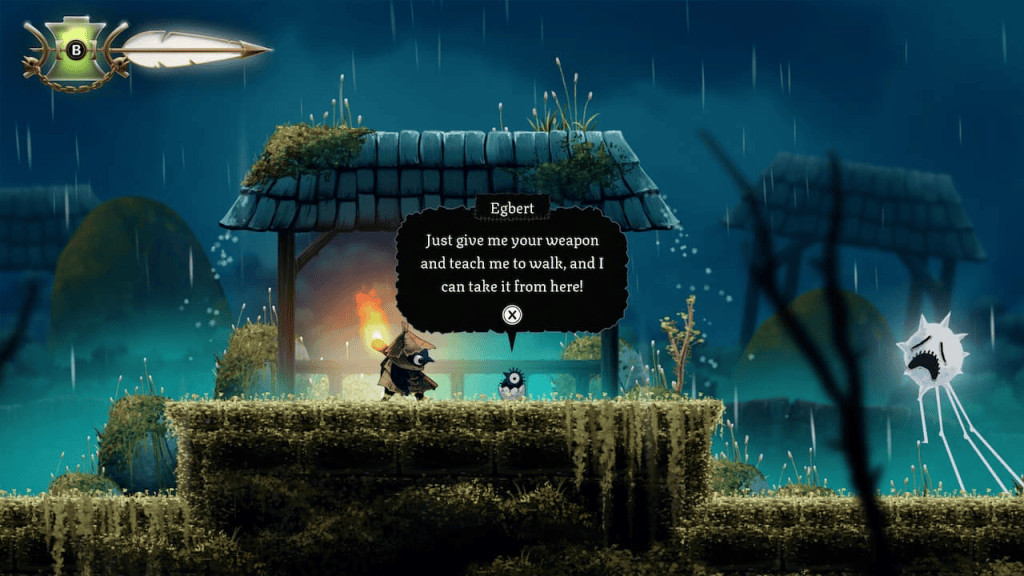
Figure 1: Glimmer’s family is full of character, and Egbert’s dialogue is as funny as it is charming.
Image Source: https://www.gamespew.com/2026/10/well-dweller-review/
The writing is a real highlight. It’s charming, heartfelt and properly funny, with a confident voice that carries you through the whole adventure. It draws on classic myths and fables and settles into a dark fairy tale with a wholesome core that I found really special. There are also collectible story pages hidden around the world, each one a creepy little tale that adds extra flavour to the kingdom’s lore.
Visuals: Where Cosy Meets Creepy
The art style is the first thing that grabs you, and it might be the game’s greatest strength. Every scene looks like a painterly page from a fairy-tale storybook, and the contrast at its heart is what makes it so special. Some characters are the absolute cutest little animals you’ve ever seen, while others are grotesque, horror-adjacent creatures that look like they jumped out of a nightmare.
It’s very Tim Burton, with a spooky, moody warmth that makes the whole kingdom a pleasure to wander through. The richly detailed environments give every area its own personality, the hand-drawn animation is lovely, and the boss designs deserve a special mention for being wonderfully twisted and full of character. Even the collectible story pages share the look, with woodcut-style illustrations that suit the fairy-tale world perfectly. It makes the whole thing even more impressive to know that Thompson drew it all himself.
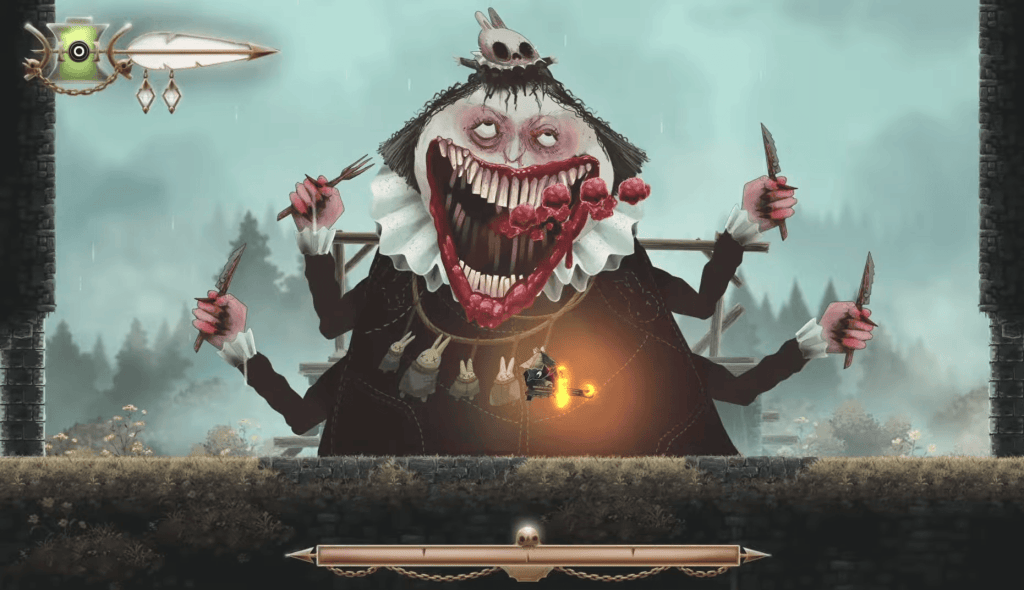
Figure 2: Hand-drawn horror at its best: the boss designs are some of the game’s most memorable art.
Image Source: https://games.gg/well-dweller/guides/well-dweller-how-to-beat-lida-the-terrible/?srsltid=AU7gw4Wv3qgow62KoqTJh3px6auBMv42RPO6XCAxFhltfONNV0PK8C8w
Gameplay: Light the Match, Burn Down the Queendom
Glimmer’s matchstick is one of the game’s most inventive ideas, and it does far more than hit things. It lights up dark areas, acts as your health indicator (the flame burns bright when you’re healthy and dims to an ember as you take damage), and works as a traversal tool. You can launch it from a slingshot and jump off it for extra height, and later plant it in walls to create platforms and climb. Healing ties into the same system. You relight the flame using oil vials, and relighting at the right moment gives you a short boost to your attack, which gives fights a satisfying rhythm.
On top of that you have trinkets, which you collect and mix and match to customise how you play, and a steady stream of movement abilities that open up new parts of the map. A wall that looks like set dressing often turns out to be a route once you combine two tools, and returning to old areas with a new ability always feels rewarding. You also get a throwable flaming vessel that you can bat into enemies with your melee attack, which keeps combat varied and fun to experiment with. Combat is fluid and sharp, the controls are tight, and the boss fights are creative and memorable.
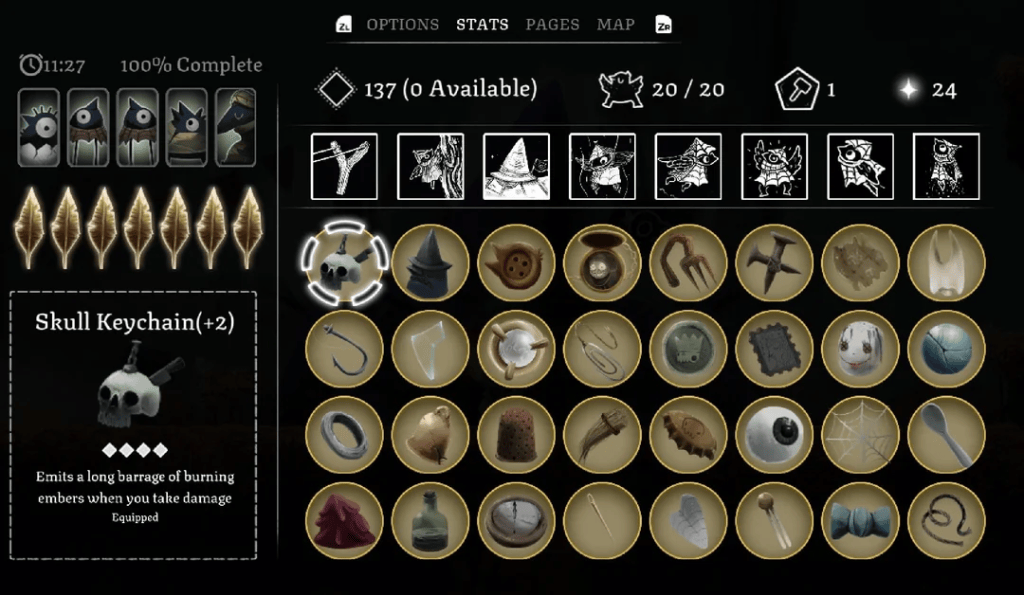
Figure 3: Trinkets let you mix and match to build your own playstyle, and collecting all of them is a satisfying part of the 100% run.
Image Source: https://www.reddit.com/r/metroidvania/comments/1wvb4cg/heavy_spoiler_well_dweller_is_there_any_place_i/
The structure around all this is clean and easy to read. Many of the puzzle rooms follow the same rhythm: a platforming challenge, then a shortcut unlocking at the end, which makes the world feel tidy and satisfying to navigate. It repeats often enough that I found myself wishing for a few more surprises, and a handful of areas I went out of my way to explore turned out to be loops rather than rewards. I’d love to see Thompson push this further next time with more secrets and more room for sequence breaking, because the traversal tools are strong enough to support it. The same goes for the shop, which is a little light on things worth buying, so there’s room to make that currency feel more exciting (especially as you don’t lose currency on death).
Difficulty: Designed for Flow
Let me be clear about this: Well Dweller is a noticeably gentler game than Hollow Knight, even on Hard, and that is a deliberate and very well executed choice. Thompson has talked about aiming for a flow state, and it shows. We live in an age where every metroidvania seems to want to be Dark Souls, and I love those games, but I’ve been longing for an experience that cares about more than excruciatingly difficult boss fights. There are still challenging fights and platforming sections to enjoy, but you’re never asked to spend hours learning attack patterns and dying over and over. Many bosses fell on my first try, and I never felt bored or unaccomplished, because the fights are so well designed that beating them always feels good.
The game removes friction in a lot of smart ways. There’s no contact damage. When you die you don’t drop your “souls” or currency, so there’s never any stress about fighting your way back to claim it, there are no long boss runbacks either. Fast travel is just as generous, you can unlock it early and teleport to any tent you’ve found from anywhere on the map, so backtracking with a new ability never turns into a chore. This changes how you play, in a good way. Because dying costs so little, I felt free to explore bold paths, and if one turned out to be too hard, I could simply go somewhere else and come back later.
Sound: A Soundtrack That Glows in the Dark
Eric Thompson’s soundtrack has a spacey, synth-heavy sound that sits beautifully against the hand-drawn visuals. The music is eerie and warm in equal measure, which is exactly what the cosy-spooky art calls for, and it made long exploration sessions a pleasure. It’s a huge score too, with 28 tracks and over an hour of original music, all composed and produced by Eric himself.
What I love most is that each area has its own theme. Places like the Bog, the Drains, Gravenvalley and the Docks all get their own track, so the music works hand in hand with the art to give every region a distinct identity and atmosphere. Whenever I stepped into a new area, the music set the mood before I’d taken in the scenery. Eric has scored every one of Kyle’s games since Sheepo, and you can hear that creative partnership in how naturally the music and visuals fit, which makes the whole kingdom feel cohesive and lived in.
Accessibility: A Seat at the Campfire
This is where Well Dweller truly shines and where Thompson deserves the most credit. There are three difficulty levels (Easy, Normal and Hard), and you can change them mid-game, which is a handy touch. The real depth is in the assist options, which let you tailor the experience in a much more personal way. You can adjust the damage you deal and take, give yourself extra time on the time trials, and switch healing to a simple hold-to-heal button instead of the timing mini-game. That last one makes tense boss fights much more manageable, whatever difficulty you’re on.
The settings menu goes well beyond difficulty. There’s a photosensitive mode and toggles for screen shake and text effects, so players who find motion or flashing effects uncomfortable can switch them off. You can adjust the camera zoom and set vibration strength as a percentage, and the controls are fully remappable. The audio menu has separate volume toggles and a switch for character voices, and there’s even a speedrun mode for anyone who wants to race through the kingdom. It’s rare to see this much choice in a game from such a small team, and it shows a developer who wants everyone to be able to play.
Guidance is just as flexible. There’s a minimap you can switch on in the Gameplay menu, so it’s easy to find what you need without constantly opening the full map. My favourite feature, though, is the collectible map system, and I wish far more games did this. The game opens up early and lets you explore freely without much hand-holding. At the map station in your tent, you can spend currency on one of two markers. One shows you where your next main objective is, and the other reveals any collectibles you’ve missed in rooms you’ve already visited. If you’re truly lost and need a nudge, there’s a marker for that. If you want to work everything out yourself, you can ignore it completely. That is exactly how guidance should work: there if you want it, invisible if you don’t.
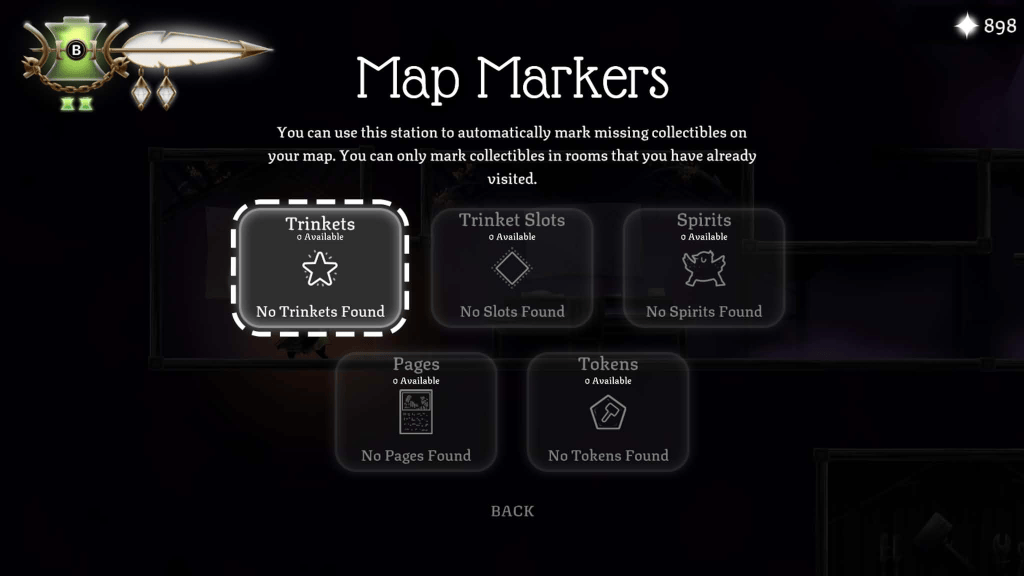
Figure 4: The map station lets you mark any collectibles you’ve missed, from trinkets to story pages, but only in rooms you’ve already visited.
The achievements are thoughtfully designed too. They’re sensible and mostly tied to story progression and completion, so there’s no grinding involved, and I earned all 1000G in 12 hours. Sessions work as well in an hour as in a long weekend, which makes the game welcoming to newcomers, busy players and anyone who finds punishing games stressful. If you’re new to the genre, this is one of the friendliest places to start.
Conclusion: Yes, One Developer Can
Yes, absolutely. Well Dweller is a charming, creative and beautifully presented metroidvania, and it’s remarkable that Kyle Thompson crafted the art, code and design himself, with his brother Eric adding a superb soundtrack. The matchstick traversal is unique and inventive, the world is gorgeous, and the writing has real warmth and humour. It’s a game that proves a small team can stand alongside the genre’s giants.
What impresses me most is how kind and brilliant it manages to be at the same time. We need more games like this, ones that let newcomers, busy players and anyone who wants a gentler way in join the party without taking anything away from people who love a brutal boss fight. The collectible map and optional hints are a feature the whole genre should adopt, and the huge set of assist options shows a developer who wants everyone to be able to play. Kyle Thompson has made something special here, and I can’t wait to see what he does next. It’s free on Game Pass, so if you have it, try it out.
Rating: 4/5
Time played: 12 hours
Achievements: 41/41 (1000/1000G)



Leave a Reply