
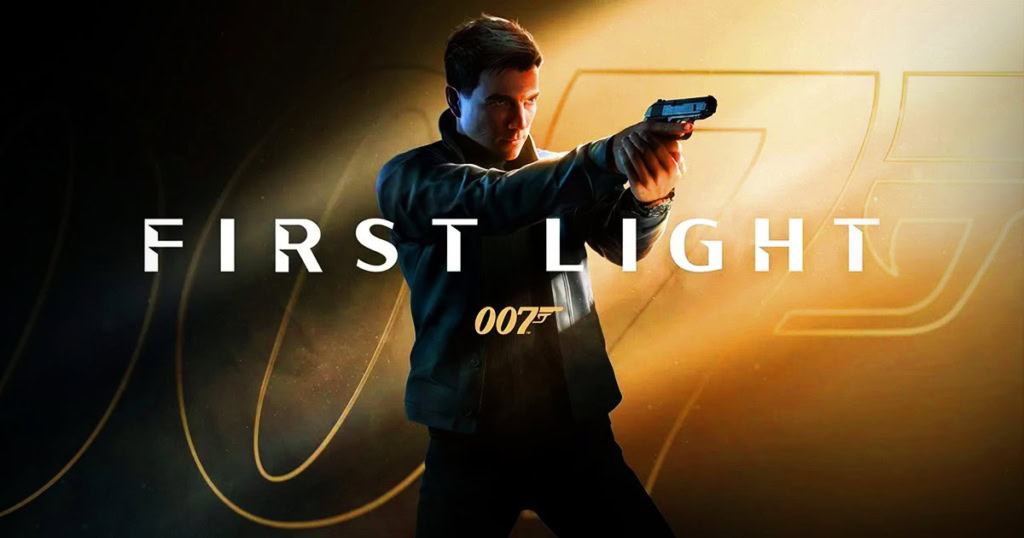
Minor Spoilers
Introduction: A Newcomer’s First Mission
Full disclosure: I have never seen a single James Bond film. I know Q makes gadgets, I know the theme tune, and I could probably name a few iconic villains through cultural osmosis, but that’s about it. What I do have is a genuine love for IO Interactive’s Hitman World of Assassination trilogy, one of the finest stealth sandboxes ever built, defined by open levels, disguises, and an almost absurd amount of player agency. So the moment First Light was announced, my brain filed it under one heading: Hitman, but Bond.
That expectation shaped nearly everything about how I experienced this game. This isn’t a review from a lifelong 007 obsessive, but it isn’t from a stealth-game novice either. That middle ground gives me a useful lens on where First Light soars and where it plays things frustratingly safe.
The Story So Far: Becoming 007
Without spoiling anything, First Light is an origin story, following a young, unproven Bond as he works his way from raw MI6 recruit towards the agent we all eventually recognise, against a plot that touches on some genuinely contemporary anxieties rather than leaning purely on Cold War tropes. As someone with zero prior attachment to the character, I never once felt lost or like I was missing context, which for a franchise with this much baggage is a real achievement in itself.
Espionage vs Action: A Game of Two Halves
First Light splits its missions into two distinct halves: espionage, all exploring, eavesdropping, and evidence-gathering with your weapon holstered, and full 007 action, guns, gadgets and chaos. It’s a great structure on paper, but the espionage side often feels like an illusion of choice. At one point you’re told to avoid drawing attention crossing a room of guards watching TV. Your relevant gadgets are locked out, and despite plenty of open floor space, you physically cannot walk around the sofa, the game forces you between the guards and the screen to trigger a scripted fight. It’s a corridor wearing a sandbox costume.
I understand why, IO wanted a structured story, and full Hitman-style freedom would work against that. But it creates a strange whiplash where you’re constantly reminded you’re a trainee on rails, not yet a 00 agent trusted with his own discretion. Maybe that’s deliberate groundwork for a sequel with more freedom. If so, I’m on board. For now though, it’s odd being shown an open room and told exactly which three feet of it you’re allowed to use.
Gameplay, Level Design and Getting Behind the Wheel
The Malta training sequences are where the game makes its strongest impression, folding mechanical teaching directly into playable, cinematic set pieces rather than a lifeless tutorial. Bond feels excellent to control from the start, smooth platforming, satisfying climbing and vaulting, and melee combat with real weight behind every hit.
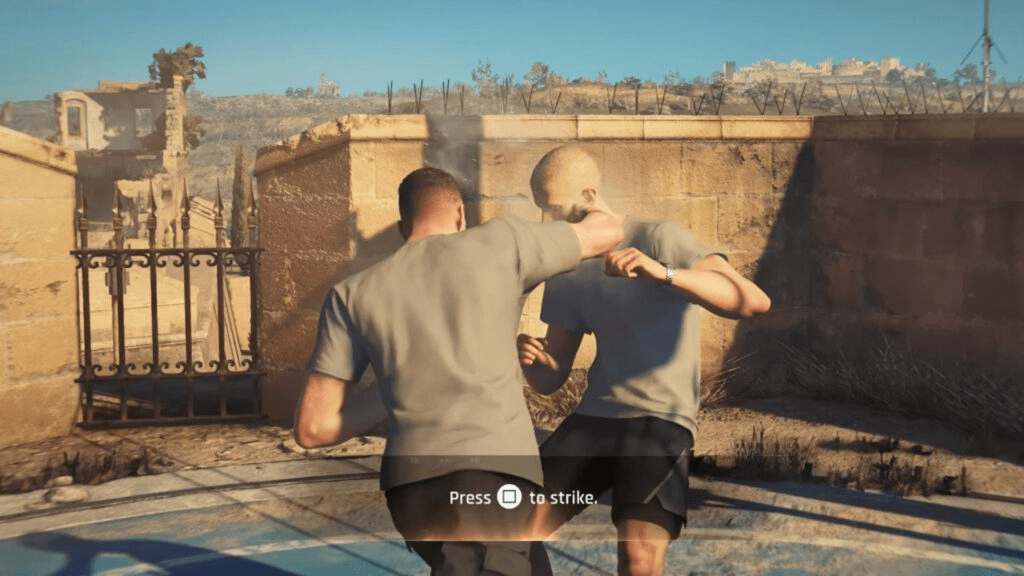
Figure 1: Bond drills hand-to-hand combat during the Malta training sequence
Image Source: https://questduo.com/007-first-light/chapter-1-the-needles-eye-walkthrough/
The stealth AI is where things fall apart. Guards don’t patrol so much as just exist, barely turning their heads, the whole layer feels balanced around enemies being fundamentally passive. It looks like Hitman but lacks the alert, reactive guard behaviour that made Hitman’s cat-and-mouse so tense. However combat AI is the opposite, flanking, destroying cover, throwing explosives, although it can tip into comedy; as more than once an enemy stood still shouting “HE’S RELOADING, LET’S GET HIM” while doing nothing about it.
The best moments are the big set pieces, the early plane sequence especially, and the Slovakia and Aleph chapters are the most confidently designed stretches in the game. I wish there were more of them, because the back half noticeably dips and leans on repetition rather than escalation.
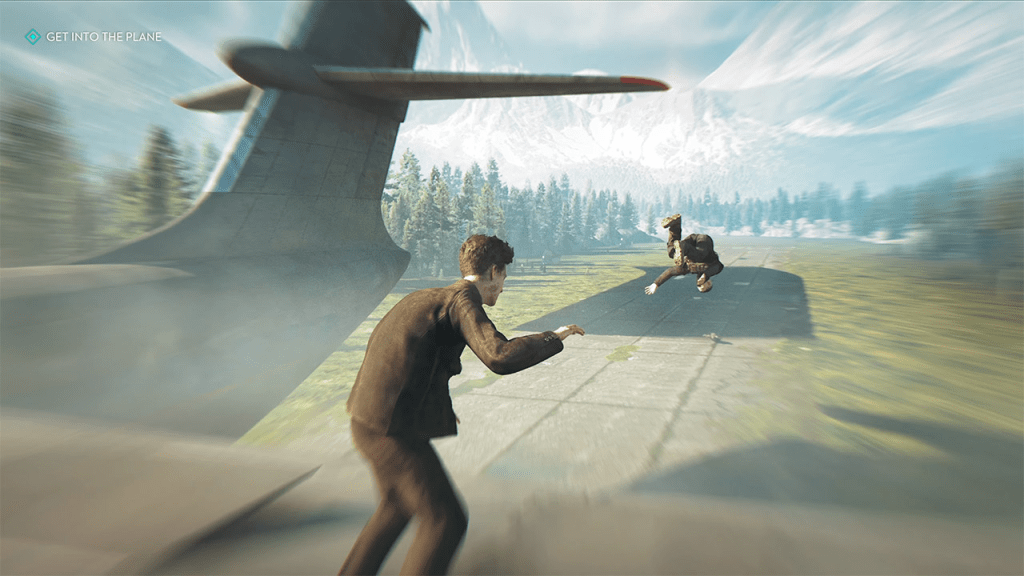
Figure 2: One of the campaign’s best cinematic set pieces sees Bond racing across an active runway.
Image Source: https://www.techeblog.com/007-first-light-gameplay-reveal-bond-screenshots/
One genuine, unexpected highlight deserves its own mention here: the driving. IO have clearly poured real engine work into the vehicle sections, and they’re some of the most purely fun moments in the campaign. I wanted more of them, and they leave me curious what a driving-focused Bond mission slate could look like in a sequel.
Combat, Gadgets and the Bluff Mechanic
Bond’s two real weapons are charm and gadgets, his gun is a distant third. Most encounters restrict lethal force until enemies escalate first, a design choice reminiscent of Splinter Cell’s “Fifth Freedom.” Combined with early training on disabling shots (hands to disarm, legs to disable), I expected a game that rewarded restraint. Instead the story mode never grades you on it, so a promising idea ends up as flavour text rather than a system, allowing you to fail stealth and go full combat at every opportunity.
The bluff mechanic is a genuine highlight, talking your way past guards produces an impressive amount of unique dialogue. The catch is the energy meter recharges on every stealth takedown, so you’ll rarely run dry, removing a resource-management layer that could have made it feel more tactical.
The gadgets follow a similar pattern: fun, but unbalanced. The Q-laser and emetic phone do so much heavy lifting that most other tools feel redundant by comparison. A proper “00 Agent” difficulty that limits gadget choice would fix this instantly in a sequel.
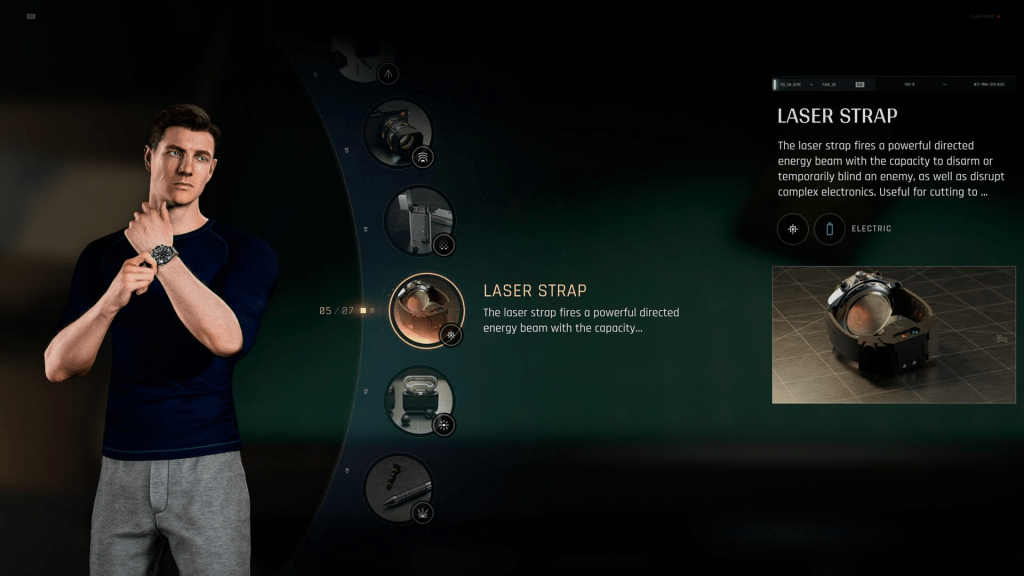
Figure 3: The Laser Strap sits alongside Bond’s other Q-Branch gadgets
Image Source: https://store.epicgames.com/news/007-first-light-7-tips-to-help-you-master-the-art-of-espionage
Combat truly shines up close. The Close Quarters Combat melee is the best mechanical system in the game, weighty and reactive enough that you’ll want to engage even with a full clip. Running dry and launching your weapon directly at someone’s face before closing the distance is one of the most satisfying loops in the campaign. The only blemish is the camera, which gets wonky when CQC breaks out in tight corners.
Story and Characters: Style Over Substance
The production value is consistently excellent, voice performances carry real dynamic range depending on scene tension, a small touch rarely done this well in games, and the cutscenes have proper cinematic weight throughout.
The writing is shakier. Without spoiling anything, there’s a stretch where Bond makes a genuinely reckless call driven by revenge despite already having what he needs to close things out cleanly. I understand the intent, a younger, greener Bond who hasn’t learned restraint, but it feels like a step backwards given what he’s already been through.
The supporting cast is mixed. M barely registers, which is odd for an origin story. Cressida is set up with real care early on (alongside a character named Monroe) only to be sidelined shortly after, which stings. The main villain fares worse still and simply doesn’t leave a mark, unusual for a franchise that’s supposed to live or die by its antagonists. The clear bright spot is Bond’s dynamic with his handler, Greenway, easily the most engaging relationship in the story.
TacSim: Bond’s Answer to Contracts Mode
Once you’ve cleared a mission, First Light unlocks it inside TacSim (Tactical Simulation), a standalone hub of replayable challenges and escalating tiers like The Training, The Test and The Showdown. Complete them and you earn Intel, a currency for unlocking outfits, gadgets and upgrades to bring back into future runs.
Structurally, it’s clearly IO reaching for their own Contracts mode. In practice, it’s a decent Hitman-shaped substitute rather than a genuine replacement. The challenges are fun in short bursts, headshot runs, gadget-restricted clears, stealth-only escalations, but they’re built by the developers rather than the community, so there’s none of the endless, player-generated chaos that made Contracts mode so replayable for years after launch. A good foundation IO have confirmed they’ll keep expanding, just not the full meal yet.
Sound and Music: For Your Ears Only
The title theme, also called “First Light,” is performed by Lana Del Rey and produced alongside legendary Bond composer David Arnold, marking his first return to the franchise after five previous 007 film scores including Casino Royale. It’s a genuinely strong track, sultry and restrained before swelling into dramatic strings and horns, closing with a knowing nod to the classic Bond motif. It sets the tone beautifully without leaning too hard on nostalgia.
The rest of the score, composed separately by The Flight, keeps that energy going, genuinely mission-aware, low-key during espionage and swelling into full orchestral hits during combat. It does a lot of heavy lifting for the game’s atmosphere.
The dialogue undoes a lot of that good work, and it’s my single biggest issue with the game. There’s near-constant chatter over nearly every stealth sequence, undercutting the tension of sneaking through a room of armed guards. At one point Bond and Greenway banter back and forth for a solid twenty minutes through a supposedly high-stakes office building. It’s charming in isolation, but stacked across a whole campaign it repeatedly kills the atmosphere.
Visually the game won’t redefine what’s possible, but it’s consistently handsome, with detailed, lived-in environments, and performance held up throughout without a single stutter worth mentioning.
Accessibility: A Solid Foundation With Some Odd Gaps
First Light ships with a genuinely comprehensive accessibility menu, full button remapping, hold-to-toggle options, a robust subtitle suite, camera and screen shake reduction, and photosensitivity settings including a dark flashbang alternative.
Execution is where it falls short. Button prompts are hard to spot in low-contrast environments, and QTEs don’t feel meaningfully softened even with auto-complete on, some sequences still demands precise, rapid input regardless. Not a dealbreaker, but a reminder that ticking the boxes and nailing the experience aren’t always the same thing.
The Final Verdict: World Is Not Enough, But It’s a Start
First Light is a good game that’s about two hours longer than it needs to be, padding that shows most in a back half repeating its own homework rather than escalating. What IO have built here is genuinely their own thing: a confident, cinematic action-adventure with brilliant close quarters combat, a genuinely funny bluff mechanic, and gorgeous driving, wrapped around a story that doesn’t always trust the player the way Hitman does.
Where Hitman handed you an entire level and said “figure it out,” First Light hands you a corridor and calls it a mission. That’s the trade-off at the heart of this game, and it’s the right one for telling a focused origin story, even if it costs the series some of its old magic along the way. TacSim proves IO haven’t forgotten what made their own formula so special, it’s just not fully grown yet.
So, Hitman with a licence to kill, or something else entirely? Honestly, a bit of both. The DNA is unmistakably there, but IO have deliberately traded total freedom for something tighter and more cinematic, and the result is a genuinely different kind of game, one confident enough to stand on its own. Not better than Hitman. Not trying to be. If this is the opening chapter of a proper trilogy, there’s a genuinely great Bond series taking shape.
Not a martini shaken to perfection just yet, but a very promising first pour.
Rating: 3.5/5
Time Played: 14h30m
Achievements: 37/37 (1000/1000G)



Leave a comment