*Minor spoilers ahead for story beats, character details, and DLC content.*
Introduction: Thirteen Years in the Dark Place
Alan Wake 2 is the long-awaited sequel from Remedy Entertainment, the Finnish studio behind a string of some of the most narratively ambitious games of the last two decades. If you know Remedy, you know their thing: cinematic storytelling, reality-bending meta narratives, live-action sequences, and a shared universe (the so-called Remedyverse) that connects Alan Wake, Control, and now this. The original Alan Wake came out in 2010, and Remedy wanted to make a sequel almost immediately. But Microsoft had other ideas, Quantum Break happened, the rights were tied up, and then years passed. It wasn’t until 2019 that Remedy reacquired the Alan Wake IP, and even then it took another four years to get here.
I’ve been along for the ride. I played Alan Wake (2010), American Nightmare, and Control, so I came into this with context, investment, and a genuine appreciation for what Remedy does when they’re firing on all cylinders. The original Alan Wake is a flawed gem, dull combat, repetitive level design, but a story and atmosphere so compelling it carries the whole thing on its back.
So after thirteen years, does Alan Wake 2 deliver? Or does it disappear into the Dark Place along with everything else?
Story: Come Back to the Light
Alan Wake 2 picks up thirteen years after the original, with Alan Wake still trapped in the Dark Place, a nightmarish parallel dimension, desperately trying to write himself out of it. Alongside him is Saga Anderson, a brilliant FBI agent investigating a series of ritualistic murders in Bright Falls, who quickly finds herself pulled into the same supernatural nightmare. You play as both characters, switching between them at will, and the two storylines interweave in ways that are both clever and surprising.
Saga’s sections are the standout. The small-town supernatural atmosphere is exactly what the original promised, and her story delivers it in spades. There’s a creeping dread to Bright Falls that never lets up, and her Mind Place (a literal mental investigation board where she pieces together clues, profiles suspects, and advances the narrative) is one of the best storytelling mechanics in recent memory. It keeps track of everything, makes the mystery feel tangible, and gives you a genuine sense of detective work rather than just following a waypoint.
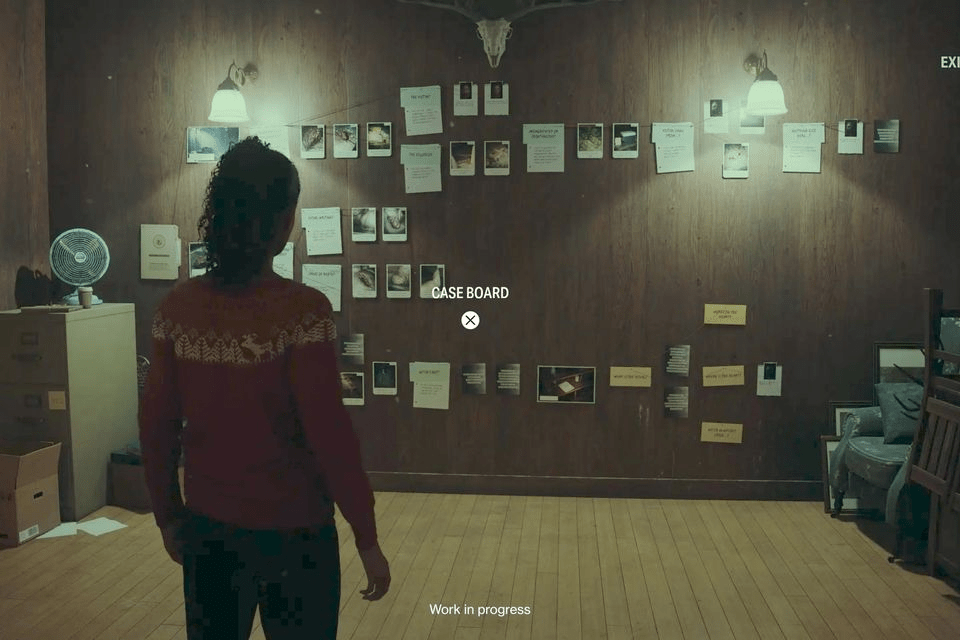
Figure 1: Saga’s case board in Alan Wake 2, used to organise clues and progress the investigation.
Image Source: https://www.independent.ie/entertainment/games/alan-wake-2-review-write-and-wrong-married-in-ambitious-sequel/a261621168.html
Alan’s sections in the Dark Place are harder to love, but still worthwhile. Remedy’s love of meta-narrative is in full force here, and Alan’s Writer’s Room (where he manipulates story elements to change the environment around him) is a brilliant concept. But some of his sections get a little too self-indulgent, a little too caught up in their own cleverness, and occasionally veer into territory that’s more confusing than compelling. The “We Sing” chapter, however, is one of the most memorable sequences in any game in years. You’ll know it when you get there.
The way both stories eventually converge is genuinely great. Remedy makes bold narrative choices that don’t all land, but when they do, it’s executed amazingly. This is a sequel that earns its thirteen year wait in terms of ambition and storytelling, even if the execution is occasionally uneven.
Gameplay: Not All Who Wander Are Lost (But Some Are)
Alan Wake 2 is a survival horror game, and a good one, even if it’s not quite in the same league as the genre’s best. Combat revolves around shining your flashlight to burn away a shield on enemies called the Taken before you can deal damage, then actually shooting them. It’s tense and resource-hungry, ammo is often scarce, healing items need time to apply, and taking damage is punishing. Headshots help, dodging is essential, and knowing when to fight versus when to run is a skill you genuinely have to develop.
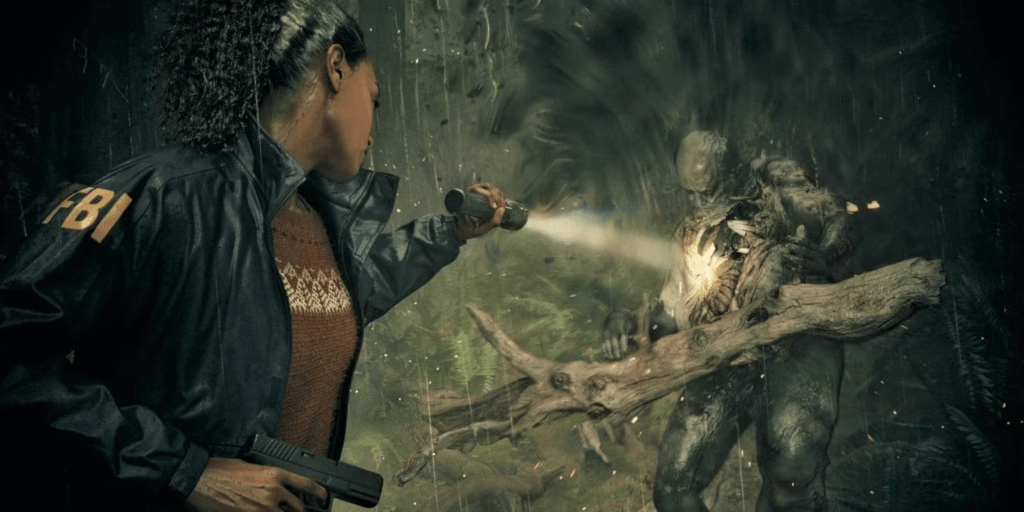
Figure 2: Saga Anderson using her flashlight to weaken a Taken enemy during combat in Alan Wake 2.
Image Source: https://gamerant.com/alan-wake-2-survival-horror-explained-combat-camera/
The save system uses typewriters in well-lit safe rooms when you play as Alan, and Coffee Thermoses when you play as Saga. These safe rooms allow you to store items and switch between characters. It’s classic survival horror logic and it works well, though dying and replaying sections can be genuinely irritating when level design gets in the way. Both characters carry their own resource pools and their own gameplay identity: Saga feels more grounded, more readable, more classically structured. Alan is stranger, more atmospheric, more dependent on his Writer’s Room mechanics to navigate the narrative as much as the environment.
The puzzles are mostly well-judged. Optional ones reward exploration with supplies and weapons. Mandatory ones can occasionally frustrate, particularly in Alan’s sections where the game gives you almost no guidance on where to find the idea or element you need, leading to aimless wandering that kills the pacing. The Mind Place and Writer’s Room both stay active in real time (they don’t pause the game), which adds tension but also means you need to find safe moments to use them.
Compared to similar games in the genre such as Resident Evil 2 or Dead Space, the combat feels a little sluggish and the gameplay loop a little undercooked. It’s functional and often tense, but it’s not the reason you play this game. The bosses in particular are mostly underwhelming and feel like the weakest mechanical element, which is a recurring Remedy problem.
The good news: if any section becomes too frustrating, the game offers one-shot kill, infinite ammo, infinite flashlight batteries, immortality, and invulnerability modes. You can dial the difficulty down as far as you need and still experience the story without the game becoming a wall. That’s the right call for a game where the narrative is the main event.
Presentation: A Writer Reborn
This is where Alan Wake 2 really impresses. It’s a great-looking game, with excellent lighting and strong environmental detail. Alan’s Dark Place sections in particular stand out visually, creating some striking and memorable scenes. It’s a clear example of modern visual design done well.
The motion capture and voice acting match the visuals. Matthew Porretta as Alan Wake is excellent, and Ilkka Villi does remarkable work in the live-action sequences. Melanie Liburd as Saga Anderson is a genuine standout and one of the best new characters Remedy have ever introduced. Sam Lake also appears as Alex Casey (and as himself, in the way only a Remedy game could pull off). The live-action sequences are used with real craft here, blending into the game world in ways that feel meaningful rather than gimmicky.
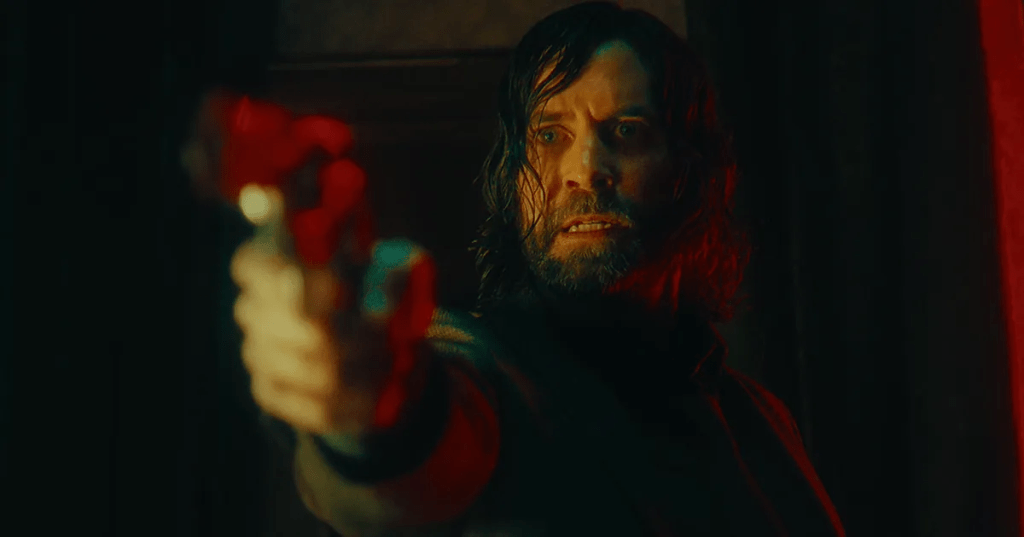
Figure 3: Live-action sequence in Alan Wake 2, highlighting the game’s integration of filmed footage with in-game storytelling.
Image Source: https://www.playstationlifestyle.net/review/894558-alan-wake-2-review-ps5-worth-buying/
The jump scares deserve a mention. There are some brutal ones, particularly during one specific chapter that throws them at you relentlessly. If you’re sensitive to that kind of thing, be warned, the game doesn’t always earn them, and at a certain point they tip from frightening into exhausting.
Soundtrack: We Sing (And It Absolutely Slaps)
The music in Alan Wake 2 is extraordinary. Remedy teamed up with Poets of the Fall, who appear in-game as the Old Gods of Asgard, and every chapter is bookended by a song that reflects the plot, the characters, or the emotional state of the story. It’s a level of craft you rarely see in games, closer to a film score than a game soundtrack, but louder and weirder and better for it.
“Herald of Darkness” and “Dark Ocean Summoning” are the highlights, but the whole thing is consistently cinematic. Every song was written specifically for the game rather than licensed, which gives the whole soundtrack a cohesion that’s rare. Remedy have always known how to use music (the Poets of the Fall collaboration goes back to the original), but this is the best they’ve ever done it.
DLC: Night Springs and The Lake House
The two DLC packs integrate naturally into the game rather than feeling bolted on after the fact. Night Springs consists of three short episodes accessed via TVs scattered throughout the world in Alans sections, each an anthology-style story set in the Remedyverse. They’re playful, self-aware, and packed with nods to Control, Quantum Break, and the broader universe. Tonally they’re lighter than the main game, and they’re a nice breather when the main story is at its most intense.
The Lake House is a different beast entirely. It slots into the end of Saga’s story and is a much darker, more unsettling experience. It’s also, without much subtlety, laying significant groundwork for Control 2, which is due to release later this year. If you’ve played Control, the connections will be obvious and genuinely exciting. If you haven’t, it’s still a strong piece of horror content, but you’ll miss some of what it’s setting up
It’s also worth mentioning The Final Draft (New Game+), which Remedy intentionally designed as part of the game’s lore rather than just a replay mode. It adds new manuscript pages, subtle narrative changes, and what is widely considered the true ending of the game, a much more hopeful resolution that pays off everything that came before without undermining the original. It’s bold, it’s brilliant, and it’s the version of the story Remedy always intended players to eventually reach.
Accessibility: Shine a Light on It
The accessibility options are thorough in some areas and noticeably lacking in others. On the positive side: one-shot kill, infinite ammo, infinite flashlight batteries, immortality, and invulnerability are all available, which meaningfully lowers the floor for players who struggle with the combat. There’s also a setting to reduce horror flash audio and visual intensity, which is the right call for a game this relentlessly tense, and the controls are fully remappable.
The weaknesses are real though. The aim assist is inconsistent, working well when boosting your flashlight but poorly when actually trying to fire, which means enemies get hits in during the gap. There’s no option to have the camera follow Alan during chase sequences, which leads to him getting stuck on walls and furniture that you couldn’t see coming. The flashlight only illuminates directly ahead, so peripheral objects and interaction prompts are easy to miss as the light is bouncing around the screen. And there’s a section in the Dark Place where you must locate a ringing payphone with no visual indicator, relying entirely on audio, which is a genuine barrier for players with hearing difficulties, (Even I struggled a lot).
Subtitles are mostly well-implemented but occasionally fail to appear if you’re too far from the speaker. For a game so dependent on environmental storytelling and vague objectives, the lack of guidance systems will frustrate players who need clearer direction.
Verdict: Worth the Thirteen Year Wait?
Mostly, yes. Alan Wake 2 is the most ambitious thing Remedy have ever made, and in many respects the best. The storytelling is bold and frequently brilliant, the presentation is stunning, and the soundtrack is extraordinary. Saga Anderson is an instant classic character, the Remedyverse is richer and more exciting than ever, and the DLC is genuinely building toward something with Control 2 that has serious potential.
The gameplay holds it back from being the masterpiece it occasionally threatens to be. The combat is functional rather than great, the boss fights are weak, and Alan’s sections can frustrate as much as they compel. But Remedy have always made interactive TV more than games, and on those terms Alan Wake 2 is one of the best things they’ve ever produced.
Personally, I adored this game despite some of its flaws, and for that reason I’m rating it highly. I appreciate the risks it takes and the level of creativity on display. I love the live-action blend, the killer soundtrack, and the way the ending is handled, including how a more complete version of it is expanded through New Game+ without undermining the original experience. It’s very much my sort of game, and as a long-time fan of Remedy, I’ll 100% be picking up Control 2.
Was it worth thirteen years in the Dark Place? Yeah. It really was.
Rating: 4.5/5
Time Played: 24 hours
Completion: 88/88 achievements, 1360/1360G



Leave a Reply