
Intro: Back on the Path, and It’s Free
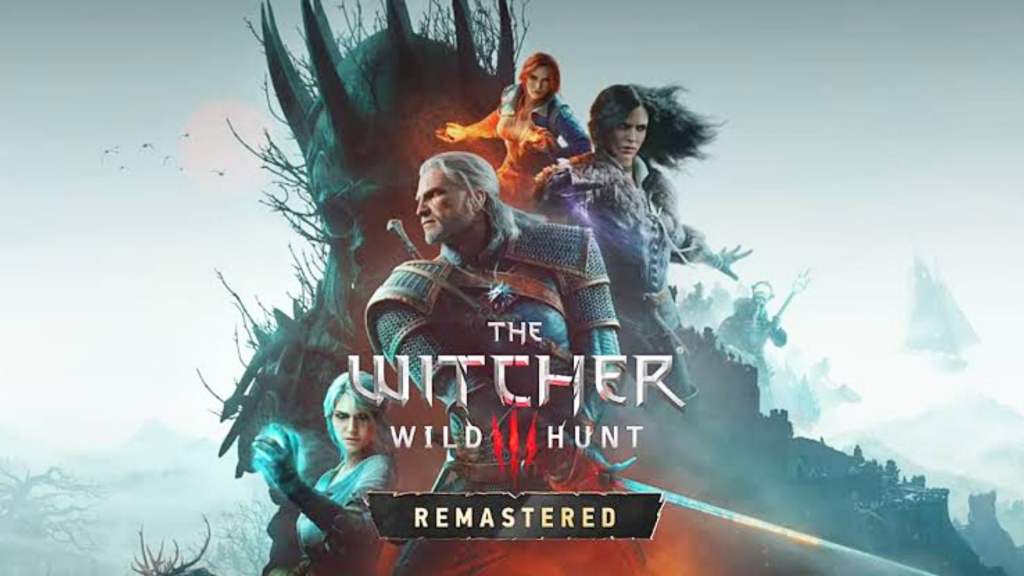
I had already finished The Witcher 3: Wild Hunt once, both expansions included, so I didn’t need an excuse to go back, However, the remaster gave me one anyway. Developed by CD Projekt Red, The Witcher 3: Wild Hunt Remastered launched on 29 September 2026 as a free upgrade for existing owners, with Hearts of Stone and Blood and Wine both included. With a brand new expansion, Songs of the Past, on the way in 2027, it felt like the perfect time to head back to the Continent and play it like it was my first time.
I played on Death March, never touched the difficulty, and got every achievement in about 95 hours. I went in expecting a prettier version of a game I loved. What I got was one of my favourite games of all time, all over again, and a reminder of what a difference careful polish makes.
Story: The Lesser Evil
You play as Geralt of Rivia, a monster slayer for hire, searching for Ciri, the adopted daughter he has spent years trying to protect, while the spectral Wild Hunt closes in on her. That premise is simple, and the game is better for it. Everything built around it is where the magic lives.
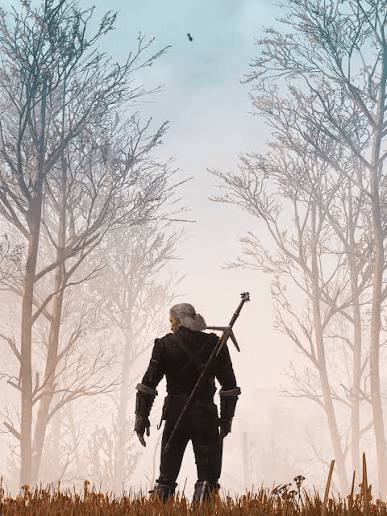
Figure 1: Geralt on the road, with the Continent stretching out ahead.
Image Source: https://www.instagram.com/p/DclXp2tFCVe/
What sets the writing apart is how every quest feels like it matters. A throwaway contract can turn into a tragedy, a fairy tale or a very dark joke, and the same few minutes can leave you laughing, uneasy and a bit guilty. Monsters are rarely just monsters, people are rarely just good or bad, and the consequences of your choices follow you for hours. Often there is no right answer, only the lesser evil, and you live with whatever you pick. I’m keeping this completely spoiler free, because going in knowing as little as possible is the best way to play it.
Characters: Dry Wit and Difficult Company
Geralt of Rivia is the best-written character in gaming. I’ll say it plainly, because I haven’t found anyone who beats him. He’s dry, tired, principled and unexpectedly funny, and he spends the whole game trying to choose the lesser evil, though how that plays out depends entirely on how you play him. You can make him gentle, ruthless or just very tired, and he stays believable every time. His deadpan humour is a joy, and what makes it funnier is that nobody ever reacts to it. He delivers a perfect line, the other person carries on talking, and Geralt carries on walking.
The one person who can match him is Yennefer. Their banter is the best writing in the game, a back and forth of dry remarks and sharp comebacks where neither of them ever loses. They feel like equals, which is rare, and it makes the moments when the jokes stop hit much harder. You also feel that they’re bound by destiny. There is a history and a pull between them that the game never over-explains, and it’s part of why every scene they share has weight. It’s the relationship the whole game quietly rests on, and it’s worth every scene.
The rest of the cast is just as strong. Ciri is a proper character with her own wants and her own fights, Triss is written with real warmth and depth, Dandelion is chaos in a doublet, and the Bloody Baron questline is rightly remembered as one of the best things any RPG has done. Even minor characters, a grumpy innkeeper or a nervous villager, have a personality that you remember. And then there’s Roach, a very good horse who deserves a mention in any review, even if she controls terribly.
I’ve also read some of Sapkowski’s books since my first playthrough, and it lifted the whole experience. You spot the references, the history between characters, and just how faithful the game is to the spirit of the source material. You don’t need to read them first, but if you ever do, it adds a whole new layer.
The Continent: A World Worth Getting Lost In
The open world is where The Witcher 3 still beats most of what has come since. Velen is a grim, war-torn marshland where every ruined farmhouse has a story. Novigrad is a huge, noisy, dangerous city that actually feels lived in. Skellige is cold, windswept and beautiful, and sailing between its islands is a great way to lose an evening.
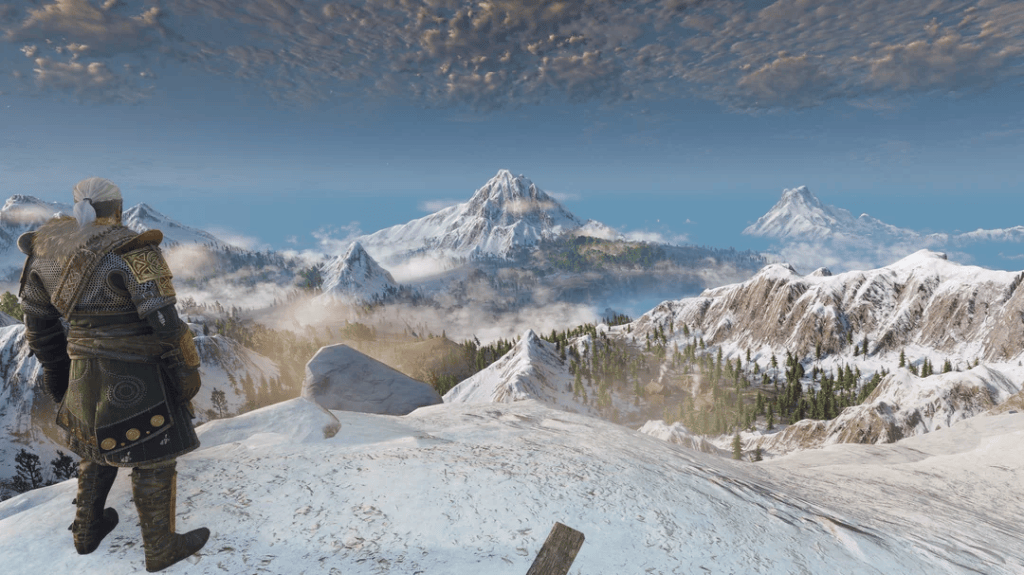
Figure 2: Skellige’s peaks stretching out below.
Image Source 2: https://www.reddit.com/r/witcher/comments/1x9rq89/skellige_has_the_most_stunning_views/
The best thing is that the map is full of things worth doing. Question marks lead to monster nests, hidden stories and small moments that have nothing to do with the main plot, and almost none of it feels like filler. The creatures are great too. Every monster has a design, a history and a weakness, and preparing for a fight with potions, oils and the right bestiary entry makes you feel like a proper Witcher.
Gameplay: Steel Smoother, Silver Sharper
The combat feels noticeably better than I remember, and at first I couldn’t work out why. After digging into the patch notes, I think it’s lots of small improvements working together:
- Smoother gap-closing animations make Geralt’s attacks flow into each other instead of snapping.
- A new dynamic combat camera keeps enemies in view, and pulls back when you’re surrounded.
- Target-lock switching is more reliable when you move the camera.
- Monsters have polished attack patterns and reactions, and there are new finishing moves.
None of it changes the core of the combat, but together it feels faster, tighter and weightier.
The reworked skill tree deserves a mention as well. Skills now sit in a proper tree with three ranks each, which gives you more freedom to build the Witcher you want and makes your choices feel more meaningful. Movement is better too, with ladders, ledges and vaulting feeling far more natural, and Roach handles better, including being able to loot from the saddle.
Gwent: Just One More Game (I Said That Three Hours Ago)
I can’t write this review without praising Gwent. It’s astonishing that a game this huge hides an entire card game inside it, and it’s a good one. It’s easy to pick up, there’s real strategy once you build a deck, and it fits perfectly into the world. You sit in a tavern, challenge a stranger and play for coin, cards and bragging rights, and it feels like exactly what people on the Continent would be doing between wars.
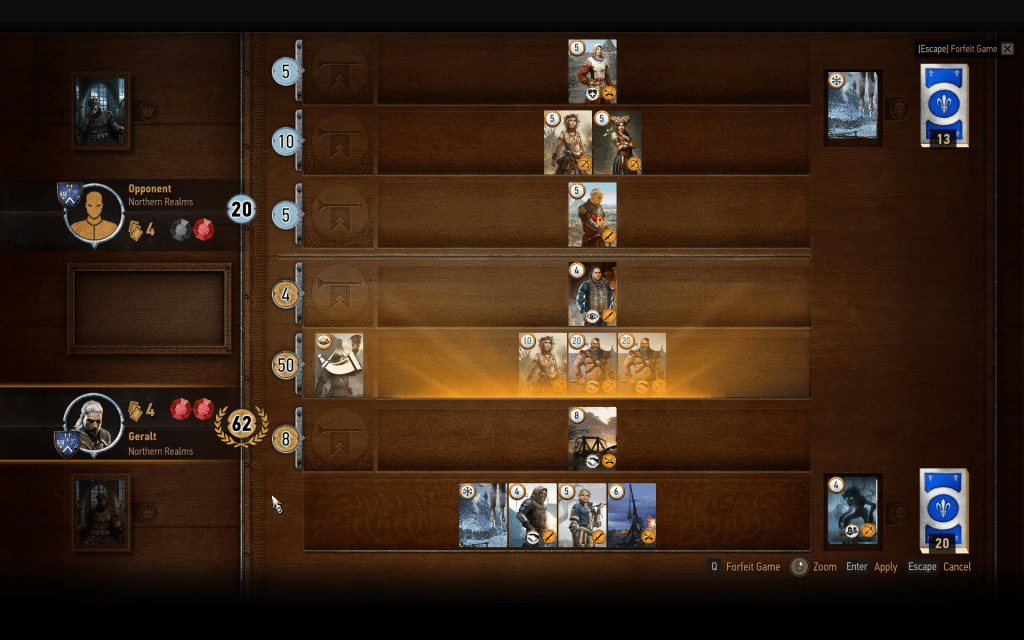
Figure 3: Settling in for another round of Gwent.
Image Source: https://www.g2a.com/news/features/guide/the-witcher-3-remastered-gwent-beginner-guide/
It’s also a brilliant excuse to explore. Hunting down new cards, searching out better players and finishing your deck turns into its own adventure, running quietly alongside everything else. It was so good that CD Projekt Red later turned it into a standalone game. Many games would be proud to ship a mini-game this good as their main event, and here it’s a side activity. I lost far too many hours to it, I did it before, and I did it again this time around too.
Visuals: A Masterpiece, Before and After the Relight
Lighting is the biggest leap. The remaster brings an improved shading model, reworked bloom, updated tone mapping and ray-traced local shadows, and the difference is obvious as soon as you step outside. Sunlight breaks through the trees in proper shafts, shadows have real depth instead of a flat dark patch, and everything sits in the world more naturally. There’s also new image-based lighting, which helps the ambient light and reflections feel right in every type of environment, from a misty marsh to a snowy peak.
I’ve lined the remaster up against the original release and the 2022 next-gen update below. The sunset is a good example. Earlier versions pour orange over everything, and the remaster keeps the golden sky while letting the grass, trees and Geralt himself keep their colour and depth.
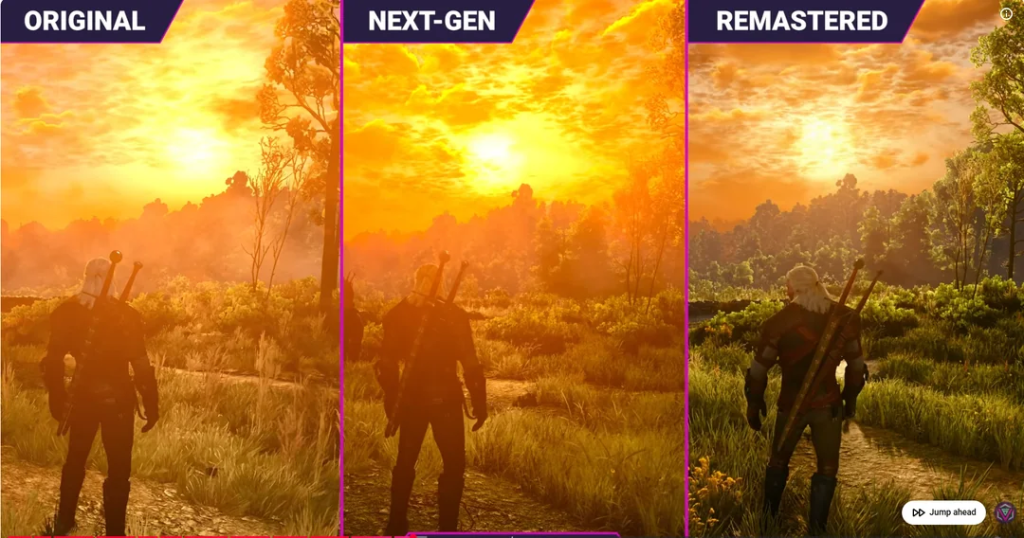
Figure 4: Original, next-gen and remastered, left to right. The golden sunset stays, but the scene keeps its colour and depth.
Image Source: https://www.reddit.com/r/Witcher3/comments/1wscrpi/witcher_3_remastered_side_by_side_comparison/
It’s just as good indoors and in bad weather. Torchlit taverns feel warmer and more lived in, with light pooling on tables and faces instead of washing over the whole room, and storm-lit coastlines have a heavy, moody atmosphere that makes sailing around Skellige even more fun. Reflections and ambient occlusion have been updated too, so surfaces like wet stone and water catch the light more convincingly, and the contact shadows under objects make the world feel more solid.
Grass and foliage have better lighting and shading, so woods and meadows look richer. The view over the hills below shows it well. The next-gen version smothers the distance in grey haze, while the remaster clears the air, so the treeline and the hills behind it stay sharp, and the colours look natural rather than washed out.
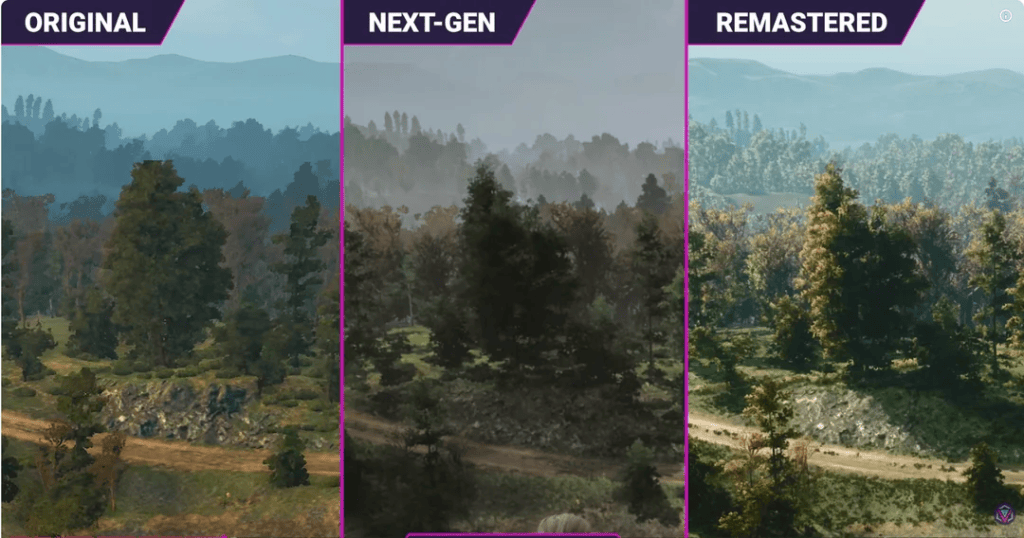
Figure 5: The same view across all three versions. The remaster clears the haze, so the distant hills and treeline stay sharp.
Image Source: https://www.reddit.com/r/Witcher3/comments/1wscrpi/witcher_3_remastered_side_by_side_comparison/
Textures and models have been refreshed too, using assets from the HD Reworked Project mod, which is a lovely nod to the community. Skin looks more natural thanks to updated subsurface scattering, and character models hold up much better in close-ups, as you can see in the cutscene shot below. Even Signs and skill effects have new visuals. None of it changes the look of the game, it just removes the rough edges, so the Continent keeps its character with a lot more depth.
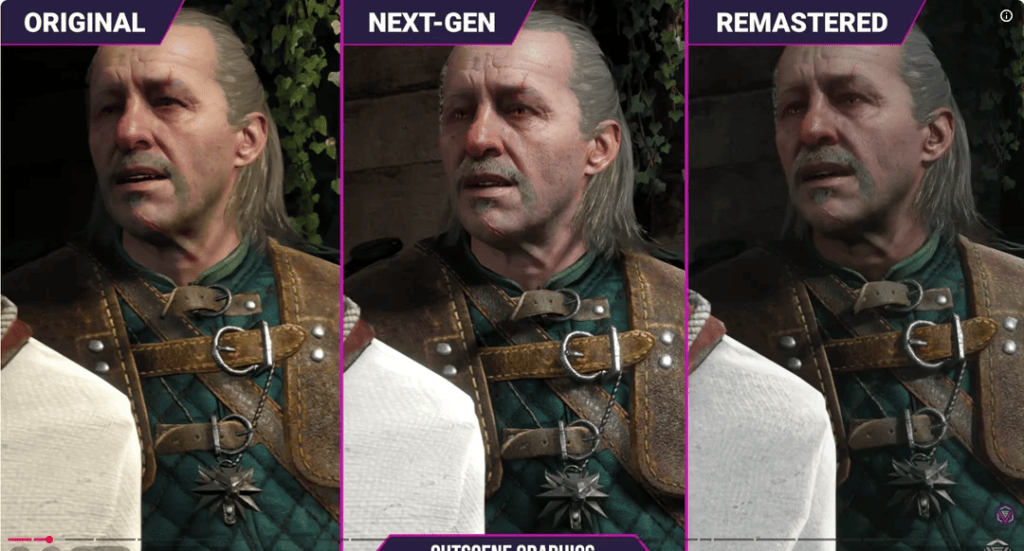
Figure 6: Vesemir in a cutscene, original to remaster. Skin, leather and clothing all show more detail.
Image Source: https://www.reddit.com/r/Witcher3/comments/1wscrpi/witcher_3_remastered_side_by_side_comparison/
How you see it is also better. A new exploration camera with a wider field of view makes riding across the open world feel bigger, and a dynamic combat camera keeps enemies in view in a fight. On console you can choose between modes that favour performance or ray tracing, so you can decide how you want to play it.
The Photo Mode has been vastly expanded, and it’s very easy to lose an hour in it. You can change the weather and time of day, place other characters and props in your shot, pose Geralt, save camera presets, switch to a first-person view and hide nearby NPCs.
Finally, you can now reforge your gear to change how it looks without touching its stats, and any dyes from Blood and Wine carry over. Looking the part while staying powerful is a great addition, even if it gave me a few hiccups (more on that below).
Music and Sound: Lelelele, Lelelele, Lelelele
The music is phenomenal, and it always has been. Marcin Przybyłowicz’s score, built on Slavic folk instruments with help from the band Percival, gives every region its own identity, from the wind-swept Skellige isles to the grim marshes of Velen. And then there are those iconic folk chants, the “lelelele” that rings out as a fight kicks off and drags you straight back to the Continent the moment you hear it. I’ve caught myself humming it in the shower, and I’m not even sorry.
It’s the sort of soundtrack I’ll happily stand still for. I’ve often just stopped in the middle of a field to listen, with Roach waiting patiently, and let a track play out. It never overpowers a scene, but it makes the biggest moments land with real emotion. The remaster leaves the score untouched, which is the right call. You don’t repaint a masterpiece, you just give it better light.
The sound design is superb too, from monster growls that make you check over your shoulder to the ring of silver on steel.
The Expansions: Two Bargains Worth Making
Hearts of Stone is a tighter, darker and more intimate story than the main game, built around a dangerous contract and a mysterious figure you really don’t want to cross. That figure is Gaunter O’Dimm, and he is one of the most ominous characters in the whole series. He’s polite, softly spoken and always smiling, which is exactly what makes him so unsettling. He never needs to raise his voice or draw a weapon, because you can feel that he’s holding all the cards. Charles Dance’s performance is superb, and every scene with him has you waiting for the other shoe to drop. It’s shorter, at around ten hours, but it holds some of the most memorable characters and set pieces in the whole game, and it shows how good the writing is when it’s focused on a few ideas. It also adds the Runewright, a crafting system for upgrading your gear. I enjoyed every minute.
Blood and Wine is something else entirely, and I’d argue it’s one of the best expansions ever made in video games, if not the best. It takes you to the sunlit duchy of Toussaint, a fairy-tale land of vineyards and knights with something nasty lurking beneath. CD Projekt Red pitched it as a 20-hour story, but the full expansion runs to 30 hours or more, with over 90 new quests and around 40 new points of interest. The new region rivals Velen and Novigrad in size, and it’s just as full of things to find. It’s a whole new game in its own right, handed over as DLC, and it’s more content than most full releases give you.
It brings a lot of new toys with it:
- A brand new region, Toussaint, with a completely different look, tone and atmosphere after the gloom of the main game
- New characters and monsters, including some of the nastiest in the game
- New armour and weapons, including a whole new tier of Witcher gear to hunt for
- New skills in the form of Mutations, 12 powerful abilities that give your build another layer, with extra skill slots to unlock as you research them
- Armour dyes, so you can finally colour in your look
- Corvo Bianco, a vineyard of your own that you can fix up and decorate, and a real home away from home
- A whole new Gwent deck, the Skellige faction, with a stack of new cards to hunt down and a fresh playstyle to learn
- New Game Plus raised to level 100, so there’s a reason to start again
On top of all that, the difficulty jump was a surprise. It felt like a noticeable step up from the rest of the game, which I loved. On Death March it pushed me harder than the base game did, and it made the final stretch feel like a proper challenge. It’s a huge, beautiful, funny and often dangerous send-off, and it’s worth the price of the whole package on its own.
Accessibility: A Path for Every School of Witcher
This is where the remaster really impresses. There’s a new, dedicated Accessibility section in the settings, with the older accessibility options moved into it, and it’s a masterclass in how to do it. The headline feature is the Bard’s Ballad preset, which you can enable when starting a new game on Just the Story, or turn on at any point later. It isn’t just an easy mode. You can use the whole preset or switch on individual options, so you choose exactly how much to change.
CD Projekt Red have said it’s aimed at players short on time or energy, and the tired parent pitch is a great way to put it. Some of the options you can adjust:
- Vitality regeneration: choose when it kicks in and how strong it is
- Infinite breath: no more pressure when swimming and diving
- Unlimited item durability: no more trips to the blacksmith
- Unlimited boat durability: a lot less stress sailing around Skellige
- Ignore item weight: loot everything without worrying
- Faster boats: the seas around Skellige feel a little smaller
- Toggle Witcher Senses: switch on and off instead of holding the button
- Colour-blind-friendly Witcher Senses: easier to read for more players
The quality-of-life additions are just as welcome:
- Nearby loot can be grouped into one window, with a loot feed showing what you’ve picked up
- Preview an item’s details before taking it
- Hide herbs, boats and corpses on the minimap for a cleaner view
- Easier quest tracking
- A horse control sensitivity slider
- A quick way to disengage from combat, by holding dodge and pressing sprint
- Meditation plays as a timelapse instead of a menu, which looks lovely
There’s also cross-platform mod support now, which suits a game with such a big modding history. It all makes the game friendlier without changing what makes it great, and it means more people can enjoy one of the best RPGs ever made.
Conclusion: Is It Still the Greatest RPG Ever Made?
For me, yes, and the remaster only strengthens the case. I went back looking for an excuse and came out with 95 hours, every achievement and the same feeling I had the first time around: I didn’t want it to end.
The Witcher 3: Wild Hunt Remastered is the definitive way to play a masterpiece. The writing is still the best in the genre, Geralt’s dry wit still lands every time, and the world, the music and the quests are as good as ever. On top of that you get stunning lighting, tighter combat, a fresh skill tree and a brilliant set of accessibility options, all free for existing owners. If you’ve never played it, you get the complete edition with both expansions, which makes it one of the best-value games you can buy.
The Witcher 4 has a huge amount to live up to. Until Songs of the Past arrives in 2027, this is an easy game to start all over again.
Rating: 5/5
Time played: 95 hours 45 minutes
Achievements: 78/78 (2000/2000g)




Leave a Reply