No major spoilers, but some vignette details are mentioned.
Introduction: Side A – How I Got Here
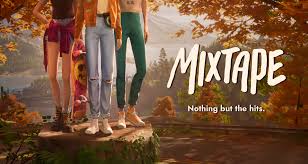
Mixtape is a narrative adventure developed by Beethoven & Dinosaur, the small Melbourne studio behind the BAFTA-winning The Artful Escape, and published by Annapurna Interactive (the label behind Outer Wilds, Stray, and What Remains of Edith Finch).
Three best friends. Last night of high school. 1990s northern California. A mixtape pulls them into dreamlike vignettes of shared memories: skateboarding down mountain roads, slinging rocks across a pond, sneaking into an abandoned dinosaur park at night. It’s coming-of-age nostalgia set entirely to a curated soundtrack of licensed music from the likes of Smashing Pumpkins, Joy Division, DEVO, Iggy Pop, Siouxsie and the Banshees, Roxy Music, The Cure, and more. The kind of soundtrack that even major AAA studios wouldn’t attempt to license nowadays given what it costs.
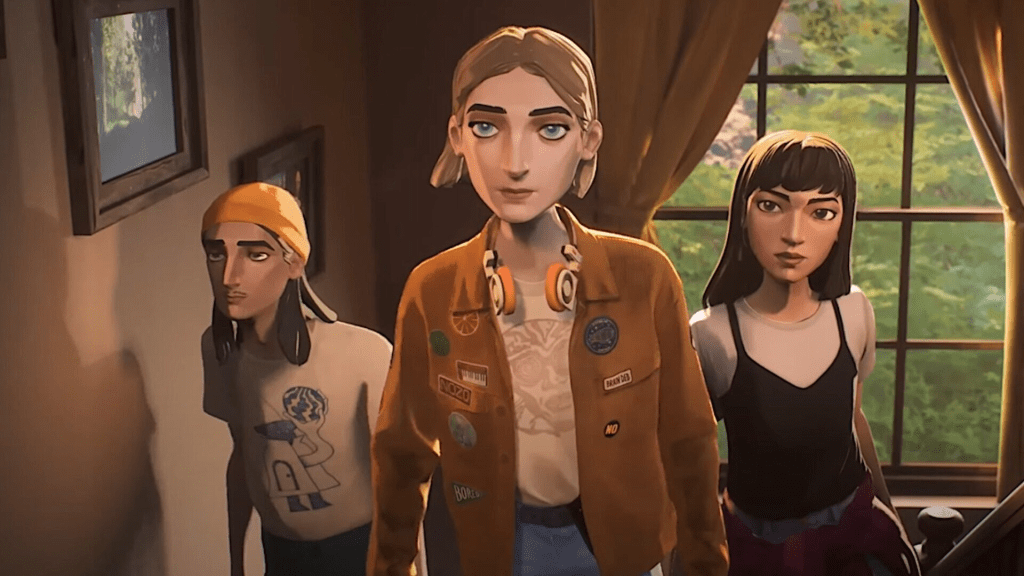
Figure 1: Slater, Stacy, and Cassandra – the three friends at the heart of Mixtape, showing the game’s distinctive animation style.
Image Source: https://www.cgmagonline.com/review/game/mixtape-pc/
I nearly skipped this entirely. I had a quick glimpse of the game on the store and it gave me the vibe of a Life is Strange clone dressed up in 90s aesthetics, and I had zero attachment to that era growing up. Then IGN gave it a 10/10, the internet caught fire, and suddenly Mixtape was everywhere and impossible to tune out. I downloaded it on Xbox Game Pass, settled in, and within twenty minutes understood exactly why it was splitting people so cleanly down the middle. Some people were going to love this. Some were never going to get it. And a loud third group were going to be furious it existed at all.
The Controversy: Rewind That Score
IGN’s 10/10 sent a specific corner of the gaming community into full meltdown. Comparisons to Crimson Desert’s much lower score of 6/10 spread everywhere. Accusations of bribery, score manipulation, and Annapurna planting the game as an industry darling followed close behind. Some people played it with the sound muted and posted clips declaring it an empty walking simulator. Others didn’t play it at all and joined the pile-on anyway.
Here’s the thing. Annapurna has one of the most respected catalogues in modern gaming (Outer Wilds, Stray, What Remains of Edith Finch), which are all games tailored to an indie market, and none of them got a perfect score at exactly the wrong cultural moment. Mixtape did, and that dragged in an audience that was never going to connect with it in the first place. For context, Annapurna released six other games in the past year. Every single one landed between 60 and 83 on Metacritic. The idea that they’re buying perfect scores doesn’t really hold up.
Watching someone play this with the sound off and call it worthless is like watching Jurrasic Park on a 1024×768 screen with no audio and calling it garbage. The game is the music. The developer explicitly refused to include a streamer mode to strip licensed tracks because music is, in their words, the soul of Mixtape. The levels are designed around specific songs. The emotional beats live in the crescendos and lulls of the tracks. Strip that out and you’re judging a skeleton. Most of the backlash has less to do with the score and more to do with a crowd that was always going to hate this kind of game stumbling in and needing someone to blame.
Story: The Greatest Night You Never Had
The structure is a mixtape in the truest sense: loosely connected moments that build into something emotionally whole. You drift between Stacy, Van, and Cassandra’s formative memories across one long evening, each vignette a short distinct moment tied to a specific song.
The writing is sharper than it has any right to be. The dialogue is funny without leaning on period-specific brand jokes, the three characters feel genuinely distinct, and the bittersweet undercurrent of the whole thing lands consistently. This is a night that’s an ending as much as an adventure, and the game never lets you forget it without being heavy-handed about it. It’s not a story with huge twists or dramatic reveals. It’s about three people who love each other spending one last night being young before everything changes. That’s it. And somehow, that’s enough.
What’s remarkable is that none of it needs to be your specific experience to land. I never grew up in 1990s California, never made a mixtape for anyone, never had a last night quite like this. But Mixtape still managed to drag up that raw, unfiltered feeling of being young before life gets complicated. The specifics don’t matter. The essence does, and Beethoven & Dinosaur capture it better than most.
Gameplay: Button Goes In, Feelings Come Out
Mixtape is roughly three to four hours long, split between cutscenes, light exploration, and vignettes with minimal fail states and no combat. You skateboard, sling rocks, set off fireworks from a backseat, kiss someone with direct tongue control, and much more. None of it is mechanically demanding. Some sections can even technically complete themselves if you don’t touch anything. The gameplay is a delivery system for the music and the emotion, not a challenge to overcome, and it works precisely because it never pretends to be anything else.
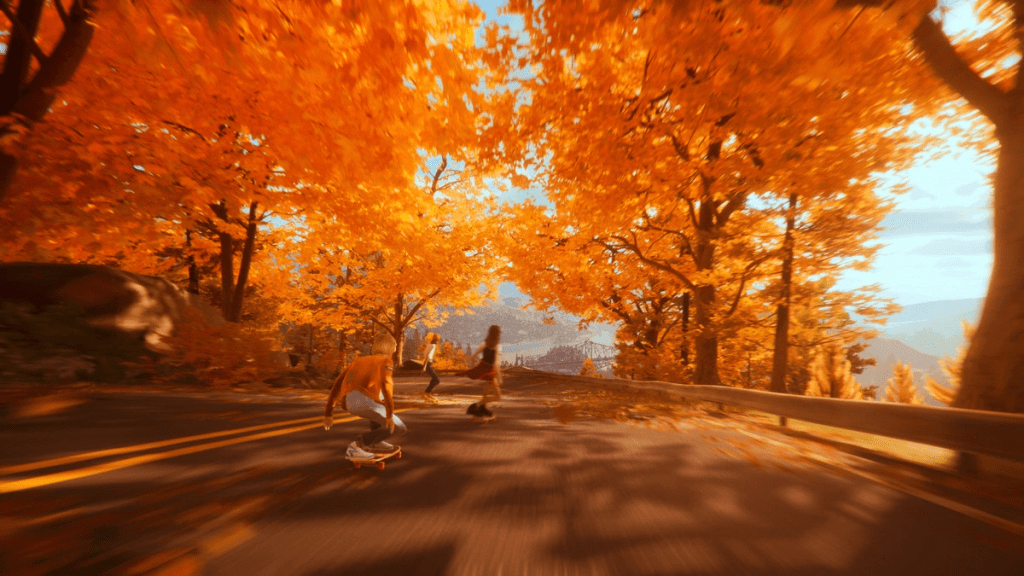
Figure 2: The opening skateboarding vignette down the mountain road, all three friends, full autumn colour.
Image Source: https://www.unrealengine.com/developer-interviews/mixtape-making-the-magic-of-nostalgia-come-alive-in-unreal-engine-5
The vignette variety is genuinely impressive for such a short runtime. No two sections feel the same, and the way each one is choreographed around its song is the clearest sign of how much craft went into this. There’s one optional achievement that required such aggressive button mashing that the community’s best advice was to plug in a keyboard. That’s the outer edge of the difficulty curve, which tells you everything about what kind of game this is.
Presentation: More Than This
The stop motion-inspired animation style gives Mixtape a tactile, handcrafted quality that sets it apart immediately, I immediatley compared this to Spider-Man: Into the Spider-Verse. The lower framerate on character animation is a deliberate stylistic choice that, like Spider-Verse, takes a few minutes to click before it starts feeling completely intentional and right. Once it does, you stop noticing it entirely.
The shot composition is remarkable for a small indie studio. Every scene feels directed rather than assembled, transitions between vignettes are seamless, and the colour palette across environments is rich and distinct from scene to scene. Game director Johnny Galvatron described the feel as channel-surfing old MTV at 3am, and visually that energy is completely present, and you notice the craft in every frame.
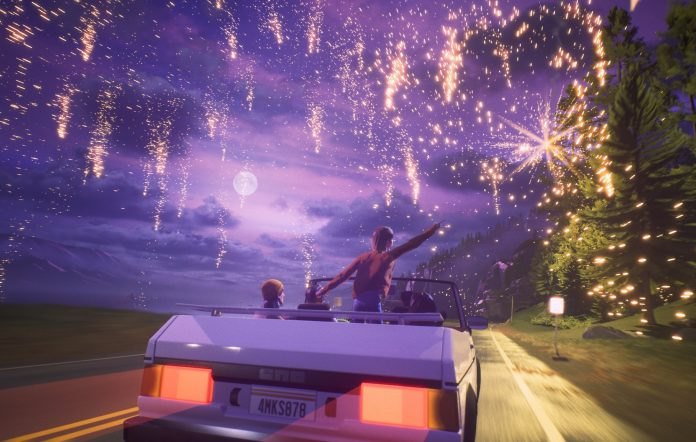
Figure 3: The fireworks vignette, one of Mixtape’s most visually stunning moments and a perfect showcase of the game’s colour palette and cinematic direction.
Image Source: https://www.nme.com/news/gaming-news/mixtape-game-soundtrack-smashing-pumpkins-cure-iggy-pop-3944536
Soundtrack: The Soul of the Tape
The licensed soundtrack is extraordinary, and genuinely unprecedented for a project of this scale. Even major AAA studios shy away from expensive licensed music nowadays given what it costs. Beethoven & Dinosaur built their entire game around it, with Galvatron reportedly starting development by making a mixtape of his favourite songs to see what story they could tell together. At each major transition in a song, there’s a transition in the game. The music and the gameplay are genuinely inseparable.
Devo, Smashing Pumpkins, Joy Division, Iggy Pop, Siouxsie and the Banshees, Roxy Music, The Cure, every track earns its place, and every track was chosen because it meant something to the story being told around it. This isn’t licensed music dropped onto gameplay as dressing. It’s music as the foundation, with everything else built on top of it. You feel the difference immediately, and it’s why judging this game without sound is so fundamentally dishonest.
Accessibility: Skip Track
The accessibility options are reasonable but need work. You get subtitle toggle with size options and colour-coded speaker names, separate audio sliders for music, dialogue, effects, and UI, controller sensitivity options, and a helpful chapter select for replaying sections and hunting collectibles.
What’s missing matters though. No controller remapping is a genuine issue for players with motor disabilities, particularly during more physically demanding vignettes where faster inputs are required. There are also no colour blindness modes, and no visual collectible progress tracker during gameplay, which makes the completionist route more frustrating than it needs to be. For a game this focused on emotional accessibility and broad appeal, the options menu needed one more pass before launch. Hopefully something that gets addressed in a post-release update.
Verdict: Side B – Is It Worth Adding to Your Playlist?
Mixtape is not a 10/10 in any traditional sense, and it isn’t trying to be. It’s a three to four hour emotional experience built entirely around music, nostalgia, and the bittersweet ache of something ending. The writing is sharp, the presentation is stunning, the soundtrack is extraordinary, and the vignette structure keeps it feeling fresh from the first track to the last.
If you need mechanical depth, challenge, or a longer runtime to feel satisfied, this isn’t your game, and that’s completely valid. But if you’ve ever felt something listening to a song that took you straight back to a specific moment in your life, Mixtape is worth pressing play. It’s a small game made with a huge amount of care and craft, and in a year already full of noise, that counts for a lot. Especially on Game Pass, where the only thing you’re risking is a few hours of your evening.
So is it the most divisive game of the year? Almost certainly. Is it worth adding to your playlist? Without question.
Some games are meant to be played. This one is meant to be felt.
Rating: 7/10
Time Played: 4 hours 47 minutes
Completion: 26/26 achievements, 1000/1000G



Leave a Reply