
*Minor spoilers ahead for world names, boss encounters, secret level content, and playable characters.
Introduction: I Came In Raw
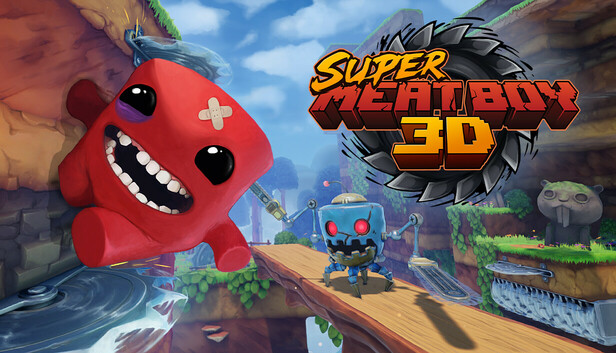
Super Meat Boy 3D is a precision platformer developed by Team Meat and Sluggerfly, the team who took over the series after Edmund McMillen (one of the original creators) departed to pursue his own projects. You play as an animated cube of meat hurling himself through buzz saws, collapsing platforms, and pools of old trash to rescue his bandage girlfriend from an evil fetus in a jar wearing a tuxedo. In 3D. That is the pitch, and honestly it’s a good one.
I’m not the person to review this from a nostalgia standpoint. I’ve played maybe two worlds of the original, I have no muscle memory, and I have no attachment to what this series is supposed to feel like. What I do have is seventeen and a half hours of dying to saw blades in full 3D, which feels like enough to form an opinion. Without Edmund at the helm, there was always going to be a question of whether the spark carries over, and that question gets a lot more complicated when you’re also asking the series to make one of the biggest structural leaps in its history.
Super Meat Boy is known for being one of the tightest, most precise platformers ever made. A game where every jump feels exact, every death feels fair, and every mistake is entirely your own. So what happens when you hand that formula to a new team and ask them to add another dimension? Does it evolve into something better, or does that extra layer just get in the way?
Gameplay: The Meat of the Matter
The very first thing you should do when you boot this up is turn off 45-degree snapping. It’s on by default, it makes movement feel sluggish and imprecise, and every review says it. They’re all right. Once it’s off, the game immediately feels faster, tighter, and far more like what it’s supposed to be. It’s a baffling default for a game that lives and dies on precise control, and it could easily push players away before they’ve given it a fair shot.
With that fixed, the core gameplay loop is genuinely addictive. Movement feels sharp and responsive, chaining jumps together is satisfying, and you fall into that fail, retry, improve rhythm almost immediately. The mix of 8-directional precision and full 360 movement works better than expected, giving you control when you need it and flexibility when you don’t. There’s also a mid-air dash that extends jumps and breaks certain platforms, and a wall run mechanic that opens up movement in ways that feel natural once they click. When everything comes together, you hit that flow state (flying through levels, shaving seconds off your time, pulling off sequences that felt impossible two minutes ago) and the one-more-try loop grabs hold and doesn’t let go.
The 20 unlockable characters keep things fresh well beyond the default. None of them are cosmetic: each one has its own speed, weight, jump height, hitbox, and in many cases a unique ability that genuinely changes how you approach a level. Ed is essentially a faster, longer-jumping Meat Boy, great for clearing big gaps quickly. Skeleton Boy is featherlight, zipping through the air with direction changes mid-fall that let you skip entire sections. Nate has the biggest double jump in the roster, making him the go-to when a level feels like it’s blocking you. Sandman can shrink to tiny size, Dr. Fetus has a long dash, and Glitch Boy (unlocked by finding all five world glitches) actively causes terrain and obstacles to glitch out around him. There are also crossover characters from other indie games including Hell Pie, Bridge Constructor, and Peak, alongside series veterans like Tofu Boy and Bandage Girl. Swapping characters to chase a specific A+ time or snag a hard-to-reach bandage adds a layer of strategy that keeps the gameplay fun and fresh throughout.
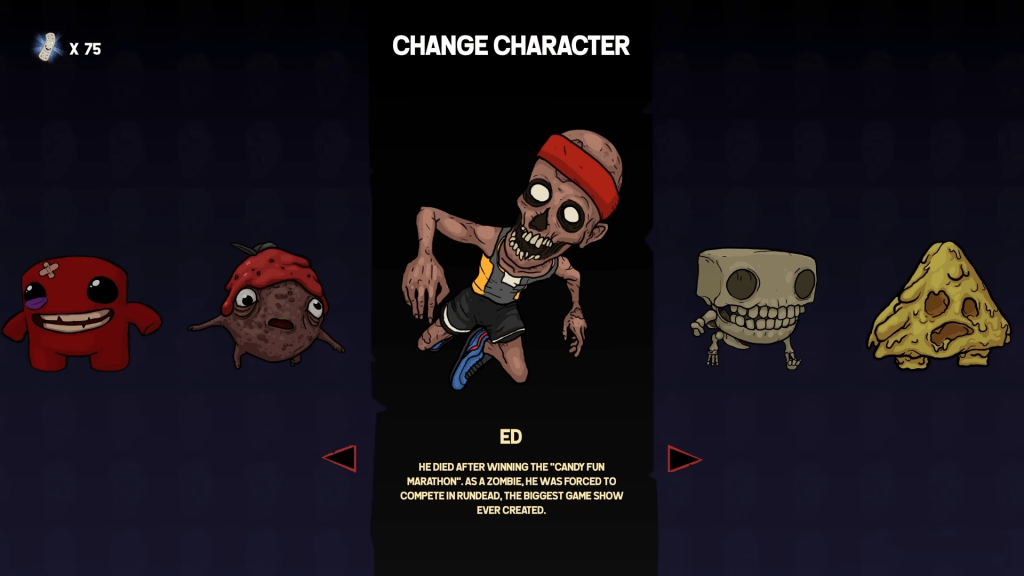
Figure 1: The character select screen, showing Ed from RunDead alongside some of the roster’s 20 unlockable characters.
Image Source: https://tposegaming.com/super-meat-boy-3d-characters/
The depth perception issue is real, though, and it lives here in gameplay rather than anywhere else. There’s a position indicator meant to show where you’ll land, but in practice it’s inconsistent and hard to follow. It shifts, disappears, and generally fails to keep up with the pace of the game, so rather than removing the uncertainty it just adds another thing to track mid-jump. The result is deaths that introduce an unintentional layer of frustration that has nothing to do with your actual skill level. In the original, you die and immediately know why. Here, you sometimes genuinely can’t tell if you misjudged or if the indicator just misled you. Those aren’t the same feeling.
The one other lingering issue is the lack of controller remapping. For a game this reliant on precise inputs, not being able to reassign buttons is a real miss. There’s also an always-sprint toggle, but turning it on can actually make tighter sections harder rather than easier, so treat it with caution.
Level Design: Five Worlds, One Saw Blade at a Time
The game is structured across five worlds, each with a distinct visual identity and escalating hazard set. You start in The Forest (lush, on fire, full of saw blades), move through The Wastes (vast dumps filled with toxic hazards and crushing machinery), then into The Forge (a factory setting with conveyor belts and laser grids), before hitting The Core (lava, spike pits, depth-staggered platforms that demand real precision) and finally Visceraville, where Dr. Fetus is waiting. The progression feels deliberate: each world builds on what came before, and the environments getting progressively more industrial and hostile gives a real sense of stakes escalating alongside the difficulty.
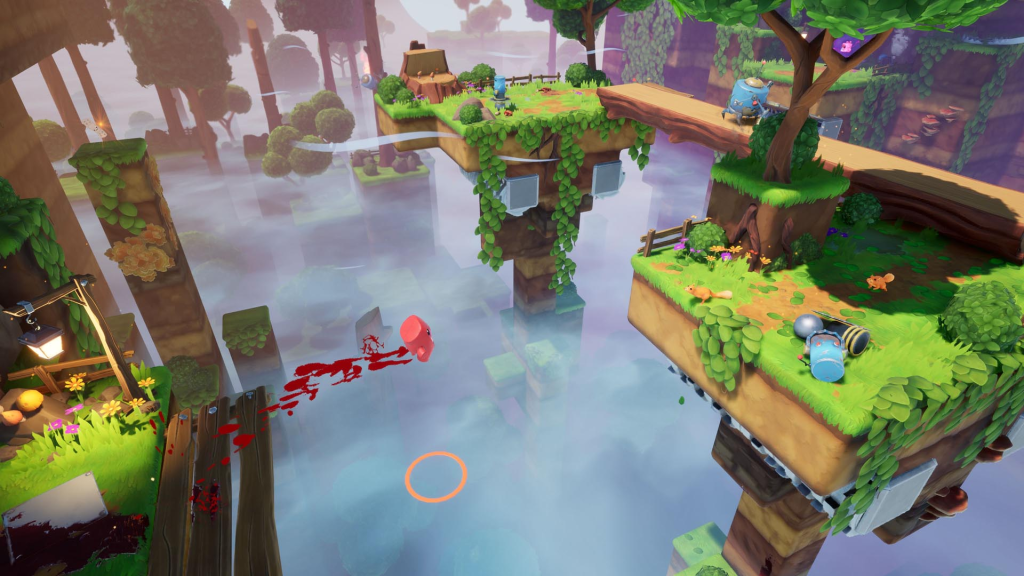
Figure 2: Meat Boy navigating a Forest world level, with the orange position indicator circle visible beneath him.
Image Source: https://news.xbox.com/en-us/2025/06/09/super-meat-boy-3d-xbox-games-showcase/
Each world contains both a Light World and a Dark World variant of every level. You won’t unlock the Dark World until you beat the posted time for a level and earn an A+ grade, which means the harder content is gated behind genuine mastery rather than just completion. When you get there, the Dark World levels are brutal in the best way.
The level design itself mostly does the right thing by treating 3D space like an extension of 2D rather than a wholesale reinvention. Stages are focused and readable, built around clear hazard patterns you learn to read and react to. The downside is that movement still sticks to eight directions most of the time, which means the third dimension often feels underused rather than purposeful. At its best, you get tight, satisfying challenges that take clever advantage of the physics engine. At its worst, the game feels caught between two identities (not fully 3D, but no longer benefiting from the pure clarity of 2D) and neither side fully wins.
Boss Fights: Dr. Fetus Phoned It In
Boss fights are visually impressive and almost immediately forgettable. Every single one is an autoscrolling dodge sequence: survive the pattern, don’t get hit, move on. There’s no sense that you’re actually fighting something. The attacks are completely preset, hitting the same spots every single time regardless of where you are, which means there’s no tension, no adaptation, no feeling that the boss is actually trying to kill you specifically. You learn the pattern once and repeat it. There’s no reason to revisit them, and as a result they’re easily the weakest part of the game.
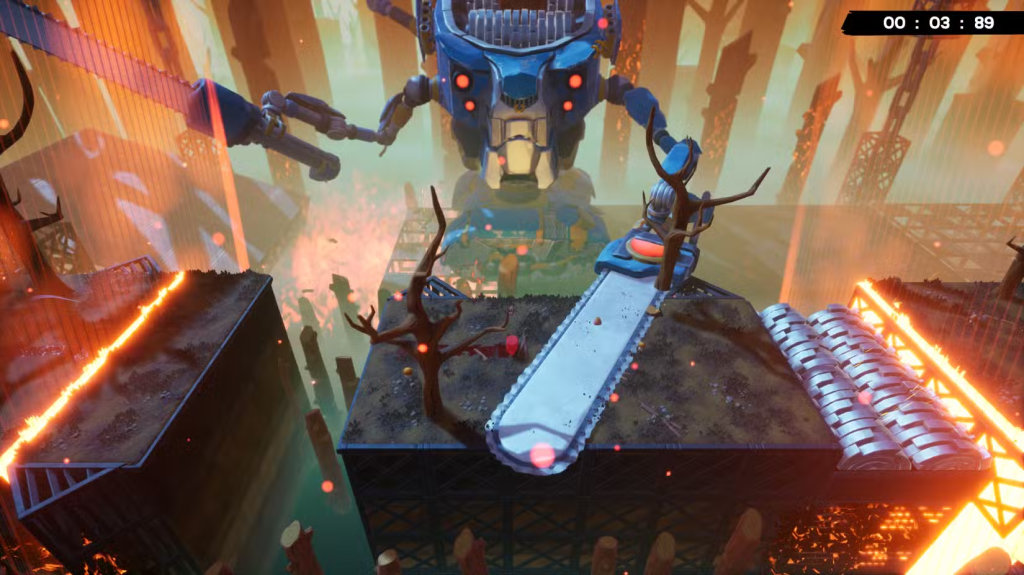
Figure 3: The World 1 boss Sawhalanthropus, a giant chainsaw-wielding mech, deploying its preset attack pattern across the arena.
Image Source: https://www.dualshockers.com/super-meat-boy-3d-how-to-beat-sawhalanthropus-the-forest-boss/
Presentation: The Jar Is Empty
This is the hardest part to pin down, but it’s also the most noticeable. The cutscenes feel flat, the humour doesn’t land, and the soundtrack (inoffensive rock that blends into the background) is serviceable but completely forgettable. Nothing about it sticks. The original had an energy and identity that made it feel like something someone cared deeply about making. That spark is mostly absent here, and the game feels more generic as a result.
It’s worth acknowledging what this is, though: Team Meat without Edmund McMillen. That spark was always going to be missing to some degree. The question is whether what’s left is still worth playing, and the answer is yes. The core gameplay is strong enough to carry the experience even when the personality around it falls short.
Highlights: The Secret Sauce
Despite its issues, there is a genuinely surprising amount of content here. Each of the five worlds hides a secret level behind a purple portal (you’ll know you’re close when the soundtrack violently distorts and slows down), and these are some of the most creative stages in the game. Each one is a love letter to a classic title: a Super Mario 64 tribute, a Metal Gear Solid parody, a Donkey Kong Country nod, and more. Clearing them unlocks guest characters who each play differently enough to meaningfully change your approach to levels, and the returning roster is a clear labour of love.
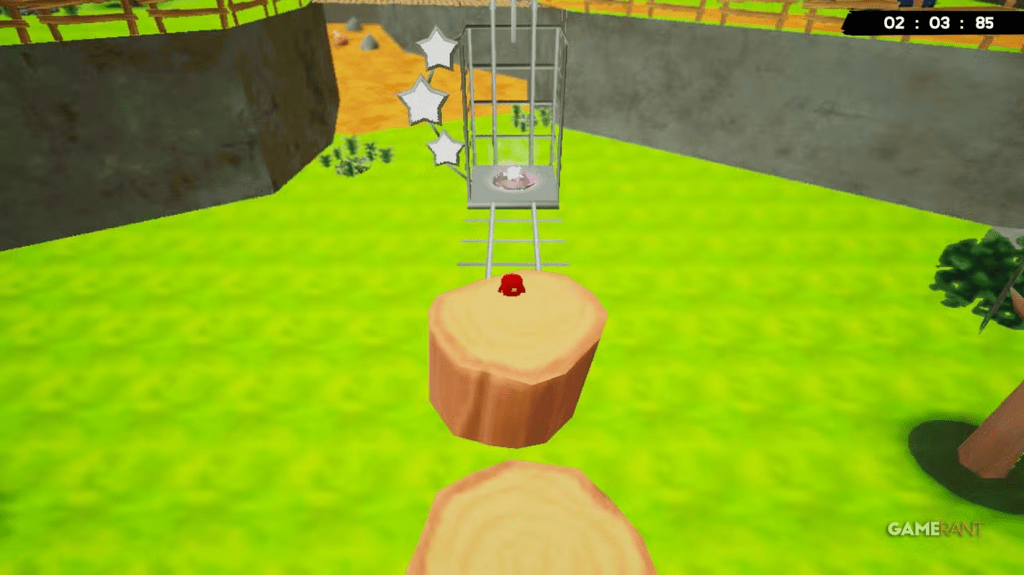
Figure 4: The Super Mario 64 tribute secret level, Plumber Hill, with Bandage Girl caged in the distance and stars to collect scattered across the level.
Image Source: https://gamerant.com/super-meat-boy-3d-all-secret-levels-locations/
Beyond the secrets, there are 75 bandages to collect across the light world levels, 75 A+ times to beat in the light world and another 75 in the dark world, plus glitches hidden in each world that unlock warp zones. For the truly masochistic, there are also achievements for completing entire worlds deathless in a single run, which is comfortably the hardest challenge the game has to offer. Not something I’m pursuing right now, but if you’re the type who enjoys that kind of punishment, it’s there waiting for you. It all adds up to a huge amount of content if you want to chase it, and the one-more-try loop makes all of it feel worth pursuing.
The one thing missing is a per-level leaderboard. For a game this built around time and repetition, competing against a global time or a friend’s ghost feels like an obvious fit, and its absence is a real missed opportunity.
One small frustration worth flagging: two achievements didn’t pop despite being completed, leaving me at 17/26 on the board rather than the 19/26 I actually earned. The developers are aware and a fix is reportedly in the works, but it’s worth knowing going in.
Accessibility: Nearly Well Done
The options menu is genuinely solid: language, screen shake toggle, speedrun mode, position helper with optional guiding line, camera speed, tutorial toggle, anti-aliasing, vsync, gamma, full audio sliders (master, music, SFX, cutscenes), colour blindness modes with a severity slider, character outlines, always sprint, stick sensitivity, and the 45-degree snapping toggle. It’s a thoughtful list. The one glaring omission is no controller remapping, which sticks out even more because everything else is here.
Verdict: Still Tasty, Just Not Quite Perfect
Super Meat Boy 3D doesn’t fully recapture what made the original special, and the move to 3D introduces new frustrations that weren’t there before. The personality and polish are largely missing, the bosses are weak, and the position indicator introduces an unintentional layer of friction throughout. But the core gameplay is fun, tight, and genuinely hard to put down once everything clicks, the world progression is well structured, and the sheer volume of content (bandages, A+ times, dark world stages, secret levels, unlockable characters) gives you plenty to chase long after the credits roll. If you’re expecting a perfect evolution, you’ll probably be disappointed.
So is it better than the original? No. But it doesn’t need to be. It’s a different take on the formula from a different team, and on those terms it mostly succeeds. If you’re open to that, especially through Game Pass, there’s a lot here worth playing.
Rating: 3.5/5
Time Played: 17.5 hours
Completion: 100% (17/26 achievements, technically 19/26 due to bugs)





Leave a comment