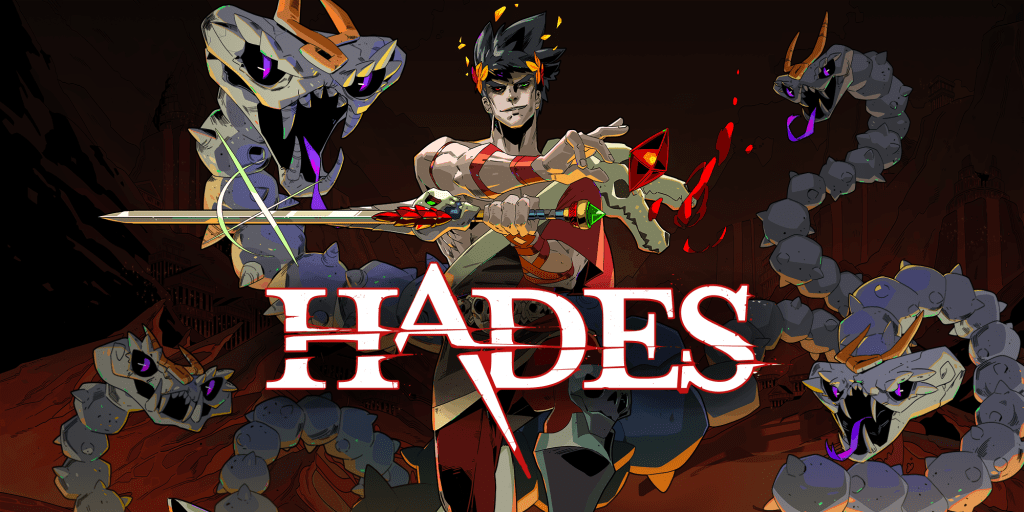
Hades is a roguelite indie game from Supergiant Games, and it’s one of those games where you instantly feel that polish. Nothing is half-baked, every system supports another system, and every new piece you unlock feels like it fits perfectly into what’s already there, like the game keeps expanding without ever falling apart.
I played Hades in preparation for Hades II, mainly because the sequel still hasn’t hit Xbox at the time of writing, and with all the hype surrounding its recent spotlight, especially after The Game Awards, I figured it was finally time to see what the fuss was about.
And to be clear, I wasn’t just playing it to “kill time” until the sequel drops. From what I understand, Hades II is a direct continuation, so it felt wrong jumping into the next chapter without experiencing the original properly first.
The funny thing is, I already tried. About a year ago I put a measly 3 hours into Hades before deciding it just wasn’t for me, and honestly, I think I know why, I was coming straight off playing The Binding of Isaac religiously (pun intended), so Hades just didn’t click at the time, and I bounced off fast. But this time I started a fresh save, and suddenly I couldn’t stop playing until I’d beaten the game’s main storyline. I never imagined a game where you die over and over again could be so rewarding, but Hades makes it work, not just mechanically, but emotionally.
A Roguelike Built on Momentum
At its core, Hades is fast, fluid, and constantly moving. Every run is a chain of combat rooms, upgrades, and split-second decisions, and the pacing is exactly why it’s so addictive. The moment-to-moment gameplay is so clean that even when a run ends badly, it rarely feels like a waste of time.
Because even when you lose, you still gain something. Resources, upgrades, progress, story, relationships, something always moves forward. Death is progress, and repetition becomes improvement, which is such a clever way of turning failure into motivation instead of frustration.
It’s “die and retry” design that actually feels motivating instead of exhausting, and that’s not easy to pull off.
Dying Isn’t Losing, It’s Coming Home
This is the key difference for me.
Most roguelikes treat death as a reset. Hades treats death like a return to the centre of the world, a chance to breathe, regroup, and see what’s changed. You come back to the House and it feels alive, full of characters reacting to what you did, or didn’t do, in your last run.
And somehow the game makes failure feel comforting.
Like, fine, I died, but I’m home now, and I’m stronger, and I get to try again.
It turns what should be repetitive into something that feels weirdly rewarding. The loop isn’t just gameplay, it’s the story.
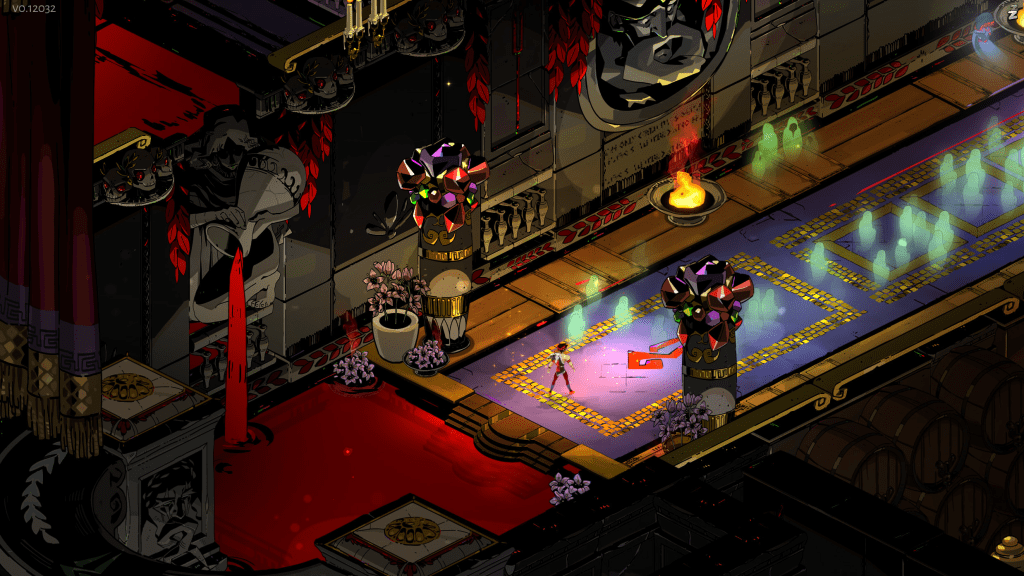
Figure 1: The Home You Respawn at When You Die
Image Source: https://www.rockpapershotgun.com/hades-early-access-review
The Gods Are the Hook
The biggest selling point of Hades is easily the Greek mythology side of it. You’re constantly interacting with gods and characters that feel familiar in an “oh wow, I know you” kind of way, and the game uses that recognition brilliantly.
It’s not just “here’s Zeus”, it’s Zeus with personality, humour, and dialogue that makes him feel like a character rather than a reference. The jokes land, the writing stays sharp, and everyone is memorable and likeable.
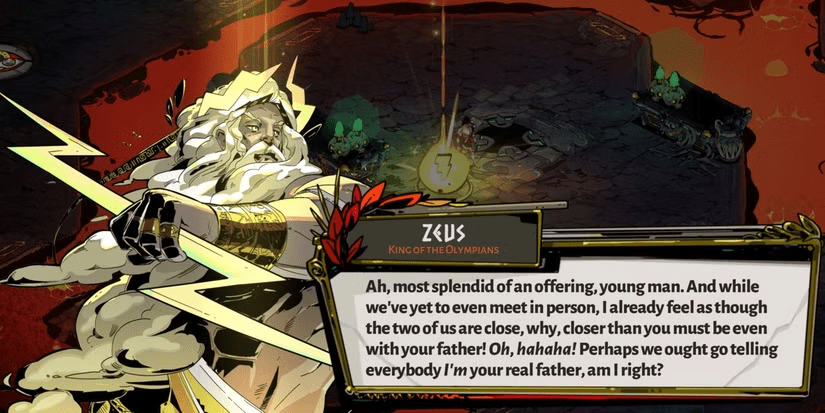
Figure 2: Zeus’ humour and dialogue
Image Source: https://www.thegamer.com/hades-best-worst-standard-boons-each-god/
And the best part is how the gods affect gameplay. The powers you pick up during your run come from them, and they don’t feel like boring stat boosts. They massively change how your build works, so your run can shift from controlled and precise to absolute chaos depending on which gods show up and what you commit to.
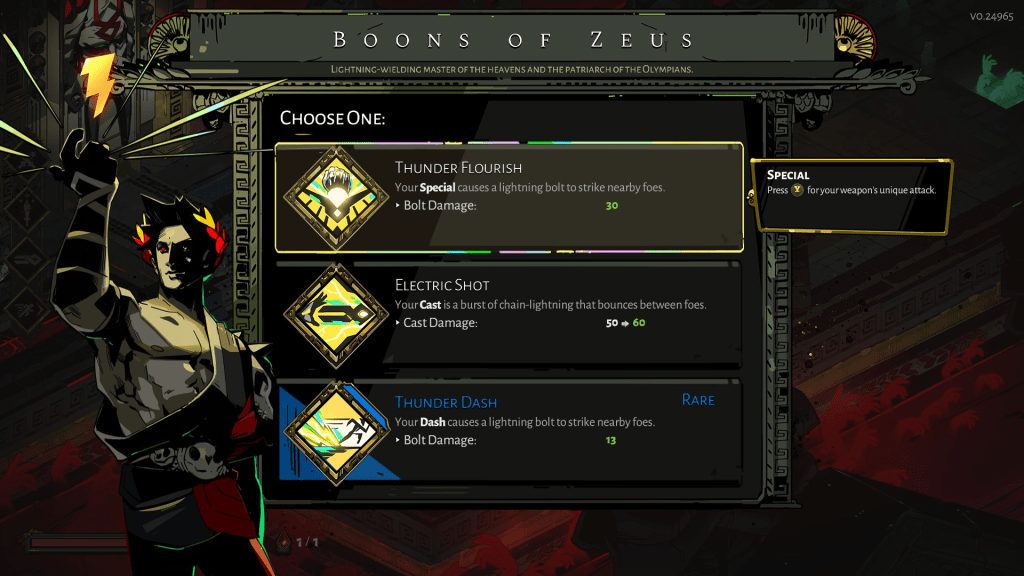
Figure 3: The “Boons of Zeus” Menu
Image Source: https://www.fanbyte.com/legacy/hades-boons-guide-best-boons-god-specialties-more
It’s one of the most addictive build systems I’ve played in a roguelite, because it constantly makes you feel like, okay, this run could be the run, especially as you can play riskier, taking on harder rooms to gain more boons and upgrades.
Combat That Feels Like a Reward System
Hades’ combat is a masterclass. It’s fast-paced, responsive, and smooth in a way that makes every weapon feel satisfying. The game is easy to understand, but hard to master, and that’s exactly why it’s so replayable.
Even with a relatively simple core moveset, your basic attack, special, cast, and dash are enough to create loads of variety once upgrades start stacking. The weapons also do a great job of pushing different playstyles. You can go close-range and aggressive, play safer at range, or lean into builds that completely change how you approach each room.
There’s a great mix of weapon styles too. The sword is your classic all-rounder, the shield turns fights into something more controlled and defensive, the bow rewards patience and timing, and the twin fists are just pure pressure and speed. Then there’s the Adamant Rail, which is basically a gatling gun in the Underworld, and it completely changes the pace of a run when you’re shredding rooms from a distance.
My personal favourite though is easily the spear. It just feels so clean, quick, and reliable, it gives you that perfect balance of staying aggressive while still keeping enemies at a safer distance, and once you start stacking the right boons on it, it becomes ridiculously satisfying to use.
One detail I really liked is how the game subtly pushes you to experiment even when you don’t want to. Sometimes a weapon will glow purple, and if you pick it, you’ll earn bonus Darkness on that run, which is a smart little nudge that gets you switching things up instead of sticking to the same comfort picks every time.
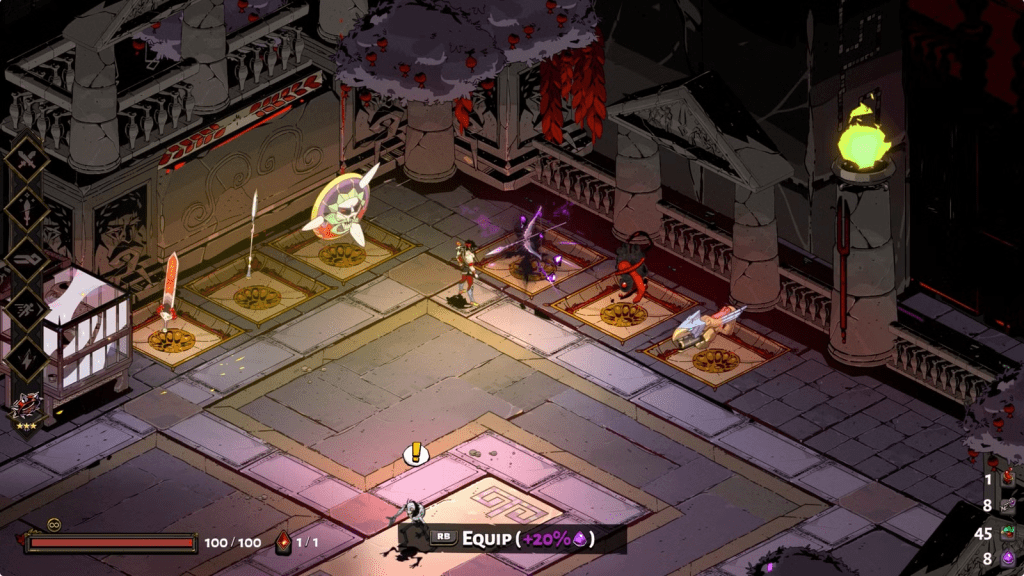
Figure 4: The Weapon Room with the Purple Glowing Bonus Incentive
Image Source: https://www.polygon.com/hades-guide/21454657/purple-weapon-glow-cloud-arsenal-room-darkness-rb-r1-equip-20-percent/
I’m not going to pretend I mastered every weapon variant, but there’s more than enough here to keep combat feeling fresh for a long time.
And when everything clicks, when your weapon, boons, and upgrades all start feeding into each other, Zagreus feels unstoppable.
Doors, Decisions, and “Just One More Room” Energy
Hades is constantly giving you tiny choices that make you feel in control. After clearing a room, you usually get a choice of doors, and each one hints at what reward you’ll get next, things like a god upgrade, currency, healing, or progression items.
That small design choice is a huge reason the game stays fun, because you’re not just wandering through rooms, you’re always planning. Do I take the reward that helps right now, or the one that sets up my build later? Do I chase story progress, or stock up on resources for upgrades?
I also love that the game shows you what you’re getting before you commit. It’s a small UX detail, but it makes runs feel more intentional, like you’re curating a build rather than rolling the dice completely blind.
There’s also an extra layer of risk and reward built into this, because sometimes you’ll see a skull icon on a door, which basically signals that the next room is going to be more challenging, but the payoff is better than the standard version. So a skull-marked Darkness room, for example, might reward you with more Darkness, but you’ll have to earn it through a tougher fight. The same idea applies to other reward rooms too, skull doors are essentially the game asking, do you want the safe option, or do you want to gamble for something better?
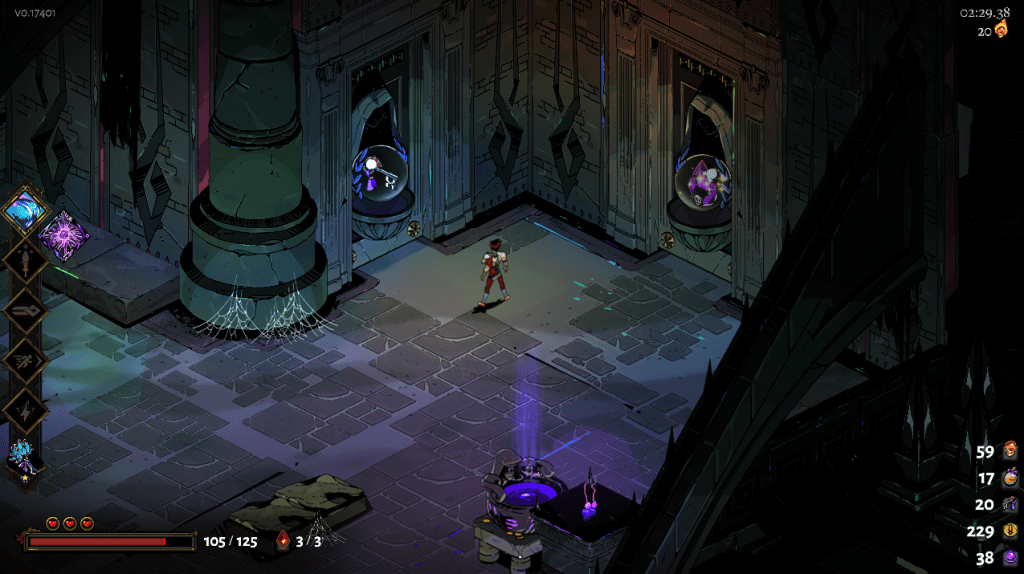
Figure 5: Door Choices Between Chambers, Showing Rewards in Advance
Image Source: https://www.reddit.com/r/HadesTheGame/comments/bpc5l5/what_do_the_doors_with_the_skull_mean/
It creates a really satisfying micro strategy inside the fast action, and it keeps every run feeling personal.
Progression, Resources, and Crazy Value for Money
There is an insane amount of content in Hades.
Even after beating the main storyline, it’s obvious there’s still loads left. More weapon upgrades, more relationships, more side objectives, more unlocks, and yes, even the kind of long-term “secret ending” grind that a lot of roguelite fans love committing to.
The progression system is built to keep pulling you back in too. You’re collecting resources during runs that you can spend back at the House to improve your overall strength and unlock new tools. Even small things like renovating and upgrading areas over time makes the game feel like it’s growing with you.
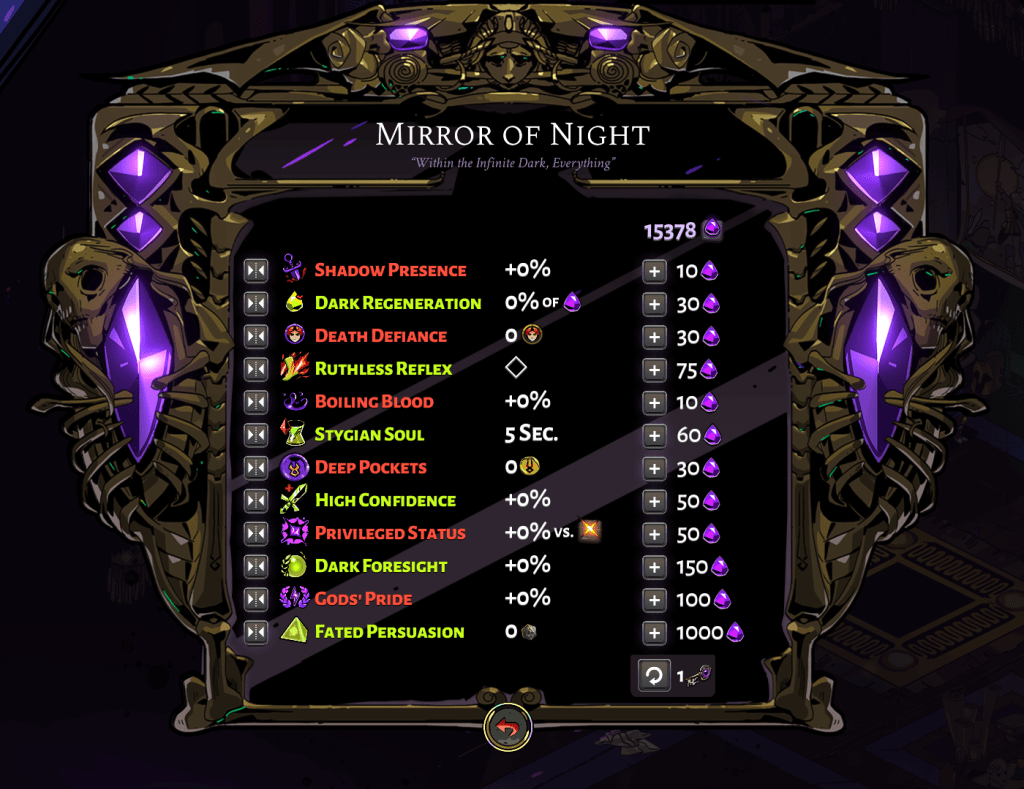
Figure 6: The Mirror of Night Allows You to Spend Darkness on Upgrades
Image Source: https://www.reddit.com/r/HadesTheGame/comments/pej9m2/how_did_you_upgrade_your_mirror_of_night_and_why/
It’s honestly ridiculous value for money, especially considering it’s available through Xbox Game Pass.
Keepsakes, Nectar, and Why Characters Matter
One of my favourite parts of Hades is how relationships aren’t just extra story, they matter mechanically too.
You can gift characters Nectar, and when you gift someone for the first time, you’ll get a Keepsake, basically an equipable charm that can help shape your runs. The more rooms that you clear whilst each keepsake is equipped, will level it up to a maximum of 3 times, increasing it’s ability even more.
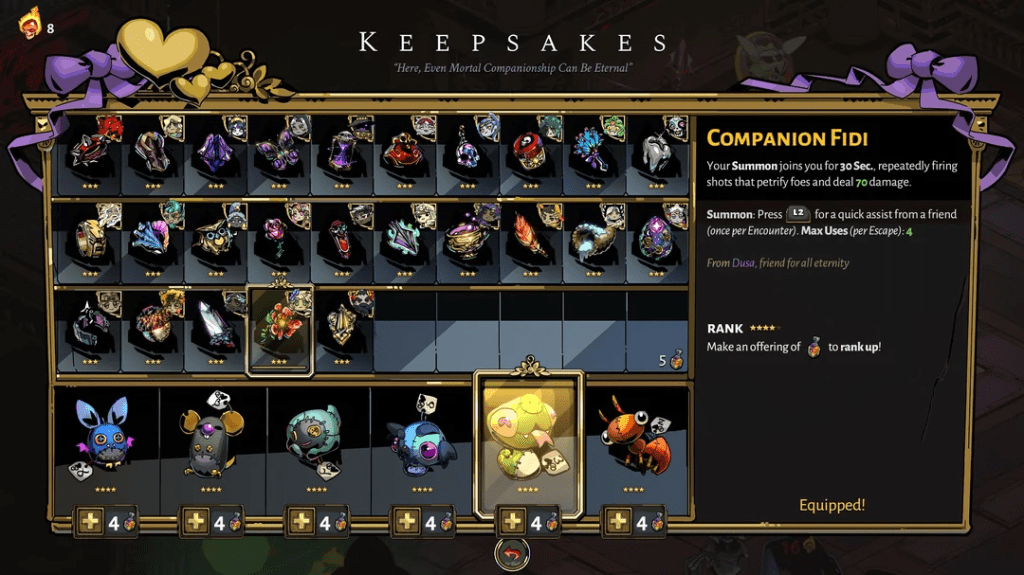
Figure 7: All Keepsakes at Their Maximum Level
Image Source: https://www.reddit.com/r/HadesTheGame/comments/urya2a/after_160_hours_later_i_manage_to_do_it_all/
It’s a simple idea, but it works perfectly because it makes character interactions feel useful beyond dialogue. You’re building connections, unlocking story, and gaining tools for future runs, and it all ties together so cleanly.
The Meta Problem, Some Boons Are Just Better
One thing I noticed as I played more is that a lot of the time, I wanted to pick the exact same strong boons and upgrades over and over again. There are definitely options that feel clearly more powerful than others, and once you find a few that match your playstyle, it’s hard not to tunnel into them.
The only reason I didn’t always do that is because the game pushes you to experiment. The game has a “Prophecies” menu which are full of tasks that encourage you to collect boons from specific gods, and objectives that reward you for trying different weapon upgrades, it nudges you into variety even when your brain is screaming “pick the strong one again”.
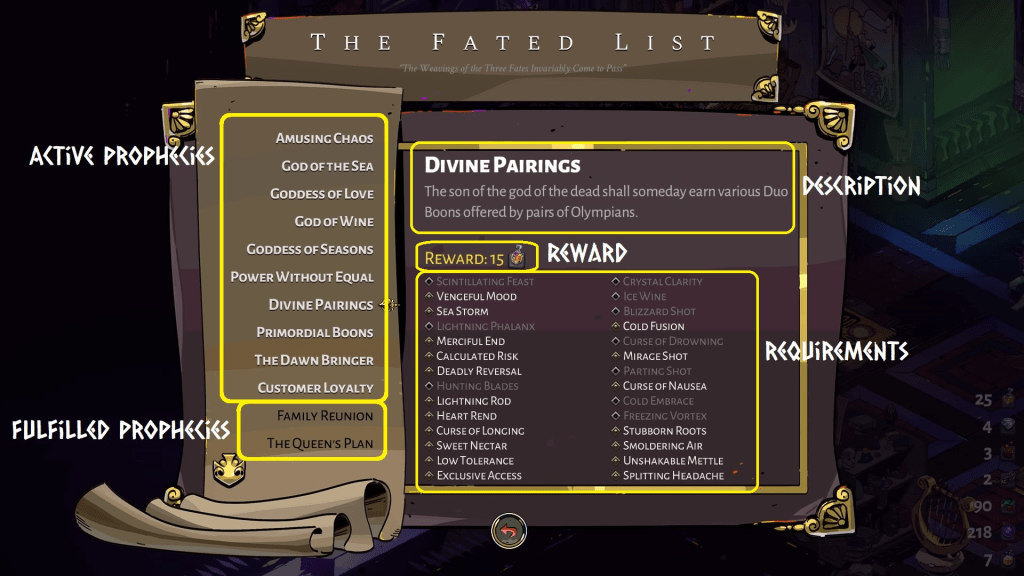
Figure 8: The Prophecies Menu
Image Source: https://psnprofiles.com/guide/13126-hades-the-fated-list-of-minor-prophecies
And honestly, I think that’s a good thing. It keeps runs from turning into the same script every time, even if the balance can sometimes feel like there are standout picks that are just a step above the rest, or at least they are for how I like to play.
Keeping the Game Fresh, Modifiers and Replayability
Once you start getting deeper into the game, Hades introduces ways to increase challenge and keep runs feeling fresh, especially by letting you apply difficulty modifiers that make escape attempts harder from the “Pact of Punishment” menu, while also letting you earn valuable rewards again.These can add modifiers such as time limits, or stronger enemies, or more enemies etc.
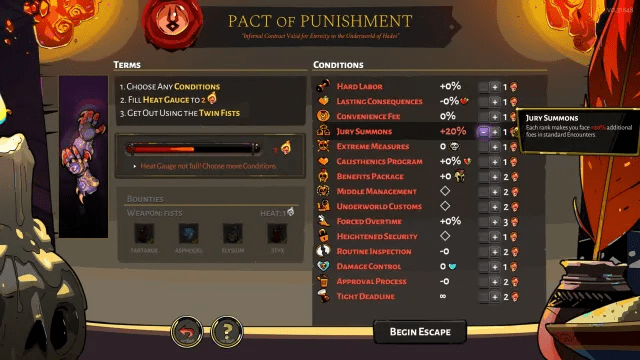
Figure 9: The Pact of Punishment Modifier Menu
Image Source: https://primagames.com/gaming/hades-guide-pact-of-punishment-modifiers-heat
It’s a clever system because it stops the game from feeling like you’re repeating the same loop for nothing. If you want more progression, the game asks you to raise the stakes. It’s optional, but it’s one of the reasons Hades stays addictive even after you “know” what you’re doing.
Soundtrack, Subtle, Unique, and Instantly Recognisable
The soundtrack in Hades is really good, not in a “constantly blaring in your face” way, but in a way that supports the mood without ever becoming background noise.
It’s subtle, it’s stylish, and the best compliment I can give it is this. You can instantly tell it’s Hades.
It has such a unique identity compared to most roguelites, and it genuinely helps the game stand out. It’s got this mix of energy and atmosphere that just works, and it helps the game feel distinct even when you’re deep into repeated runs.
It might not be my all-time favourite soundtrack, but it’s distinct, instantly recognisable, and it suits the world of Hades perfectly.
Voice Acting and Writing, God-Tier (Literally)
The voice acting is incredible, full stop.
Every character feels like a person, not a quest marker. The writing is funny, charming, and sharp, and there’s so much dialogue that it genuinely feels like the game never runs out of new things to say.
That said, this is also where one of my biggest long-term frustrations came in. Eventually, I wished the game was a little more direct about what it wanted from me for certain quests and progression paths. The dialogue is amazing, but sometimes it feels like you’re just shooting in the dark, hoping the right character appears at the right time so you can move something forward.
Accessibility and UX, Strong Basics, Missing Visibility Options
From a UX perspective, Hades is excellent. Menus are clean, upgrades are understandable, and the whole game feels built to keep you in flow. It’s fast, responsive, and never clunky, which matters so much in a game that demands quick reactions.
Accessibility-wise, it’s solid, but not massive.
The standout feature is God Mode, which makes you tougher the more you die. It’s genuinely great for anyone who wants to focus on story or experimentation without constantly being slammed back to the start.
It also includes comfort and clarity options like subtitles, screen shake settings, vibration options, brightness controls, and audio sliders, plus some helpful gameplay comfort like control rebinding, deadzone settings, and aim assist.
Where it falls short is visual accessibility. There’s no colourblind mode or strong contrast options, and as the game gets more intense, the screen can become visually messy, especially once effects stack up deeper into a run. It can turn into a bit of a blur at times, which isn’t ideal in a game where readability matters.
Final Verdict, A Must-Play Roguelite That Earns the Hype
As a massive Binding of Isaac fan, I still don’t think Hades competes with Isaac’s level of pure roguelike chaos and endless randomness.
But Hades isn’t trying to be that.
It’s faster, smoother, more story-driven, and built around characters and progression in a way that makes every run feel meaningful. It’s one of the few roguelites where dying over and over doesn’t feel frustrating, it feels rewarding, like part of the experience rather than a setback.
It’s stylish, funny, addictive, packed with content, and insanely polished. Even if you’re only slightly considering playing a roguelike, Hades is a must-play.
Because once it clicks, you’re always one run away from saying, alright, just one more.
Rating, 4/5
Total playtime, 23h45m
Achievements, 19/49 (415/1000G)
 Kirbylife Game Research & Reviews
Leave a comment