
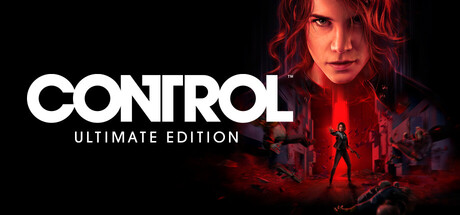
Welcome to the Oldest House
Control is the rare kind of game that feels completely comfortable leaving you in the dark. Developed by Remedy Entertainment and released in 2019, it drops players into a world where logic bends, architecture shifts, and the most dangerous object in the room might just be a desk chair. Instead of guiding you gently into its universe, Control shoves you through the front door and expects you to keep up, and surprisingly, that confidence is exactly what makes it so compelling.
I originally picked up Control because of my love for the Alan Wake universe, knowing there was some form of connection leading into Alan Wake 2. Since finishing it, the announcement of Control 2 has only made that decision feel even more justified. What started as curiosity about a shared world quickly became an experience that stood firmly on its own.
You play as Jesse Faden, a woman marked by a childhood supernatural event and searching for answers about her missing brother. Her investigation leads her to the Federal Bureau of Control, a secretive government agency operating inside a brutalist skyscraper known as the Oldest House. What begins as a personal search quickly turns into something far bigger, as Jesse becomes entangled in the Bureau’s strange responsibilities and the hostile paranormal force known as the Hiss. Control establishes its tone immediately, mysterious, unsettling, and unapologetically weird, without ever over-explaining itself.
Abilities – Power First, Gun Second
Control isn’t a cover shooter pretending to be something else. From early on it becomes clear that the game wants you moving, dashing, and tearing the environment apart, not hiding behind waist-high walls. Combat arenas are built like sandboxes filled with destructible objects, vertical space, and multiple angles of attack. The more abilities you unlock, the less it feels like you’re surviving encounters and the more it feels like you’re commanding them.
The standout ability is Launch, a telekinetic throw that quickly becomes the backbone of combat. Ripping concrete from pillars, catching rockets mid-air, or hurling office furniture across rooms never loses its novelty. It’s responsive, powerful, and often more effective than firing a bullet. But Launch is only the beginning.
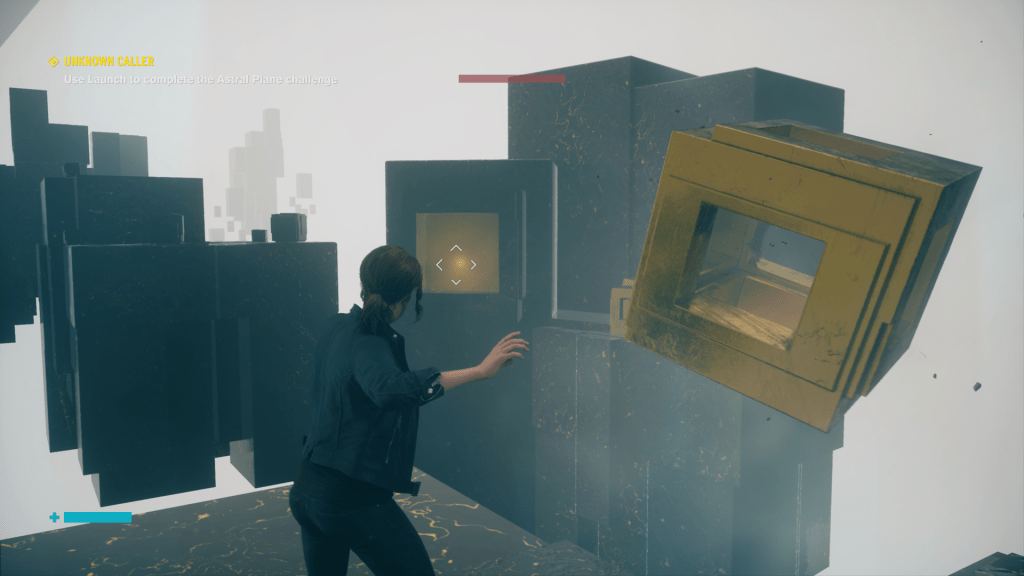
Figure 1: Telekenesis/Launch Ability Being Used
Image Source: https://www.gamesradar.com/control-objects-of-power/
Evade introduces quick dashes that keep combat fluid and prevent firefights from becoming static. Shield lets you pull debris toward you to absorb incoming damage, then burst it outward offensively. Seize allows you to temporarily turn weakened enemies into allies, subtly shifting the balance of encounters without ever trivialising them. Levitate changes combat entirely by introducing aerial positioning and vertical traversal, while Ground Slam adds a devastating downward strike from above. Even melee upgrades stay relevant thanks to scaling damage boosts and synergy with movement.
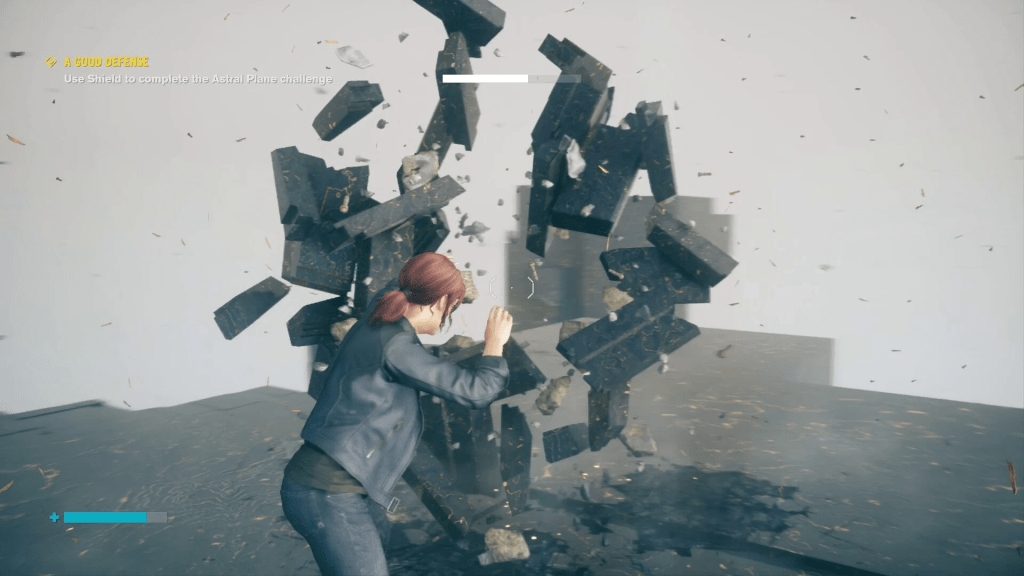
Figure 2: Shield Ability Being Used
Image Source: https://www.gamebyte.com/control-guide-every-psychic-ability-and-how-to-unlock-them/
Upgrades deepen these powers rather than simply inflating numbers. Shield evolves into offensive rushes and energy recovery boosts, Seize gains duration and stronger targets, and Levitate increases in airtime and slam impact.
Health and energy management upgrades further shape whether you play aggressively or cautiously. All of this is handled at Control Points, which act as fast travel hubs, upgrade stations, and safe zones. The overall result is less of a traditional skill tree and more the gradual unlocking of a full supernatural toolkit.
Weapons & Mods – One Gun, Many Personalities
Control technically gives you a single firearm, the Service Weapon, but calling it “one gun” is misleading. It transforms into multiple weapon forms, each drastically altering how combat feels. You can equip two forms at once and swap instantly, which encourages experimentation rather than locking you into a rigid playstyle.
• Grip acts as the reliable semi-automatic pistol, ideal for mid-to-long range precision.
•Shatter behaves like a shotgun, devastating at close range and excellent for crowd control.
•Spin becomes a rapid-fire SMG suited for medium-range chaos and sustained pressure.
•Pierce is a charged, railgun-style shot capable of penetrating enemies and cover, perfect for tougher targets.
•Charge functions like a rocket launcher, firing explosive rounds that excel at area damage.
The expansion-added Surge, which pushes things further with sticky grenades that can be layered onto enemies or surfaces before detonating.
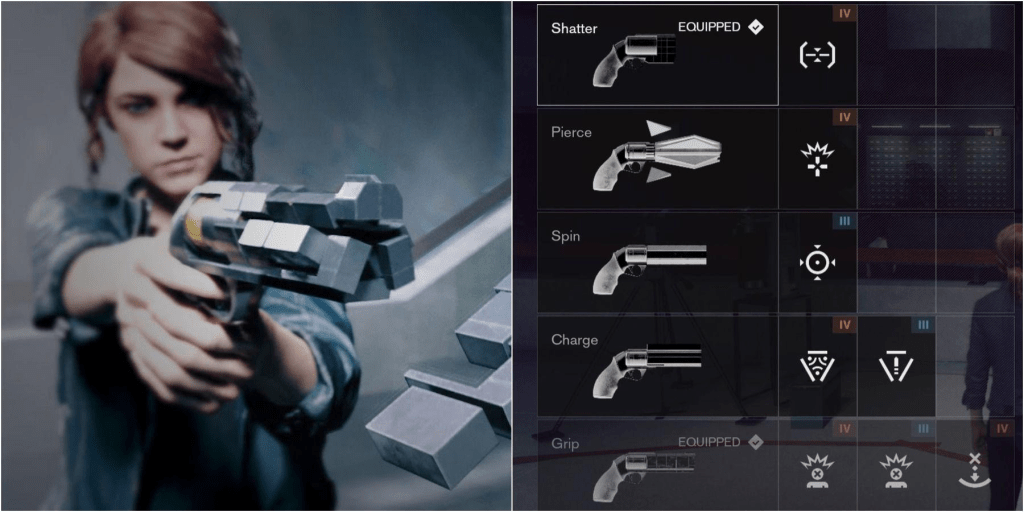
Figure 3: The Service Weapon + It’s 5 Base Game Variants
Image Source: https://www.reddit.com/r/controlgame/comments/1bh1fat/which_weapon_forms_are_your_favorite_and_which/
Progression comes through Astral Constructs at Control Points, where you spend in-game currency and materials to unlock or strengthen forms. Layered on top are weapon and personal mods, which noticeably change performance rather than offering negligible stat bumps. Faster energy recovery, improved launch efficiency, increased damage while aiming, or altered ammo behaviour all subtly influence how you approach encounters.
Because you can only carry two weapon forms at a time, loadout decisions actually matter. Combined with abilities and mods, the system creates genuine build variety. One player might float above enemies with precision shots and controlled launches, while another charges through rooms with explosive blasts and shield rushes. It’s this blend of forms + powers + mods that gives Control its long-term combat depth.
Narrative & World – Confusion by Design
Control thrives on intentional ambiguity. Rather than delivering long exposition dumps, it scatters documents, audio logs, hotline messages, and cryptic conversations throughout the Bureau. This can initially feel overwhelming, particularly if you’re not keen on reading large amounts of lore, but engaging with it at your own pace reveals a layered and fascinating world that feels far bigger than what you physically explore.
You can follow the main narrative without reading everything, but the deeper you dive, the richer and stranger the Bureau becomes. The game never fully spells everything out, instead trusting players to connect the dots themselves. It’s a bold storytelling choice that won’t appeal to everyone, but for those who enjoy mystery and interpretation, it’s incredibly rewarding.
What truly elevates the narrative, though, is the setting itself. The Oldest House doesn’t just feel like a large building, it feels endless. Corridors stretch longer than they logically should, rooms shift, entire sectors feel disconnected from reality, and architecture rearranges itself without warning. It creates the constant impression that you’re only seeing a fraction of something impossibly vast. Offices sit next to surreal, reality-bending spaces, and mundane government paperwork coexists with objects that defy physics. That contrast between the ordinary and the inexplicable is where Control’s worldbuilding shines.
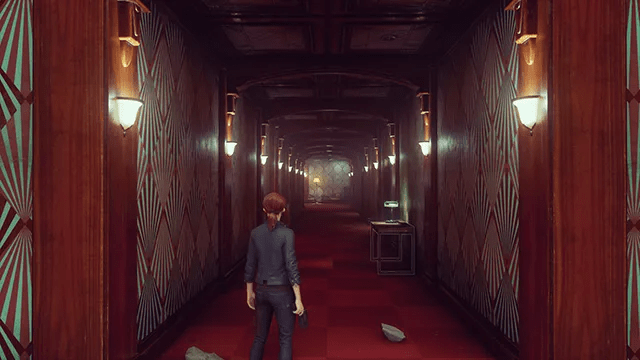
Figure 4: Long Empty Corridors Which Reshape Around the Player
Image Source: https://www.gamerevolution.com/guides/587475-control-ashtray-maze-solution
There’s also a quiet humour woven into the Bureau’s bureaucracy. Official reports treat supernatural phenomena with the same tone as office memos, which somehow makes everything even more unsettling. The world feels like a blend of cosmic horror, workplace satire, and paranormal thriller, and it never fully commits to just one tone. Instead, it sits in that uncomfortable middle ground where nothing is ever fully explained, yet everything feels deliberate.
Exploration feeds directly into this atmosphere. Optional areas, hidden rooms, and side missions often reveal strange little stories or environmental details that don’t necessarily impact the main plot but add texture to the universe. You’re not just uncovering a narrative, you’re peeling back layers of a place that feels alive, secretive, and impossibly large. The result is a world that lingers in your mind long after you stop playing, less because of what it tells you outright and more because of what it lets you wonder about.
Visuals & Sound – Atmosphere in Every Shadow
Visually, Control stands out more for its art direction and lighting than sheer graphical flashiness. The Oldest House leans heavily into brutalist architecture, towering concrete structures, sharp geometry, and vast open office spaces, yet it never feels dull. The muted colour palette allows shadows, reflections, and light placement to carry the atmosphere. Harsh fluorescent panels, deep corridor silhouettes, and glossy floors turn otherwise plain rooms into striking scenes, especially once combat starts tearing the environment apart.
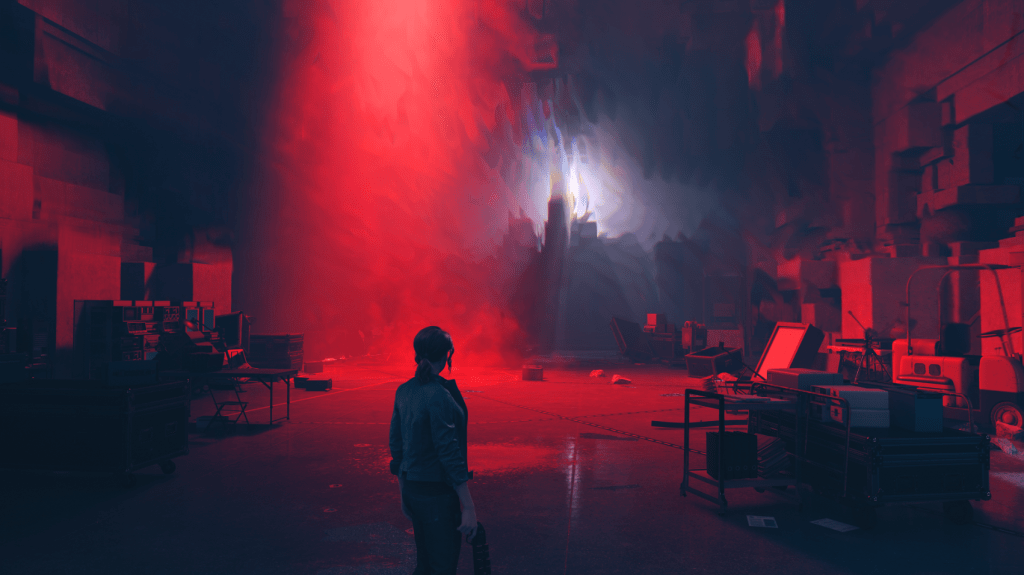
Figure 5: Dark and fluorescent Lighting
Image Source: https://caniplaythat.com/2019/08/29/deaf-game-review-control/
Character presentation is where the realism really hits. Jesse in particular looks remarkably lifelike during cutscenes, with detailed facial animation, natural lighting on skin textures, and subtle expressions that blur the line between game model and live-action performance. Transitions between gameplay and cinematics are smooth enough that the visual quality rarely dips, which keeps story moments immersive rather than feeling like separate modes. It’s not loud or overly colourful, it’s precise, controlled, and atmospheric, and that restraint is exactly what makes it so visually impressive.

Figure 6: Jesse Faden Lifelike Graphics In Cutscene
Image Source: https://wccftech.com/control-first-13-minutes/
The sound design supports this mood without overpowering it. Gunfire echoes through wide chambers, telekinetic impacts land with satisfying weight, and the ambient score hums quietly beneath exploration. Small details like distant announcements and mechanical drones make the Oldest House feel inhabited even when nothing is happening, tying the entire presentation together.
Frustrations & Drawbacks – Not Quite Perfect Control
Despite its strengths, Control isn’t flawless. The most noticeable sticking point is its navigation and map design. Rather than separating floors into clean, distinct layers, the game uses a vertically stacked map system that mirrors the architecture of the Oldest House itself. In theory, this fits perfectly with the building’s surreal, reality-bending identity, it’s supposed to feel confusing and endless. In practice, however, it can sometimes be more disorienting than immersive, crossing the line from intentional mystery into poor UX design.
The map often communicates height and depth through subtle shading rather than clear floor separation, which means objectives can appear deceptively close while actually being several levels above or below you. During early exploration this adds to the intrigue, but during backtracking or side missions it can lead to unnecessary wandering and friction that feels less like discovery and more like interface friction. It’s an example of strong thematic design slightly undermined by usability clarity, where atmosphere occasionally takes priority over player orientation.
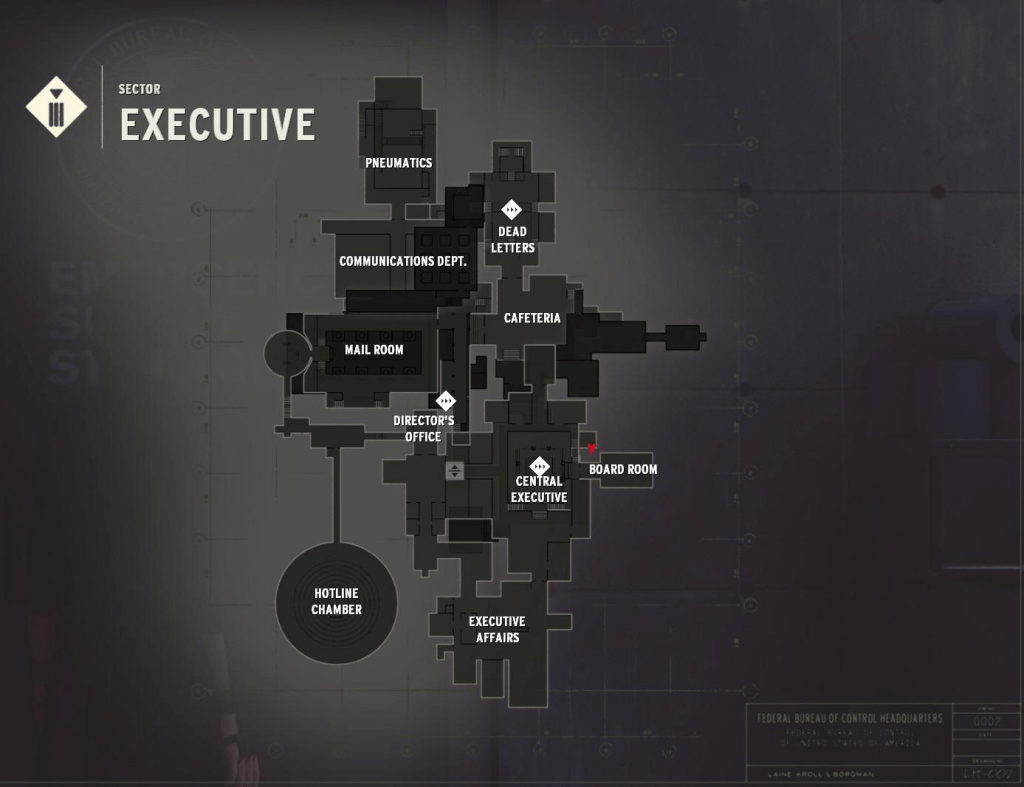
Figure 7: Confusing Multi-Layered Map Design
Image Source: https://www.reddit.com/media?url=https%3A%2F%2Fi.redd.it%2F2djt56ndzyx81.jpg
Repeated visits to similar office environments can also make the gameplay loop feel slightly repetitive over extended sessions, and enemy variety doesn’t always evolve at the same pace as Jesse’s growing power, occasionally making later encounters feel predictable. On top of that, save points sometimes sit just a little too far from difficult fights, and currency loss on death can discourage persistence during tougher moments.
None of these issues derail the experience, but they are noticeable bumps in an otherwise polished package — the kind of imperfections you feel rather than flaws that truly break the game.
DLC & The Remedy Universe – Expanding the Weird
The Ultimate Edition includes two expansions that feel like meaningful additions rather than filler, but they serve very different purposes. The Foundation acts as a direct continuation of the main story, picking up almost immediately after the base game ends and diving further into the Bureau’s inner workings and hidden layers. It feels less like optional side content and more like an epilogue chapter, extending the narrative rather than interrupting it.
AWE (Altered World Events), on the other hand, feels more self-contained. While it still sits comfortably within Control’s world, its focus leans toward connecting the game to Remedy’s wider universe, particularly Alan Wake, rather than continuing Jesse’s immediate storyline. It plays more like a crossover case file than a sequel chapter. Neither expansion spoils the mystery of the base game; instead, one deepens the core narrative, while the other broadens the universe, together reinforcing the sense that Control exists within something much larger than a single building.
Accessibility & Settings – Shaping Your Reality
Control includes a surprisingly robust Accessibility and Assist Mode suite that allows players to tailor both difficulty and presentation to their needs. While it doesn’t cover every modern accessibility standard, it offers a strong degree of flexibility in how the game is played, viewed, and controlled. Most options can be adjusted at any time, meaning players aren’t locked into a single experience and can fine-tune things as they go.
Key Accessibility & Customisation Options:
• Control adjustments including full controller remapping, stick swapping, and sprint toggles instead of hold-to-run
• Assist Mode modifiers such as aim assist, one-hit kills, player immortality/invincibility, and various damage scaling options that dramatically reduce difficulty barriers without penalty
• Visual settings like graphics vs performance modes, motion blur toggles, subtitle size and background opacity, HUD visibility controls, and health bar colour changes for both player and enemies
(notably, there are no dedicated colour-blind preset modes)
• Audio and interface options including individual sound sliders, a mute-copyrighted-music toggle for streamers, and general UI scaling or display adjustments
Overall, Control provides strong practical accessibility, especially through its Assist Mode which allows players to shape the challenge level to their comfort without disabling achievements or progress. While the lack of full colour-blind presets is a noticeable omission, the combination of HUD controls, subtitle customisation, and gameplay assists makes the experience highly adaptable. It isn’t the most exhaustive accessibility suite in modern gaming, but it is thoughtful and flexible.
Final Thoughts – Not for Everyone, But Hard to Forget
Control is a game that genuinely trusts the player. It doesn’t hold your hand, it rarely explains itself outright, and it certainly doesn’t limit the power it gives you. Instead, it hands you a set of supernatural tools, drops you into a shifting concrete labyrinth, and quietly asks what you’re going to do with them. That design choice can make the experience confusing or even frustrating at times, from its intentionally obscure storytelling to its occasionally clumsy map UX, but it’s also what makes the game feel so distinct.
What lingers long after finishing isn’t just the combat or the abilities, but the atmosphere and identity. The brutalist architecture, lifelike character cinematics, subtle sound design, and reality-bending worldbuilding create an experience that feels deliberate rather than formulaic. Control isn’t trying to appeal to everyone, and that’s exactly why it works as well as it does. For players who enjoy single-player action games, supernatural themes, or Remedy’s style of storytelling, it’s an experience that feels bold, unusual, and ultimately hard to forget.
Rating: 3.5/5
Time Played: 38 Hours
Achievements: 67/67


 Kirbylife Game Research & Reviews

Leave a comment