
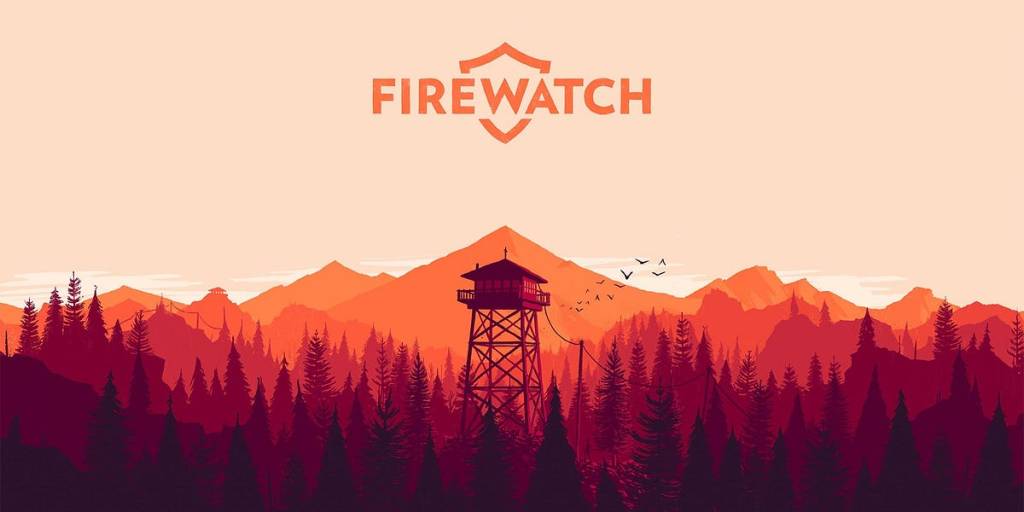
Spoiler Free Review:
Firewatch is one of those rare indie gems that doesn’t try to be everything, it focuses on telling a human, heartfelt story wrapped in a stunning visual and audio package. Released in 2016, the game is best described as an “environmental narrative” or “walking simulator,” where the emphasis is placed squarely on character development, atmosphere, and emotional storytelling rather than traditional gameplay mechanics. But to dismiss it as “just another walking sim” would be doing it a disservice. Its quiet, introspective tone and grounded performances create a uniquely immersive experience that certainly leaves you with something to think about.
This emotional depth and artistic confidence comes from Campo Santo, a small but exceptionally talented studio founded in 2013 by industry veterans Sean Vanaman, Jake Rodkin, Nels Anderson, and illustrator Olly Moss. Vanaman and Rodkin previously led the critically acclaimed first season of The Walking Dead at Telltale Games, while Anderson brought his design experience from Mark of the Ninja. Artist Olly Moss’s iconic style gives Firewatch its distinct visual identity. With a team of just about a dozen people, Campo Santo set out to make story-first games in rich, memorable worlds. Their success with Firewatch eventually led to the studio’s acquisition by Valve in 2018, where their creative DNA continues to influence larger-scale projects.
Gameplay: Trekking, Chatting, and Discovering
At its heart, Firewatch is about observation; of nature, of other people, and of yourself. You play as Henry, a man who takes a summer job as a fire lookout in the Shoshone National Forest, connecting only with your supervisor, Delilah, via handheld radio. Voiced brilliantly by Rich Sommer and Cissy Jones, their raw, funny, and occasionally awkward conversations create a deeply human and engaging dynamic. Conversations are initiated through points of interest in the environment or prompted as part of the main story beats, with timed responses that let you shape Henry’s personality in subtle ways. These moments are natural, often humorous, and surprisingly emotional.
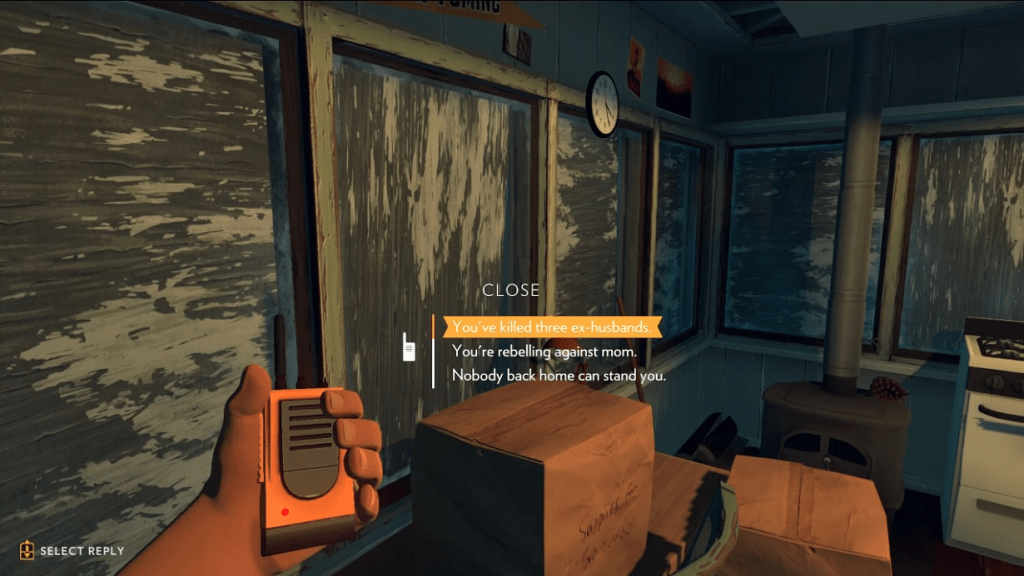
Figure 1: Three dialogue options whilst talking to Delilah on the radio
Image Source: https://www.rockpapershotgun.com/firewatchs-walkie-talkie-friendship-is-what-made-it-stand-out
The gameplay is light and purposefully minimal. You’ll hike through forests, rappel down cliffs, and open supply caches, but there are no enemies, puzzles, or combat mechanics here. The “challenge,” if any, lies in navigation. You use a paper map and compass to find your way, and the game doesn’t hold your hand.
There’s no GPS or minimap, relying instead on a paper map and compass for navigation. This can feel disorienting at first, especially with no on-screen indicator to show which direction you’re facing, forcing you to closely study the terrain to get your bearings. The map features two types of red lines: a dotted line tracing your recent path, helping you track short-term movements, and a solid red line marking all routes you’ve taken throughout the entire game save, providing a broader sense of where you’ve explored.
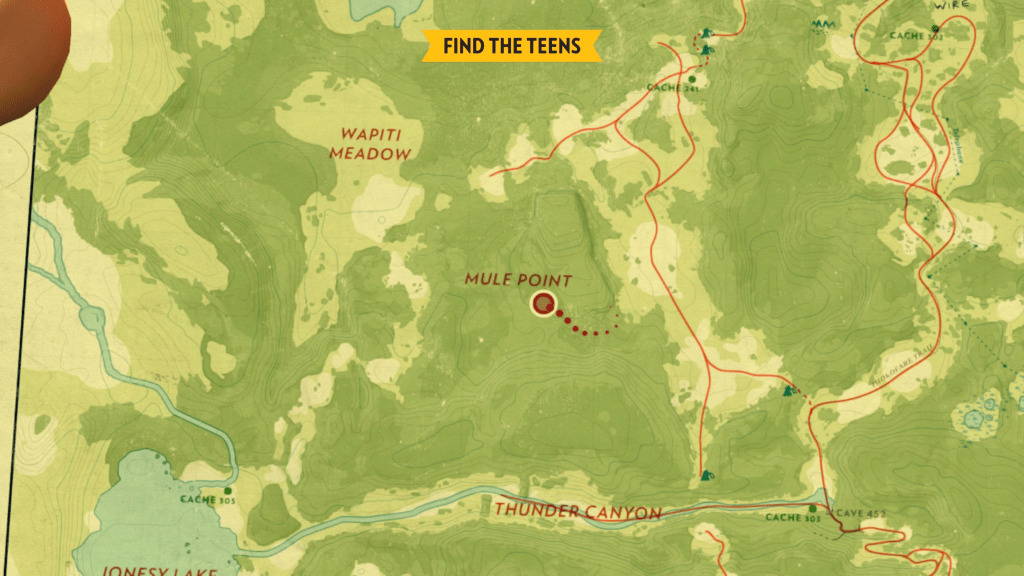
Figure 2: In-Game Map Displaying Recent Path (Dotted Line) and All Routes Taken (Solid Red Lines)
Image Source: https://www.reddit.com/r/Firewatch/comments/1an2uf7/exploring_firewatchoff_the_beaten_pathsout_of/
With multiple paths to key locations, you can approach objectives in varied orders, which adds freedom but can occasionally trigger dialogue that feels slightly out of order/context due to the non-linear exploration. This minor issue is noticeable but doesn’t significantly detract from the experience.
Where Firewatch absolutely shines is in its art direction. The world is drop-dead gorgeous, from the soft orange glow of sunrise through pine trees to the eerie stillness of a foggy morning in the canyon. The visual style is rooted in the iconic WPA-era National Park posters, interpreted through the minimalist yet expressive art of Olly Moss and Jane Ng. It’s low-poly, painterly, and full of personality, never aiming for realism, but capturing the feeling of the wilderness perfectly. Every location feels crafted with care, and the varied landscapes; lakes, fire-scorched clearings, and rocky valleys make the world feel much larger than it actually is.
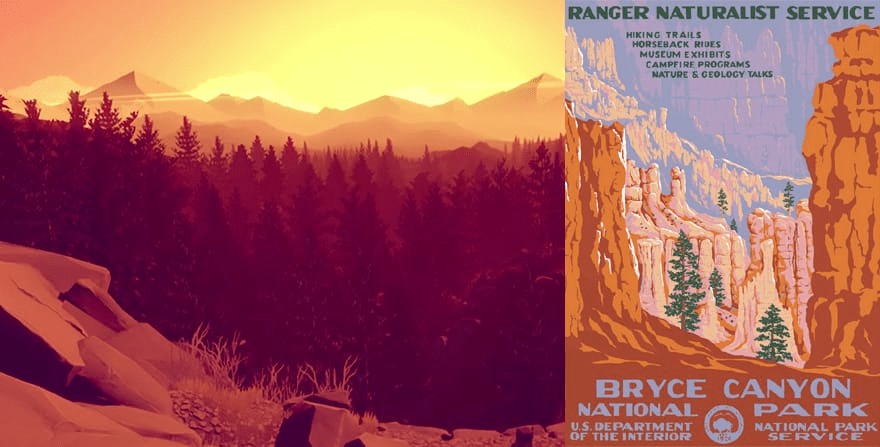
Figure 3: Firewatch’s Stunning Art Direction Alongside WPA-Era National Park Posters, Highlighting Vibrant, Painterly Landscapes
Source: https://www.killscreen.com/firewatchs-design-rich-american-history/
Sound and Atmosphere: Subtle Tones, Lasting Echoes
The sound design in Firewatch is a quiet triumph. Chris Remo’s original score, though concise at just 33 minutes long, is ambient, minimal, and beautifully timed, often pausing in silence before swelling or fading to signal key moments. The prologue sets the tone with a light, almost whimsical guitar and piano theme that evolves into something somber and reflective. Other tracks are equally dynamic, some peaceful, some introspective, a few slightly haunting, blending acoustic guitars and electric pianos to create emotional highs and lows without overwhelming the narrative.
Beyond the music, the environmental audio does a great job grounding you in the space. The rustling of leaves, distant thunder, birdsong, and the occasional eerie silence are all carefully used to support the game’s moments of calm and tension alike. There’s no jump scares or horror here, but Firewatch still manages to build suspense through sheer atmosphere. At moments, I felt genuinely unsettled, wondering if I was truly safe or alone in the vast wilderness.
Audio Tour and Replayability: A Behind the Scenes Feature
Firewatch offers compelling reasons to return to its world after the credits roll, thanks to its Audio Tour (also known as Director’s Commentary) mode and free roam feature. These additions enhance the game’s replay value, providing both creative insights and open exploration.
In the Audio Tour mode, the Shoshone National Forest is populated with nearly 100 cassette tapes. These tapes deliver developer commentary on story building, dialogue options, character writing, and game design. Beyond audio, the mode includes bulletin boards showcasing concept art and an interactive tool to adjust the in-game time and weather, deepening your appreciation of the game’s artistry.
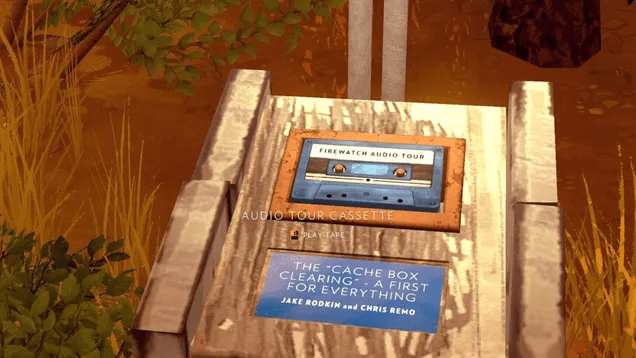
Figure 4: A casette tape found in the “audio tour” game mode
Image Source: https://kotaku.com/games/firewatch-audio-tour
The free roam mode lets you wander the stunning wilderness without objectives, perfect for soaking in the atmosphere or revisiting favorite locations..
Accessibility and Interface: Simple but Restrictive
Firewatch’s accessibility and interface support its narrative focus but feel limited compared to modern standards, with some strengths offset by notable drawbacks. Below are the key pros and cons:
Pros:
•Default subtitles: Included out of the box, ensuring basic accessibility for dialogue-heavy moments.
•Adjustable audio: Individual sliders for voice, music, and effects allow sound customisation.
•Basic control options: Y-axis inversion and head bob toggle offer some flexibility for comfort.
•Stable performance: Runs smoothly overall, with no major crashes on Xbox Series X
Cons:
•Limited accessibility: No controller remapping (only preset configurations), no FOV slider, and no colorblind modes, which may frustrate some players.
•Barebones subtitles: No options to adjust size, colour, or background, limiting customisation.
•Radio system issues: Timed dialogue options can feel too short, especially when holding the map or compass, as they can’t be used simultaneously with the radio, leading to missed responses that feel significant in the dialogue-driven experience.
•Control limitations: No sensitivity settings; vertical aiming feels slower than horizontal, with no way to tweak it.
•Technical hiccups: A minor intro bug causes text to skip, briefly breaking immersion. Console performance is locked at 30fps, and a 60fps remaster would enhance the visuals.
While these limitations don’t ruin Firewatch’s immersive storytelling, they can frustrate players who value accessibility, especially in a game where dialogue and exploration are so central. but as it stands, the core experience remains compelling despite these shortcomings.
Final Verdict: A Poignant Walk Worth Taking
Firewatch is a brief but powerful experience that shines through its emotional storytelling, painterly visuals, and strong sense of place. Free of combat, side quests, or mechanical clutter, it’s a game that dares to slow down, focusing instead on the quiet tension between two voices and the natural world around them. Its minimalist approach to gameplay relying on a map, compass, and your own sense of direction, adds to its grounded tone and encourages real immersion.
With top-tier voice acting, evocative sound design, and the thoughtful addition of features like Audio Tour and Free Roam, Firewatch invites reflection both during and after your time in the Shoshone. It’s not about what you do, but what you notice, and what that noticing reveals. For players drawn to narrative richness and atmospheric depth, it’s a journey well worth taking.
Playtime: 4 hours
Achievements: 10/10
Rating: 8/10 turtles


 Kirbylife Game Research & Reviews
Leave a comment