

Some games stand the test of time, not just because of how they play but because of how they make you feel. Shadow of the Colossus is one of those games. Originally released in 2005 for the PlayStation 2, it became a cult classic, praised for its breathtaking world, emotional storytelling, and unique gameplay. The 2018 remake brings it to a new generation with gorgeous visuals and smoother controls, but does it still hold up today for someone experiencing it for the first time?
A World of Mystery and Silence
Right from the start, Shadow of the Colossus lets you know it’s doing things differently. There are no bustling towns, no NPCs, and no side quests where you collect 50 flowers for a guy who won’t even say thank you. It’s just you, your horse, and a whole lot of unsettling quiet.
You play as Wander, a young man who brings a girl named Mono to a forbidden land, hoping to bring her back to life. A booming, otherworldly voice, Dormin, tells you that to do so, you must hunt down and defeat sixteen giant creatures known as colossi. That’s it. No long-winded exposition, no cutscenes every five minutes, just a single, simple goal.
The Forbidden Lands are vast and empty, yet somehow, they feel alive. You ride across deserts, forests, and ruins, searching for each colossus. There’s no music, just the sound of the wind, your horse’s hooves, and your own thoughts. However, the journey between fights isn’t just filler, it builds tension, giving you time to reflect on what you’ve done and what’s coming next. And when the soundtrack does kick in during a battle? Chills. Every time.
The Weight of the Fight
Unlike many action games where combat is fast and flashy, Shadow of the Colossus makes every movement feel heavy. Wander isn’t some anime protagonist pulling off 12-hit air combos, he’s just a guy with a sword, a horse, and a very optimistic plan
Climbing a colossus is slow, methodical, and nerve-wracking. Every stab takes effort, every climb feels desperate, and every time a colossus violently shakes you around like a ragdoll, you can feel it in your bones. Your stamina gauge constantly ticks down as you cling to fur for dear life, forcing you to choose: go for a full-power strike and risk getting thrown off, or play it safe with quick jabs?
Even the controls reinforce the tension. Jumping feels sluggish, climbing is awkward, and the camera sometimes has a mind of its own, but that’s kind of the point. You’re not meant to feel graceful. You’re meant to feel like an ant fighting a god.
The deliberate and sometimes awkward control scheme, such as the stiff jumping mechanics and the limited camera controls, is a design choice that heightens the tension, but can also frustrate certain player types. Players who favor smoother, faster-paced combat may find themselves spending more time struggling with the mechanics rather than enjoying the world. On the other hand, those who appreciate slower, more deliberate gameplay may find these same design elements deepen the sense of struggle and accomplishment.
The Overwhelming Sense of Scale
Few games capture a true sense of scale like Shadow of the Colossus. The colossi aren’t just big, they’re impossibly massive, towering over Wander like living mountains. Standing at their feet, looking up as they slowly turn to face you, there’s an immediate feeling of powerlessness. Every step they take sends vibrations through the ground, every roar echoes across the empty land. The game makes sure you feel that scale in every moment, Wander isn’t effortlessly leaping up their bodies like an action hero; he’s clinging for dear life as they shake, trying desperately to keep his grip.
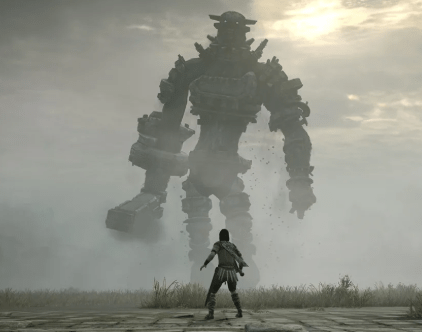
Gaius towering over Wander in battle
But it’s not just the colossi that create this feeling, it’s the world itself. The Forbidden Lands stretch endlessly in all directions, filled with massive ruins, towering cliffs, and deep valleys. Everything is built on a scale that makes Wander feel small, reinforcing the idea that he’s just a tiny figure in a land meant for something far greater. This overwhelming size isn’t just visual spectacle, it’s a storytelling tool, making every battle feel like an impossible feat and every victory feel like it came at a cost.
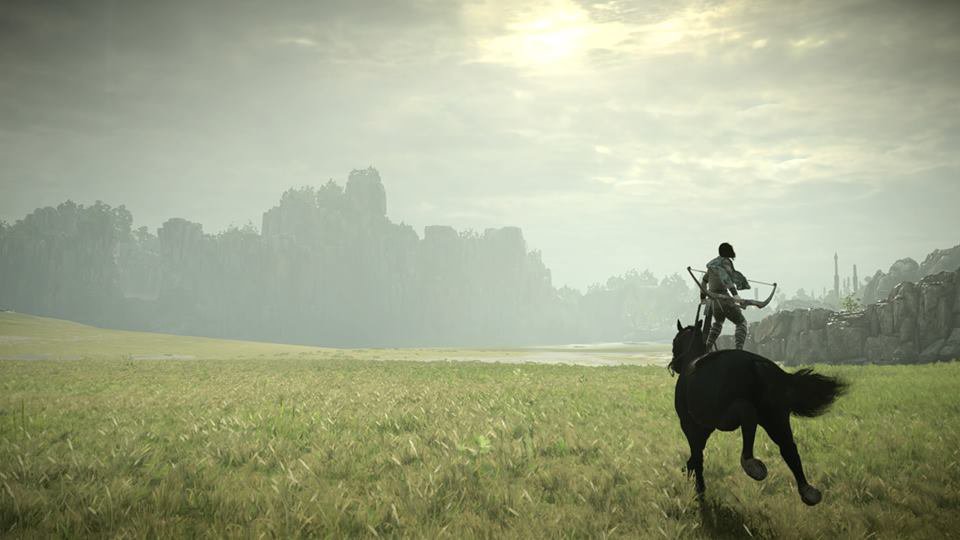
Wander and Agro in the vast landscape
The colossal scale and vast, empty world might be awe-inspiring to some, but some players may experience confusion or disorientation when navigating the large environment without clear objectives or markers. For those who prefer more directed experiences, this expansive, solitary atmosphere can sometimes feel less accessible, particularly during long travel segments between colossi.
The Guilt of Victory
What really sets Shadow of the Colossus apart from other action games is how it makes you feel after a battle. Unlike typical boss fights where victory is met with triumph, here, it often feels… wrong. These colossi aren’t evil, they’re just existing in their world, minding their own business until you show up with a sword and a mission. Some barely fight back, only reacting defensively as you climb and stab them. Watching them collapse, their massive bodies crumbling as mournful music plays, doesn’t feel like a win. It feels like a tragedy. Each defeat weighs on you, making you wonder if you’re really the hero of this story, or just a desperate fool willing to destroy something beautiful for a selfish goal.
An Uncluttered Experience
A lot of modern games are obsessed with user interface (UI), skill trees, and quest markers. Shadow of the Colossus doesn’t need to worry about any of that.
The Heads Up Display (HUD) is minimal:
✅ Health bar (When you get hit)
✅ Stamina bar (When you are climbing)
✅ Colossus health bar (When they have been hit)
✅ Your current weapon (When sword and bow are being swapped)
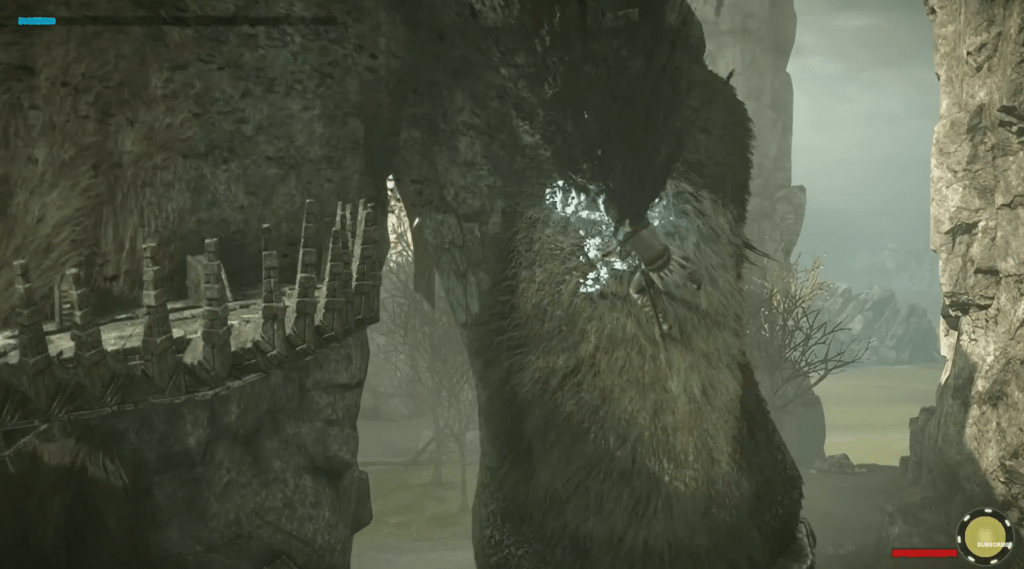
This image shows the minimalistic “HUD” with Wanders health and stamina bars at the bottom right, and the collosi’s health bar at the top left.
That’s it. No unnecessary icons, no distractions. Just you and the overwhelming sense that you may have made a terrible mistake by waking up a 200-foot-tall monster.
That said, the stamina bar is essential, since it dictates how long you can cling on for dear life. But the health bar and weapon display? Those are less persistent, appearing only when needed to fully immerse the player in the world.
Colossi: From Awe-Inspiring to Infuriating
The colossi are the core of Shadow of the Colossus, offering a mix of awe-inspiring battles and frustrating encounters. The best colossi, like Valus, Gaius, and Avion, combine stunning visuals with fair challenge and rewarding puzzle-solving. Others, like Quadratus and Phaedra, have great ideas but falter due to clunky mechanics or unclear solutions, while the most frustrating fights, like Basaran and Cenobia, often feel like you’re battling the controls more than the colossus itself. The game keeps things fresh by constantly surprising players with unexpected shifts in battle types, ensuring that no two encounters feel the same.
In my opinion, a great colossus should be:
✅ Visually stunning
✅ A fun puzzle to solve
✅ Fair in difficulty, challenging, not frustrating
Traversal – The Pacemaker of an Adrenaline-Filled Experience
You don’t just teleport between fights, you ride there. The Forbidden Lands are vast, empty, and eerily beautiful, with sprawling deserts, ancient ruins, and misty forests. There are no NPCs, no side quests, no distractions. Just you, your horse, and the slow realisation that this place used to be alive, and now it isn’t.
At first, the long rides might seem unnecessary. But if the game was just back-to-back boss fights, they’d start feeling like a glorified boss rush. These moments of silence make each battle feel earned. They give you time to soak in the world, speculate on what’s coming next, and mentally prepare for the next colossus.
And then there’s Agro, the horse. She’s not a generic video game mount, she’s a character. She resists slightly when you turn, slows down on rough terrain, and sometimes just decides she’s not feeling it today. At first, she might seem unresponsive, but once you get used to her, she feels more real than most human companions in games.
The Soundtrack: A Haunting Echo of the Colossi
The soundtrack of Shadow of the Colossus, composed by Kow Otani, remains one of the most powerful aspects of the game. The 2018 remake enhances the original’s orchestral score, breathing new life into its already emotionally charged music. From the sweeping strings to the subtle piano, the music amplifies the somber journey of Wander and his quest to bring Mono back to life. The enhanced audio quality ensures every note resonates more deeply, heightening the emotional weight of the colossus battles and the quiet moments in between.
In addition to the remastered sound, the soundtrack’s composition continues to shine through, with its melancholic tones and moments of majesty. Whether it’s the calm before a battle or the exhilarating fight with a colossus, the music never feels out of place, perfectly complementing the pacing and atmosphere. The 2018 version captures the essence of the original while improving the audio experience, ensuring that the soundtrack stays with players long after they’ve finished their journey.
Accessibility Settings (2005 vs 2018)
The 2018 remake of Shadow of the Colossus introduces several important accessibility features that weren’t present in the original 2005 version, making the experience more inclusive for a broader audience. For starters, the addition of adjustable difficulty levels allows players to tailor their experience, whether they prefer a more challenging encounter with the colossi or a less intense journey. This option is invaluable for players who might struggle with the game’s original, unrelenting difficulty.
The save system in the 2018 version is also a significant improvement. Unlike the 2005 game, which required players to find shrines to save at, the remake offers a more flexible auto-save and manual save system. This reduces frustration, especially during long sessions or after difficult battles. You can save at your convenience, making the game feel more forgiving and accessible, especially for players who might struggle with time management or those with mobility challenges who can’t commit to long, uninterrupted sessions.
The remake also includes the ability to adjust volume levels for music, sound effects, and dialogue independently. This is particularly useful for players with hearing impairments or those who prefer to focus on specific elements of the audio experience. You can turn down the music if it’s too overwhelming, or boost the dialogue to ensure you don’t miss any of the important story beats.
In terms of visual accessibility, the 2018 version lets players tweak contrast and brightness settings, a feature that was notably absent in the original. This adjustment can help players with vision impairments, or those who simply want a more personalised visual experience, to better engage with the game’s stunning landscapes. Whether you prefer a more vibrant, colorful world or a darker, moodier atmosphere, these settings help create a game that is accessible to a wider variety of visual needs.
Additionally, the 2018 remake offers partial controller customisation, allowing players to adjust control schemes to suit their preferences. Although not as robust as some might hope, it’s still a step up from the 2005 release, which didn’t offer much in terms of input flexibility. This is particularly useful for players with motor impairments or those who need a setup more tailored to their comfort.
These improvements in accessibility bring Shadow of the Colossus closer to modern gaming standards. While the original 2005 version offered a raw and challenging experience, the 2018 remake understands the importance of player agency and comfort, giving players more control over how they experience the game. In a way, it’s a reminder that while the soul of Shadow of the Colossus remains unchanged, the tools to experience it have evolved, making it more inclusive without sacrificing the essence of what makes the game so powerful.
Final Thoughts
Shadow of the Colossus is proof that “less is more” actually works. Its minimalist storytelling, breathtaking world, and unforgettable colossi create an experience that lingers long after the credits roll. Whether you’re in awe of the towering giants, frustrated by their unpredictable movements, or haunted by the weight of each victory, the game makes you feel every moment. Even with some mechanics that might feel dated, the sense of scale, mystery, and emotional weight remains timeless. For newcomers, the 2018 remake offers the best way to experience this classic, refining the visuals and controls while preserving everything that makes it special. Some games stand the test of time, Shadow of the Colossus transcends it.
Rating: 4/5 Agros




 Kirbylife Game Research & Reviews
Leave a comment